
Two routes to recruitment.
- MYANMAR → JAPAN
Recruitment from Myanmar
Nagani International Partners and Nagani Japan coordinate job requirements, local recruitment, matching, interviews, pre-arrival study, entry preparation and support after placement. Discuss planned hiring, multiple positions and regional workplaces with us.
- JAPAN → JAPAN
Hiring within Japan
We match people already in Japan, including SSW workers, eligible technical interns, students and professionals, after checking the fit between the job and residence status. Local experience is valuable, while pay, location and development opportunities also matter.
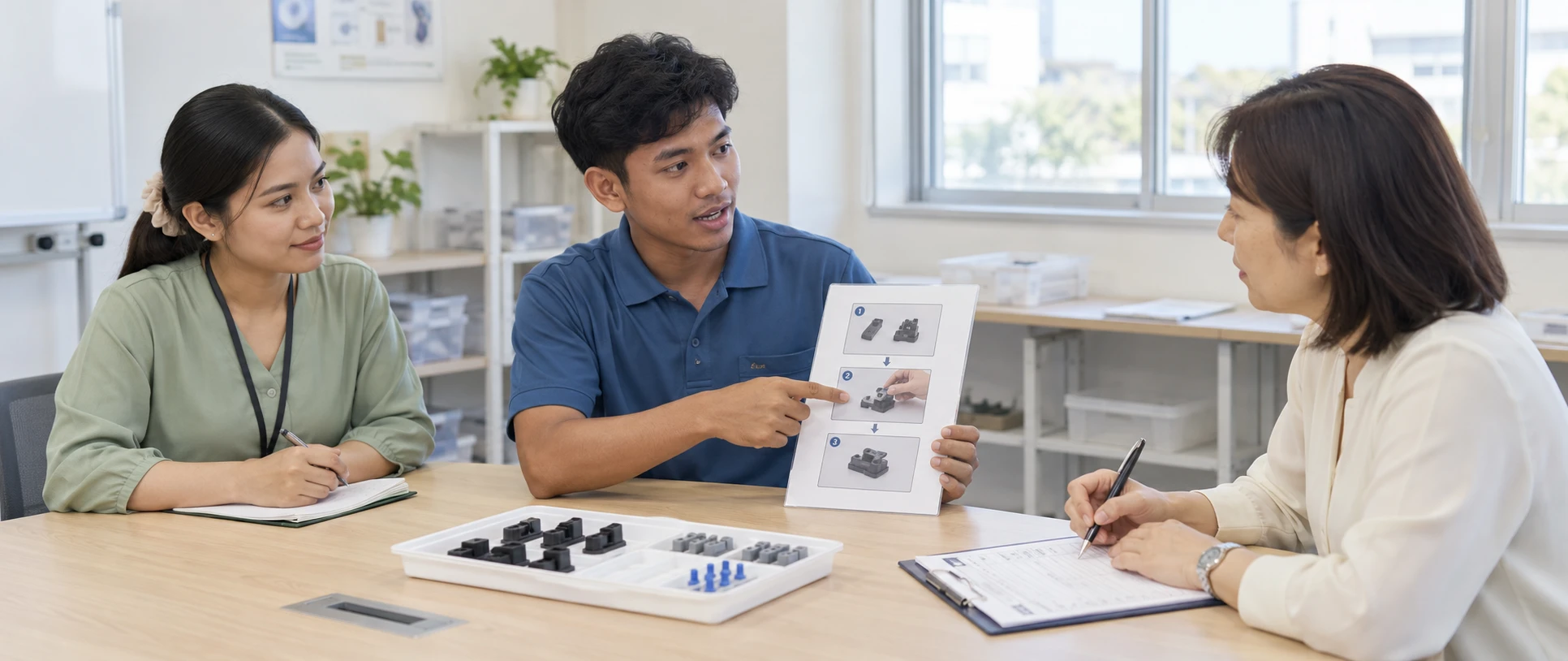
Match language ability to the actual job.
Language & practical skills
You can discuss prioritizing N3-level or higher candidates, including N2-level applicants. A test level alone does not establish job readiness: interviews, workplace vocabulary and training methods are also considered.
Recruitment & employment terms
Domestic recruitment may suit employers seeking relevant experience or an earlier start. Overseas recruitment may suit employers able to plan ahead and prepare clear work procedures and training. Employment conditions must be appropriate; nationality is not a basis for lower pay.
The ten areas of SSW (i) support.
Pre-arrival guidance
Explain employment terms, entry procedures and planned activities in a language the worker understands, after contracting and before the COE application.
Arrival and departure transport
Support travel from the airport to accommodation on arrival and accompany the worker to the airport on departure.
Housing and essential contracts
Help with accommodation, bank accounts, phone service, utilities and essential household items.
Daily-life orientation
Explain everyday rules, transport, waste disposal, emergency preparedness, safety, contacts, public services and rights.
Public procedures
Help with resident registration, social security, tax procedures and required documents.
Japanese learning opportunities
Introduce community classes, programs and learning resources so study can continue alongside work.
Consultation and complaints
Listen to concerns about work, daily life and health in an accessible language and connect workers to appropriate support. Contact methods and hours are discussed around work shifts.
Community interaction
Share local events and activities that help workers build connections in everyday life.
Job-change support
Help find a new position and complete necessary procedures when employment cannot continue for reasons such as the employer’s circumstances.
Regular interviews and reporting
Meet workers and supervisors regularly, and refer identified problems to the appropriate authorities. Interview frequency and periodic notification requirements are managed separately.
Listen to both sides and work through problems.
We hear both the employer and the worker, clarify instructions, daily-life concerns and differing expectations, and work toward solutions. Individual conversations in the worker’s language and clear communication with the employer help keep small problems from being overlooked.
We encourage understanding of culture, religion and daily habits. We listen to each person’s background and preferences rather than assuming personality from nationality.
Additional support where it helps.
- [separate quotation]
Workplace consulting
Task design, readiness assessment, training procedures, plain Japanese and practical manuals. Advice on workplace problems considers both sides.
- [separate quotation]
Training for Japanese staff
Cross-cultural understanding and short, clear instructions that can be applied in everyday work.
- [scope and fee by agreement]
Additional native-language conversations
More individual time to discuss isolation or concerns, alongside consultation included in standard support.
- [by arrangement]
Recruitment visits to Myanmar
Coordinate interviews, school and local visits, interpreting and explanations with the team in Myanmar.
- [in development]
Japanese study and test-preparation tool
A proprietary tool is being developed to support learning and career development. Availability, scope and pricing will be announced when decided. SSW (ii) requirements must be checked for each sector.
Time to understand, and a home ready for arrival.
Guidance & orientation
Plan around three hours for pre-arrival guidance and at least eight hours for daily-life orientation, allowing enough time for the worker to understand. Guidance uses face-to-face or video communication and a language the person understands, such as Burmese.
Housing & daily life
Housing is planned around at least 7.5 m² per person, with room conditions and applicable requirements checked individually. Air conditioning, a refrigerator, bedding, utilities, banking, phone service, resident registration and My Number procedures are coordinated with arrival and the start of work.
Official information
Information checked: 15 October 2026. Check current conditions for each case.