Detailed judicial institution profile
Revenue Appellate Tribunal
On this page
Revenue Appellate Tribunal
About the Tribunal
After occupying the whole of Myanmar in 1885, the British incorporated it as a province of British India in 1886. In 1922, the Burma Income Tax Act, 1922 was enacted as Indian Act No. 11. Under that Act, a person dissatisfied with an assessment or collection by an Income-tax Officer could appeal to the Assistant Commissioner of Income-tax within 30 days. A person dissatisfied with the Assistant Commissioner's order could appeal to the Commissioner of Income-tax.
After Myanmar gained independence, the Burma Income Tax (Amendment) Act was enacted as Parliamentary Act No. 77 in 1953. Section 7 added Sections 5-A and 5-B under the heading Chapter II-A, Appellate Tribunal, to the Burma Income Tax Act, 1922. Pursuant to that amendment, a three-member Income Tax Appellate Tribunal was first established through Gazette No. 63 dated 5 February 1954, issued by the Excise and Revenue Branch of the Ministry of Finance and Revenue of the Union Government.
In 1972, Notification No. 129 dated 23 October 1972 of the Ministry of Planning and Finance established a Revenue Appellate Tribunal consisting of four members, including the Chairperson. It was empowered to decide appeals, revisions, reviews and references concerning not only income tax but also sales tax, business-premises tax, hotel and entertainment-establishment tax, entertainment tax, sea and land customs duties, excise duties, stamp duties and court fees. The notification changed the name from Income Tax Appellate Tribunal to Revenue Appellate Tribunal.
In 1976, Cabinet Notification No. 12 dated 11 December 1976 upgraded the Tribunal's composition to the Minister of Planning and Finance, the Minister of Social Welfare and the Deputy Minister of Planning and Finance. It heard and determined appeals, revisions, reviews and references concerning profits tax (the source term is အမြတ်ခွန်), income tax, business-premises tax, hotel and entertainment-establishment tax, entertainment tax, sea and land customs duties, excise duties, stamp duties and court fees.
In 1989, Union Government Notification No. 6/89 dated 28 July 1989 reconstituted the Tribunal with the Director General of its office as Chairperson, one officer selected by the Chief Justice and one officer selected by the Auditor General as members. It heard and determined appeals, revisions, reviews and references concerning profits tax, income tax, sales tax, business-premises tax, hotel and entertainment-establishment tax, entertainment tax, sea and land customs duties, excise duties, stamp duties and court fees.
Under the Government of the Republic of the Union of Myanmar, Union Government Notification No. 54/2017 dated 31 May 2017 reconstituted the Tribunal with the Director General of the Tribunal Office as Chairperson, a Director from the Office of the Supreme Court of the Union and a Director assigned by the Ministry of Planning and Finance, excluding officers of the Internal Revenue Department and Customs Department, as members. It heard and determined appeals, revisions, reviews and references concerning income tax, commercial tax, specific goods tax, and sea and land customs duties.
In accordance with Article 96 and Schedule One, Union Legislative List, paragraph 3(ဍ) of the 2008 Constitution, which provides for revenue appeals, drafting of the Revenue Appellate Tribunal Bill began on 9 January 2013. The bill was approved at the ninth regular session of the second Pyidaungsu Hluttaw held on 31 July 2018. The Revenue Appellate Tribunal Law was enacted on 1 August 2018 as Pyidaungsu Hluttaw Law No. 23 of 2018.
Under Section 40 of that Law, President's Office Notification No. 32/2019 dated 27 February 2019 designated the period from 1 August 2018 to 31 July 2020 as a transition period to ensure a smooth transition in implementing the Tribunal's functions.
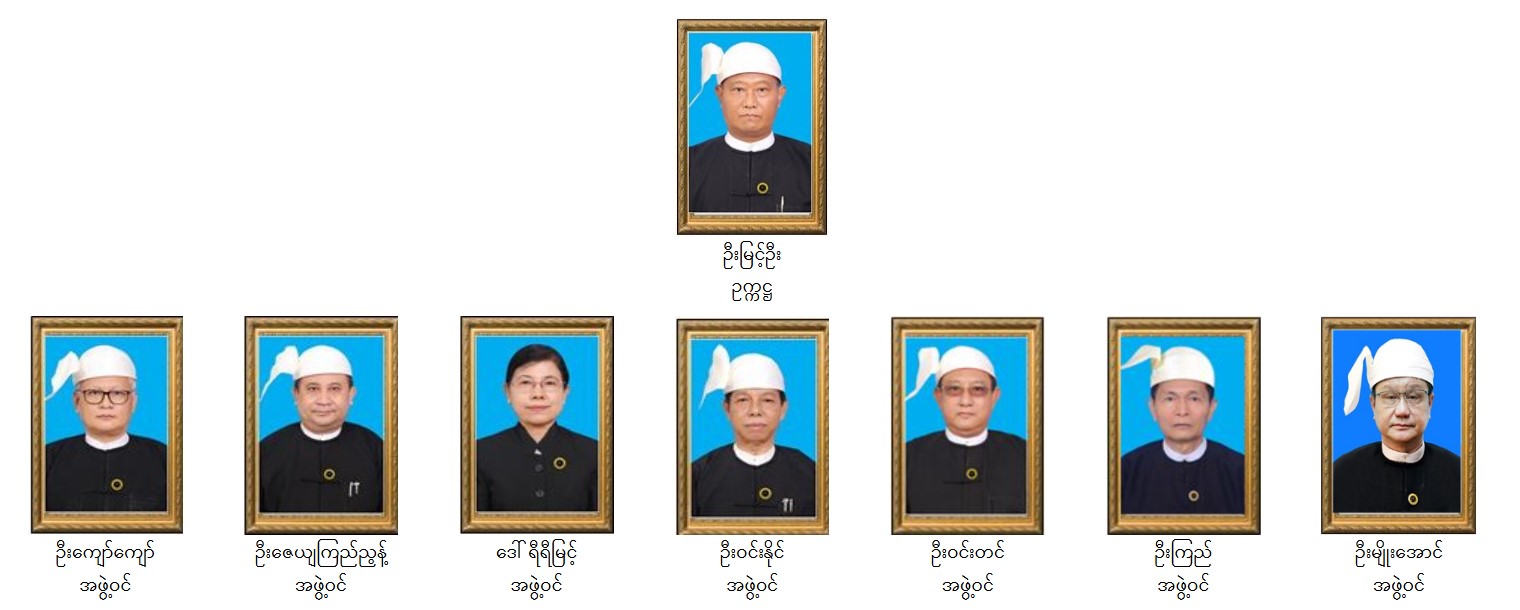
To enable the Tribunal to assume its duties at the end of the transition period, the Union Government exercised its authority under Section 4(a) of the Revenue Appellate Tribunal Law and established a Tribunal of eight members, including the Chairperson, through Notification No. 43/2020 dated 22 June 2020. Following the resignation of the Chairperson and one member, the State Administration Council appointed a Chairperson and one member through Notification No. 16/2021 dated 24 February 2021, and appointed one member through Notification No. 4/2024 dated 4 April 2024. At the time described by the source, the eight members, including the Chairperson, were hearing and determining appeals, revisions, reviews and references submitted by persons dissatisfied with taxes, customs duties, charges, licence fees, permit fees and fines collected by the Union Government for the Union Fund under Union revenue laws. The stated motto is Trustworthy, Fair and Accurate Revenue Appeals.
Revenue Appellate Tribunal
Motto
Trustworthy, Fair and Accurate Revenue Appeals
Vision
To enhance the confidence of citizens and taxpayers through a transparent, fair and accurate revenue appeals system.
Objectives
- To independently hear cases submitted by taxpayers, including domestic and foreign investors, in exercise of their right to appeal against the various taxes assessed and collected by the Union Government, and to determine them fairly in accordance with the law.
- To protect every citizen and taxpayer so that, when paying taxes in accordance with the law, they fully enjoy the rights to fair treatment, to present a defence and to pursue revenue appeals.
- To assist the Union Government in sustaining an efficient tax administration mechanism.
Values
- Transparency
- High operational performance
- Integrity, accuracy and trust
- Equality and fairness
- Protection of the rights of citizens and taxpayers.
Cases the Revenue Appellate Tribunal may hear and handle
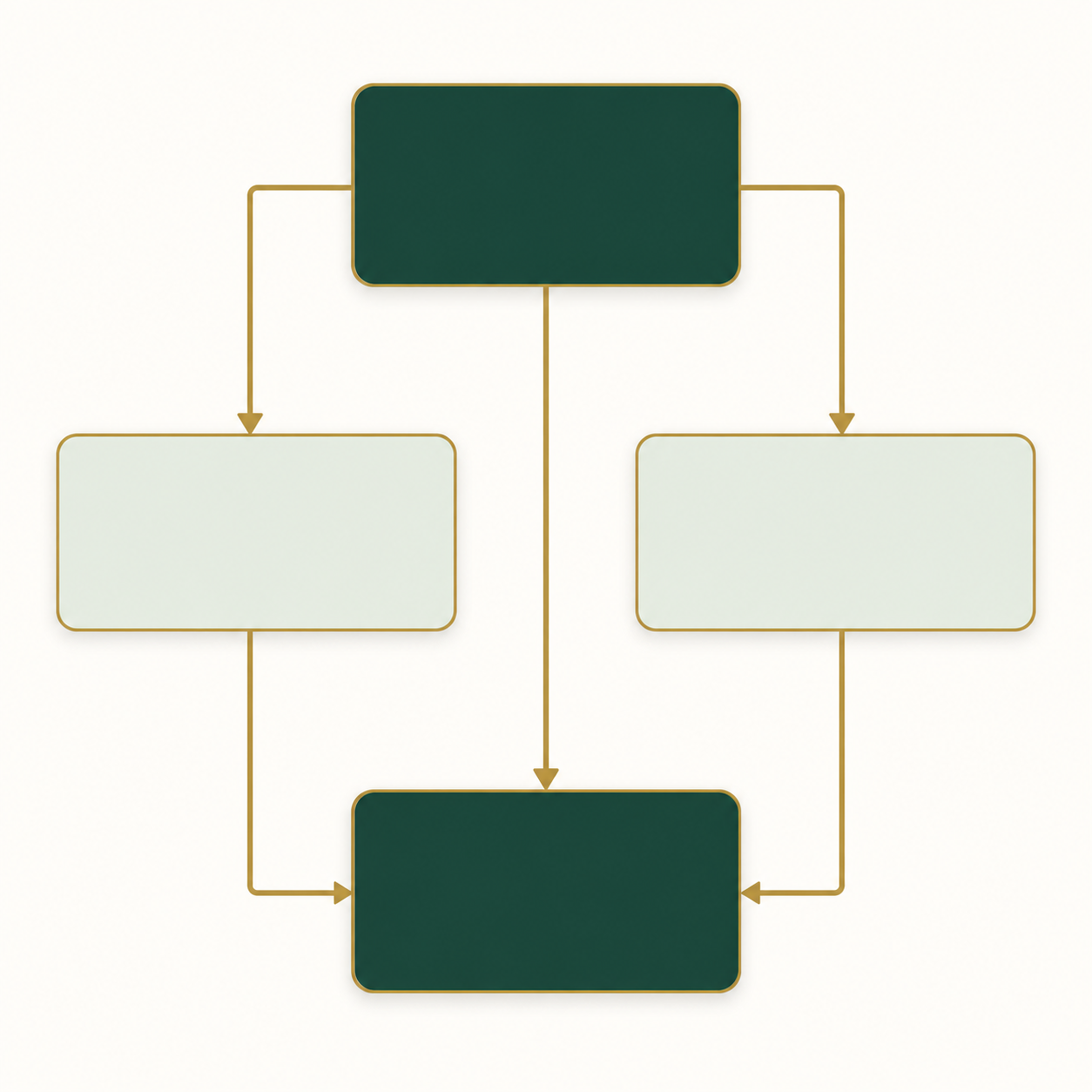
Appeal → Review; Appeal → Revision; Appeal → Reference; Review → Reference; Revision → Reference.
Revenue Appellate Tribunal Law and Rules
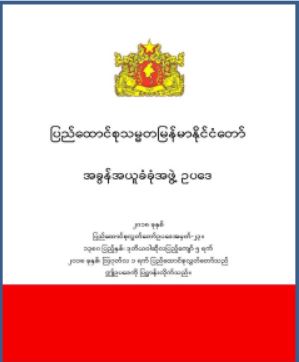
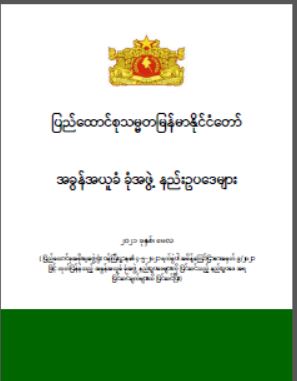
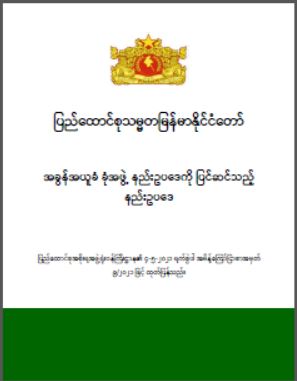
SOURCES & REVIEWSources and how to read them.
Sources and how to read them.
Covers the judicial directory and all three listed portal profiles, including two tables and 25 images. Links to source documents and external websites are retained. Those linked websites and attachments are separate materials from the profile text.
The case-category diagram has been redesigned while retaining its categories, arrows and document links. The original remains available in that section’s original-source disclosure. Other images are reproduced from the government portal.
Retrieved by Nagani · 2026-10-18
Government portal source ↗The portrait layout uses the source photographs, names and roles unchanged, with redesigned frames and placement. The complete original image is available in section 2’s original-source disclosure.
Document cards retain the original covers within a redesigned display. Each card opens its source PDF.