Detailed organization profile
Ministry of Border Affairs
On this page
Published profile
About Ministry of Border Affairs
Background History of the Ministry
Since Myanmar regained her independence, there emerged armed groups due to misunderstanding among the national races and difference in ideology. For this reason, the successive governments could not implement border areas development measures. Border areas development measures together with peace and stability measures could be implemented with added momentum by laying down systematic plans when some national armed groups came into the legal fold in 1989. Border areas development measures were able to be carried out with might and main in 1989 in accordance with the guidance of the Heads of the State fostering our three main national causes which are non-disintegration of the Union, non-disintegration of the national solidarity and perpetuation of the sovereignty of the State and focusing on peace and tranquility, national solidarity and regional development.
To take responsibility and carry out the office works of the Work Committee for the Implementation of the Development of the Border Areas and National Races while implementing development measures for the border areas and national races, the office of the Work Committee for the Implementation of the Development of the Border Areas and National Races was established as a separate office in accordance with the State Law and Order Restoration Council's Order No. (17/92) issued by the Office of the State Law and Order Restoration Council on 8thApril, 1992 with 207 total staffs comprising 49 officers and 158 staffs.
In line with the various functions of the Office of the Work Committee for the Implementation of the development of the Border Areas and National Races, the border areas development measures need to be undertaken in a wider scale and to continuously supervise, monitor and co-ordinate these measures, therefore, Ministry for the Development of Border Areas and National Races was established with Notification No. (54/92) dated 14thSeptember 1992. Then, the Ministry was reestablished at Ministry of Progress of Border Areas and National Races and Development Affairs with Notification No. (15/94) dated 30thJanuary 1994.
At present, Ministry of Progress of Border Areas and National Races and Development Affairs was abolished by Notification No. (4/2011) issued by the President Office of the Government of the Republic of the Union of Myanmar on 30thMarch 2011 and Ministry of Border Affairs has been established.
Strategy of Ministry of Border Affairs
"To accelerate striving for the development of the border areas and national races, that have lagged for behind in development due to various reasons, without having any gap between the states and mainland areas."
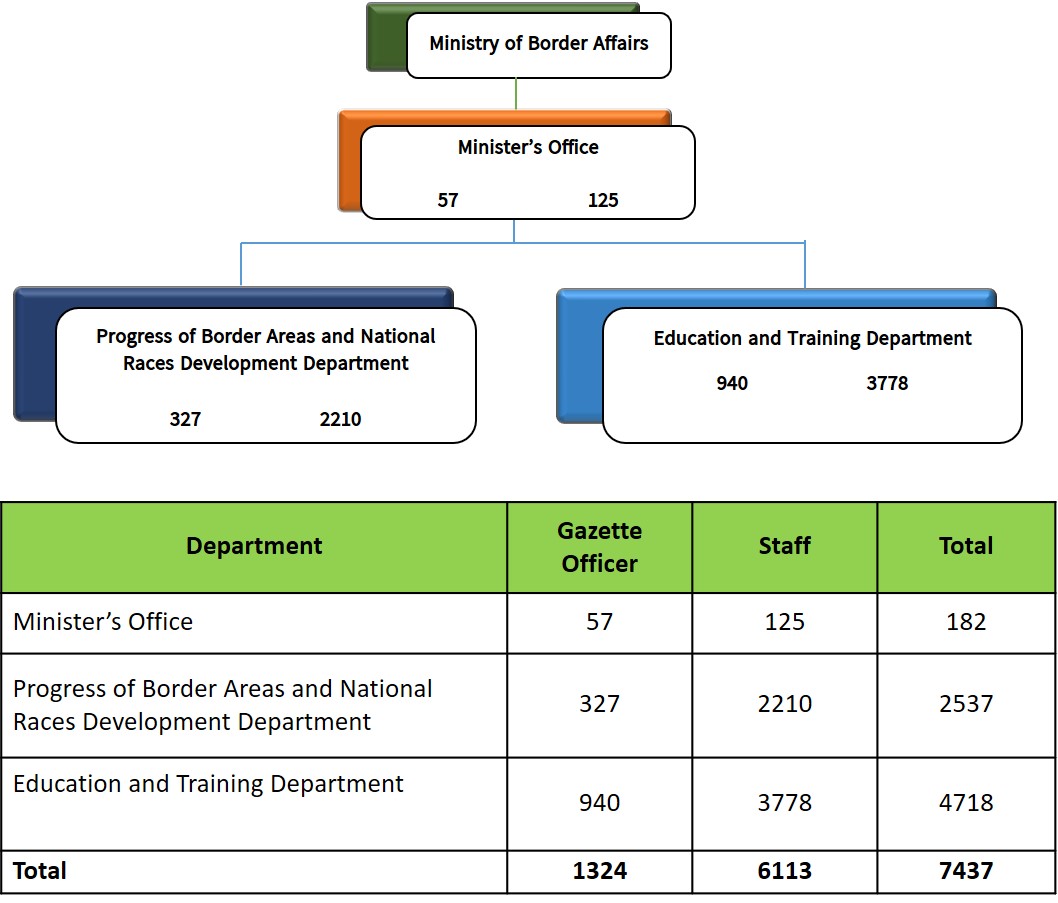
The Organization of the Ministry
The Policies of the Ministry
Ministry of Border Affairs is carrying out the development of border areas and national races and human resource development by laying down the following 4 policies;
- Stability and tranquility in the border areas;
- Development of the border areas;
- Development of socio-economic condition of the people in border areas; and
- Development of human resources of national races in border areas.
Missions of the Ministry
- To preserve and maintain the security, prevalence of law and order and regional peace and tranquility of the border areas;
- To strengthen the amity among national races;
- To develop socio-economy of national races by establishing infrastructure in border areas;
- To preserve the culture, literature and custom of the national races;
- To propagate religious affairs in the border areas;
- To support nationalities youth to be able to pursue basic education, higher education and professional education for the future; and
- To serve the development of their respective regions by their willingness.
Functions of the Ministry
-
- Designating special development zones for the development of border areas and national races;
- Drawing up the long-term and short-term plans for the development of national races residing in border areas;
- Implementing the long-term and short-term plans which are approved by the Central Committee for the Development of Border Areas and National Races;
- Implementing the development works which have been prescribed for immediate performance by the Central committee for the development of Border Areas and National Races;
- Implementing socio-economic infrastructure for the border areas with annual plans such as:
- Roads and bridges;
- Water supply:
- to supply water for cultivation;
- to supply water for drinking;
- Electricity:
- Hydro-electric;
- solar energy system;
- Religious Affairs;
- Construction work for Peace;
- Roads and bridges;
- Education;
- Health;
- Housing;
- Giving chances for Nationalities Youth living in different border areas to be able to attend schools from Basic Education Middle School to High School for free of charge;
- Supporting Nationalities Youth who pass the basic education high school to pursue higher education at the University for Development of the National Races of the Union and Nationalities Youth Resource Development Degree Colleges;
- Consolidating the Union Spirit and amity among the Nationalities Youth while studying together at the schools, degree colleges and university and to understand and cherish the culture tradition, customs and practices of national races;
- Nurturing nationalities youth to exist in their mind as non-disintegration of the Union, non-disintegration of the Union, non-disintegration of national solidarity and perpetuation of sovereignty;
- Appointing the nationalities youth at the respective Ministries after completing higher education so that they can participate in their regional development work;
- Teaching vocational expertise to the national races women in the border areas and assisting them to set up their own business applying with their vocational skills;
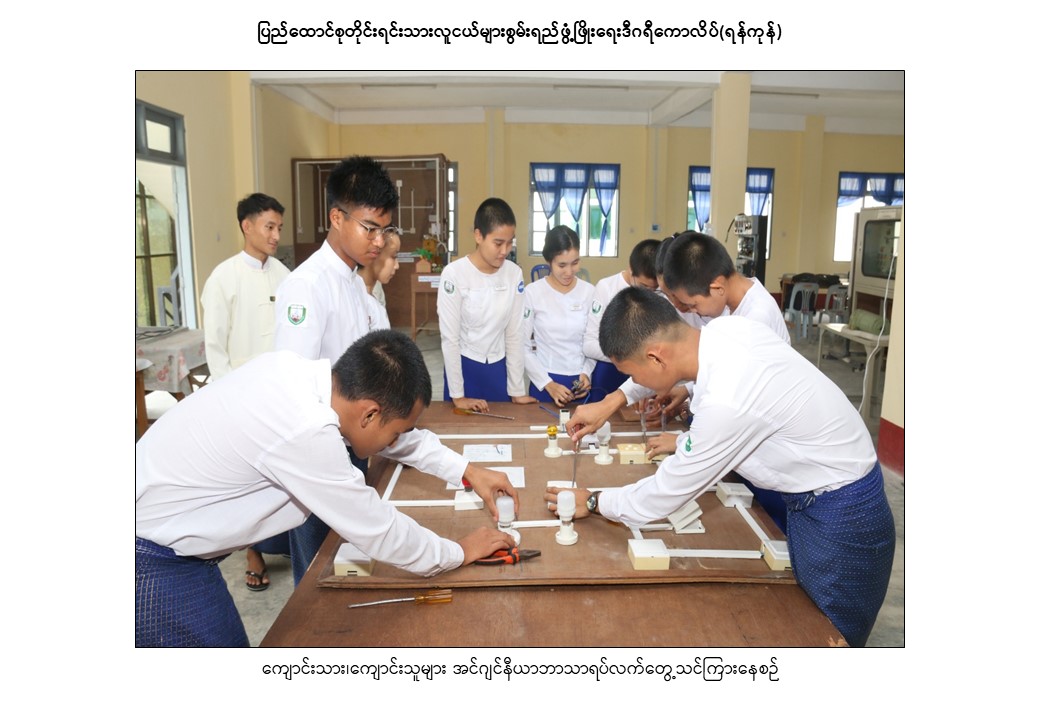
- Teaching engineering to the Nationalities Youth in the border areas with the aim of becoming skillful workers and carrying out the development of small skill manufacturing and industries;
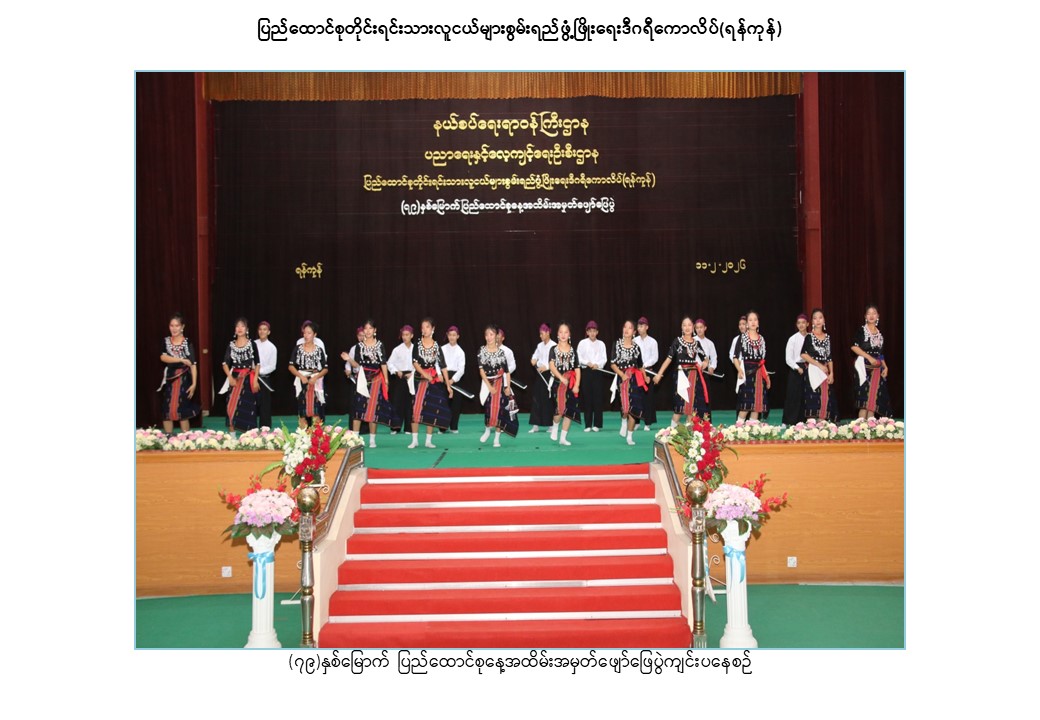
- Carrying out cultural exchanging programs to enrich a wider knowledge for the nationalities youth in the border areas;
- Carrying out national affairs as a priority in accordance with the desire of nationalities;
- Implementing the promotion and propagation of religious affairs in the border areas;
- Establishing crops cultivation, livestock breeding and cottage industries in order to substitute poppy cultivation;
- Protecting and preserving border boundary pillars and markers; and
- Managing for the cooperating with United Nations Organizations, International Organizations, Regional Organizations and respective persons in order to effectively implement the border areas development and human resource development.
Organization Committees
In order to carry out measures for the development of border areas and national races systematically, the Government started to form“The Central Committee for the Implementation of the Development of Border Areas and National Races”with 5 members by the State Law and Order Restoration Council’s Order No. (23/89) dated 25thMay 1989 and now, the Central Committee was reconstituted by the Union Government Office’s Notification No. (91/2026) dated 25thJune 2026 as follows:
|
Sr. No. |
Name and Designation |
Duty |
|
1. |
President |
Chairman |
|
2. |
Vice President (1) |
Vice Chairman |
|
3. |
Vice President (2) |
Vice Chairman |
|
4. |
Commander-in-Chief of Defence Services General |
Member |
|
5. |
Union Minister, Minister of Defence |
Member |
|
6. |
Union Minister, Ministry of Home Affairs |
Member |
|
7. |
Chief Ministers, Government of the Regions/States |
Member |
|
8. |
Chief of the General Staff (Army, Navy and Air) |
Member |
|
9. |
Director, Directorate of People's Militia and Territorial Forces |
Member |
|
10. |
Union Minister, Ministry of Border Affairs |
Secretary |
|
11. |
Deputy Minister, Ministry of Border Affairs |
Joint Secretary |
Duties of the Central Committee
-
-
- Laying down the policy in order to implement the objectives;
- Approving, giving guidance and instructing for the implementation of long-term and short-term master plans which are drawn up by the Ministry and submitted through the work Committee;
- Laying down development works which should be carried out immediately at the border areas and instructing implementation thereof;
- Laying down work plans and instructing implementation thereof with a view to maintain the culture, literature and customs of the national races;
- Laying down measures for maintaining security, prevalence of law and order and regional peace and tranquility in order to continuously accelerate the development works at the border areas;
- Approving Development Areas which should be expanded.
-
Powers of the Central Committee
-
-
- The Central Committee shall form the Work Committee;
- The Central Committee shall determine the Chairman and Secretary in forming the Work Committee, and may determine the Vice-Chairman and Joint-Secretary if necessary.
-
“Work Committee for the Development of Border Areas and National Races” was started to form with 17 members by the State Law and Order Restoration Council Order No. (24/89) dated 31stMay 1989 and now, the Work Committee is reconstituted with 42 menbers by the Central Committee's Notification No. (63/2026) dated 31stMay 2026 as follows:
|
Sr. No. |
Name and Designation |
Duty |
|
1 |
Union Minister, Ministry of Border Affairs |
Chairman |
|
2 |
Deputy Minister, Ministry of Transport |
Member |
|
3 |
Deputy Minister, Ministry of Digital Development and Communications |
Member |
|
4 |
Deputy Minister, Ministry of Home Affairs |
Member |
|
5 |
Deputy Minister, Ministry of National Planning, Investment and Foreign Economic Relations |
Member |
|
6 |
Deputy Minister, Ministry of Finance and Revenue |
Member |
|
7 |
Deputy Minister, Ministry of Ethnic Affairs |
Member |
|
8 |
Deputy Minister, Ministry of Education |
Member |
|
9 |
Deputy Minister, Ministry of Science and Technology |
Member |
|
10 |
Deputy Minister, Ministry of Health |
Member |
|
11 |
Deputy Minister, Ministry of Religious Affairs |
Member |
|
12 |
Deputy Minister, Ministry of Agriculture, Livestock and Irrigation |
Member |
|
13 |
Deputy Minister, Ministry of Cooperative and Rural Development |
Member |
|
14 |
Deputy Minister, Ministry of Natural Resources and Environmental Conservation |
Member |
|
15 |
Deputy Minister, Ministry of Electricity and Energy |
Member |
|
16 |
Minister, Ministry of Security and Border Affairs 14 (Region/ State Governments) |
Member |
|
17 |
Deputy Director, Directorate of People's Militia and Territorial Forces |
Member |
|
18 |
Permanent Secretary, President Office |
Member |
|
19 |
Permanent Secretary, Ministry of Border Affairs |
Member |
|
20 |
Permanent Secretary, Ministry of Information |
Member |
|
21 |
Permanent Secretary, Ministry of Industry and MSME Development |
Member |
|
22 |
Permanent Secretary, Ministry of Immigration and Population |
Member |
|
23 |
Permanent Secretary, Ministry of Construction |
Member |
|
24 |
Permanent Secretary, Ministry of Social Welfare, Relief and Resettlement |
Member |
|
25 |
Permanent Secretary, Ministry of Hotels, Tourism and Culture |
Member |
|
26 |
Director General, Ministry of Sports |
Member |
|
27 |
Director General, Ministry of Youth Affairs |
Member |
|
28 |
Deputy Minister, Ministry of Border Affairs |
Secretary |
|
29 |
Director General, Progress of Border Areas and National Races Department |
Joint Secretary |
Duties and powers of the Work Committee
-
-
- Scrutinizing long-term and short-term master plans drawn up and submitted by the Ministry and submitting and obtaining confirmation of the Central Committee;
- Giving guidance for the implementation of long-term and short-term master plans, which have been confirmed by the Central Committee and supervising and inspecting the works;
- Giving guidance for the implementation of development works which have been prescribed for immediate performance by the Central Committee and supervising and inspecting the works;
- Forming Work Sub-Committees at the central level and determining the duties thereof;
- Forming Regional Work Committees and determining the duties thereof;
- causing the drawing up and submission of work schemes sectorwise by the Work Sub-Committees and Regional Work Committees and causing implementation thereof;
- Co-ordinating the activities of the Ministry, Work Sub-Committees and Regional Work Committees;
- Making the arrangement for enabling to co-operate with the United Nations Organizations, International Organizations, Regional Organizations, Foreign States, Non-Governmental Organizations and Persons;
- making arrangement, as may be necessary for obtaining funds and allocation thereof;
- determining privileges for employees who are performing duties in the prescribed areas within the Development Area;
- scrutinizing and submitting to the Central Committee for the determination of Development Areas submitted by the Ministry;
- reporting to the Central Committee on its activities.
-
In accordance with the policies laid down by the Central Committee for the Implementation of the Development of Border Areas and National Races, the Work Committee for the Development of Border Areas and National Races was formed 13 Work Sub-Committees on 31stMay, 1989. Then, by the decision of Work Committee meeting (3/94) on 3rdOctober 1994 and the President Office's Notification No. 6/11 dated 20thApril, 2011, 18 Work Sub-Committees was reconstituted in which Union Minister/ Deputy Ministers from the respective Ministry are assigned as Chairman and heads of department are assigned as members. Then, 13 Work Sub-Committees were reconstituted according to the Notification No.60/2012 issued by the President Office on 24thAugust, 2012. After that, according to the Work Committee's Notification No. (8/2016) dated 16thNovember, 2016, 7 Work Sub-Committee have been reconstituted and now, in accordance with the Notification No. (1/2023) dated 22ndSeptember, 2023 by the Work Committee for the Development of Border Areas and National Races, 7 Work Sub-Committee have been reconstituted as follows by the order No. (1/2026) of Working Committee dated on 10-7-2026;
-
-
- Work Sub-Committee for Roads, Bridges and Infrastructure Development;
- Work Sub-Committee for Education, Health and Human Resource Development;
- Work Sub-Committee for Agriculture, Livestock and Natural Resources;
- Work Sub-Committee for Energy and Electricity;
- Work Sub-Committee for Transportation, Digital Development and Communication;
- Work Sub-Committee for Religious, Culture and Tourism Development;
- Work Sub-Committee for Rural Development, Social Welfare and Vocational Education.
-
In order to implement the development measures for border areas and national races, 11 Regional Work Committees were formed since 13thJune, 1989 in which Commanders of Military Commands and Chairmen of the States acted as Chairmen of the respective Regional Work Committee. Moreover, respective work committees had been formed at the district and township levels. In accordance with the President Office's Notification No. (6/11) dated on 20thApril, 2011, Chief Minister of the respective Region/State were assigned as Chairman of Regional Work Committee. By the decision of (1/2012) meeting of "The Work Committee for the Development of Border Areas and National Races",9 Regional Work Committees were reconstituted and now, according to the decision of the Work Committee's Meeting (2/2023),9 Regional Work Committeesare reconstituted as follows:
-
-
- Kachin State Regional Work Committee;
- Kayah State Regional Work Committee;
- Kayin State Regional Work Committee;
- Chin State Regional Work Committee;
- Mon State Regional Work Committee;
- Rakhine State Regional Work Committee;
- Shan State Regional Work Committee;
- Sagaing Region Regional Work Committee; and
- Tanintharyi Region Regional Work Committee.
-
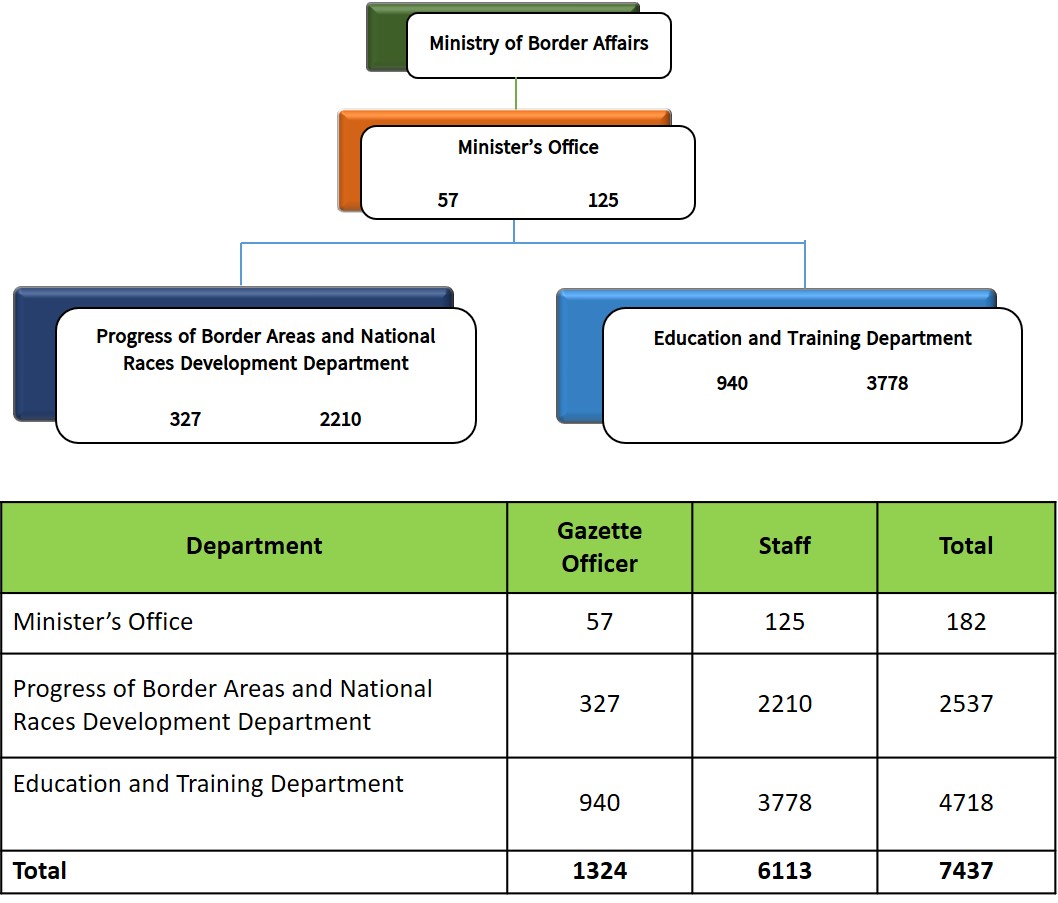
Management Structure for the implementation of Border Areas Development measures
Development of Border Areas and National Races Law
In order to effectively and systematically carry out development measures of border areas and national races, the Government enacted "Development of Border Areas and National Races Law" with Law No.11/93 on 13th August, 1993. To be in line with the current situation at that time, the State Peace and Development Council enacted"the Law Amending the Development of Border Areas and National Races Law"with Law No.7/2006 on 11th August, 2006. Then, "The Second Amendment of the Development of Border Areas and National Races Law" with Law No. 44/2015 was enacted on 22nd July, 2022.
The Master Plan for the Development of Border Areas and National Races was drawn up. Under this Master Plan, the 13-year plan, in which the first short-term 3-year plan from 1993-1994 fiscal year to 1995-1996 fiscal year, the first medium-term 5-year plan from 1996-1997 fiscal year to 2000-2001 fiscal year and the second medium-term 5-year plan from 2001-2002 fiscal year to 2005-2006 fiscal year, was implemented. Then, 30-year long-term plan for the development of border areas and national races, which is starting form 2001-2002 fiscal year up to 2029-2030 fiscal year, had been drawn up and implemented with 6 medium-term 5-year plan. In line with the current situation, 20 year long-term plan from 2011-2012 fiscal year to 2030-2031 fiscal year for the development of borders areas is being implemented.
Background History of the Progress of Border Areas and National Races Department
Office of the Work Committee for the Development of Border Areas and National Races established with 49 officers and 158 staff, totally 207 staff was formed as a separate office by the State Law and Restoration Council’s office Order No. (17/92) on 8th April 1992 to perform the functions and duties of the Work Committee for the Development of Border Areas and National Races.
As more national groups came into the legal fold, for the multi-sectoral development of their regions, Senior General Than Shwe, Chairman of the Central Committee for the Development of Border Areas and National Races attended the meeting held in the meeting hall of Ministry for Progress of Border Areas and National Races and Development Affairs, Ministers’ Office on 8th September 1995 and gave necessary guidance on organizing the department from the Work Committee office.
In accordance with the guidance by the Chairman of the Central Committee for the Development of Border Areas and National Races, organizational structure was approved from the Cabinet Meeting No. (40/95) held on 25th October 1995. By this approval, the office of the Work Committee for the Development of Border Areas and National Races was reorganized as Progress of Border Areas and National Races Department Under the Organizational structure of Progress of Border Areas and National Races Department, 194 civilian officers, 1964 staff, 105 military engineering officers and 3420 other rank staff, totally 5683 personnel were organized under the department.
To effectively implement border areas development activities, 327 civilian officers, 2210 staff, totally 2537 personnel were organized under the department by the permission of Cabinet Meeting No. (2/2015) held on 15th January 2015.
Objectives
The main objectives of implementing development activities for border areas and national races-
-
- To develop the socio-economic support infrastructure of the national races in the border areas, in accordance with the aims which are non-disintegration of Union, non-disintegration of the national solidarity and perpetuation of the sovereignty of the State;
- To focus on development in a fair and balanced without any gaps between the areas of the Union;
- To strengthen the amity among the national races;
- To eradicate totally cultivation of poppy plants by establishing alternative development activities;
- To preserve the security, prevalence of law and order and regional peace and tranquility of the border areas.
Development of Border Areas and National Races Law
In order to effectively and systematically carry out development measures of border areas and national races, the Government enacted "Development of Border Areas and National Races Law" with Law No.11/93 on 13th August, 1993. To be in line with the current situation at that time, the State Peace and Development Council enacted "the Law Amending the Development of Border Areas and National Races Law" with Law No.7/2006 on 11th August, 2006. Then, "The Second Amendment of the Development of Border Areas and National Races Law" with Law No. 44/2015 was enacted on 22nd July, 2022.
The Master Plan for the Development of Border Areas and National Races was drawn up. Under this Master Plan, the 13-year plan, in which the first short-term 3-year plan from 1993-1994 fiscal year to 1995-1996 fiscal year, the first medium-term 5-year plan from 1996-1997 fiscal year to 2000-2001 fiscal year and the second medium-term 5-year plan from 2001-2002 fiscal year to 2005-2006 fiscal year, was implemented. Then, 30-year long-term plan for the development of border areas and national races, which is starting form 2001-2002 fiscal year up to 2029-2030 fiscal year, had been drawn up and implemented with 6 medium-term 5-year plan. In line with the current situation, 20-year long-term plan from 2011-2012 fiscal year to 2030-2031 fiscal year for the development of borders areas is being implemented.
Progress of Border Areas and National Races Department
The border areas and national races department is implementing socio-economic development projects for the people of the border regions in 116 townships and 55 townships in 7 states, 2 regions, 1 self-administered region and 5 self-administered zones, 171 townships in total, and beside that, according to the Central Committee Meeting (1/2026) minute, 4 remote areas, 11 lower development townships and 2 townships where were directed to implement the development by the President and as per the needs of the project, and in regions where development projects are required, according to the guidelines of national-level individuals, submissions from the region/state government, and submissions from parliamentarians.
The townships where border area developments are being implemented
- 116 townships where the main border area developments are being implemented
- Kachin State – Myitkyina, Chipwi, Waingmaw, Tanai, Injangyang, Momauk, Mansi, Tsawlaw, Bhamo, Puta-O, Sumprabum, Nawngmun, Machanbaw, Hpakant, Khaunglanhpu.
- Kayah State – Loikaw, Bawlake, Demoso, Hpruso, Shadaw, Hpasawng, Mese.
- Kayin State – Hpa-An, Kawkareik, Hpapun, Myawaddy, Kyainseikgyi, Hlaingbwe, Thandaunggyi.
- Chin State – Hakha, Falam, Mindat, Thantlang, Madupi, Paletwa, Tedim, Tonzang, Kanpetlet.
- Mon State – Mawlamyine, Thaton, Bilin, Thanbyuzayat, Kyaikmaraw, Ye, Kyaikto.
- Rakhine State – Maungdaw, Buthidaung, Kyauktaw, Rathedaung, Mrauk-U, Kyaukpyu, Myebon, Thandwe, Ann, Toungup.
- Shan State – Taunggyi, Tangyan, Lashio, Namhkan, Kunlong, Laihka, Loilen, Monghsat, Kyaukme, Mongla, Mawkmai, Pekon, Mongton, Mongpan, Mongkaing, Kunhing, Monghpyak, Muse, Namtu, Mongyai, Mongping, Mongkhet, Hseni, Kutkai, Kengtung, Mongyang, Mongyawng, Tachileik.
- Pa-O Self-Administered Zone – Hopong, Hsihseng, Pinlaung.
- Pa Laung Self-Administered Zone – Manton, Namhsan.
- Da Nu Self-Administered Zone – Ywangan, Pindaya.
- KoKang Self-Administered Zone – Laukkaing, Konkyan.
- Wa Self-Administered Division – Hopang, Matman, Pangsang, Narphan, Pangwaun, Mongmao.
- Sagaing Division – Hkamti, Tamu, Pinlebu, Banmauk, Katha, Homalin.
- Naga Self-Administered Zone – Lay Shi, Lahe, Nanyun.
- Tanintharyi Division – Kawthoung, Yebyu, Bokpyin, Tanintharyi, Kyunsu, Myeik, Palaw, Thayetchaung.
- Yangon Division – Cocokyun.
- 55 townships where border area developments are being implemented as per the work necessity
- Kachin State – Mogaung, Mohnyin, Shwegu.
- Rakhine State – Sittwe, Pauktaw, Minbya, Ponnagyun, Ramree, Munaung, Gwa.
- Shan State – Nyaungshwe, Kalaw, Nawnghkio, Lelchar, Kyethi, Yattsaut, Mongnai, Nansang, Monghsu.
- Sagaing Division – Monywa, Wuntho, Kanbalu, Mawlaik, Kawlin, Mingin, Kalewa, Kale, Paungbyin.
- Tanintharyi Division – Dawei, Launglon.
- Bago Division – Shwegyin, Kyaukkyi, Paungde, Nattalin, Minhla, Phyu.
- Yangon Division – Thongwa, Hlegu.
- Ayeyarwady Division – Maubin, Ngapudaw, Hingyikyun, Pathein, Kyonpyaw.
- Mandalay Division – Mogoke, Kyaukpadaung, Wundwin, Nyaung-U.
- Magway Division – Pauk, Yesagyo, Salin, Aunglan.
- Naypyitaw – Za Bu Thi Ri, Poke Ba Thi Ri, Zay Yar Thi Ri, Pyinmana.
- 17 additional townships where border area developments will be implemented according to the Border Areas and National Races Development Central Committee Meeting (1/2026)
- At the west bank of Ayeyarwaddy River – Thayak and Minton.
- The remote areas – Thabaung, Pyapon, Labutta, Sidoktaya.
- The lower development areas where are not in the list of remote areas – Hsipaw, Shwebo, Monyo, Chaungzon, Seikkyi Kanaungto, Kangyidaunt, Meiktila, Kyaukse, Taungdwingyi, Natmauk, Tatkon.
Measure Takens for the socio-economic development in border areas
- Road and Bridges Construction
- Water Supply
- to get water for agriculture
- to get drinking water
- Energy Sector
- Hydro- power
- Solar power
- Religious Affairs
- Peace Making and Assistive Activities
- Road and Bridges construction
- Education
- Health
- Housing
Organization Form of Progress of Broder Areas and National Races Department
- Progress of Broder Areas and National Races Department (Head Office)
- Admin Section
- Work Section (1) (Kachin State, Chin State and Sagaing Region)
- Work Section (2) (Shan State)
- Work Section (3) (Mon State, Kayin State, Tanintharyi Region)
- Work Section (4) (Rakhine State and Kayah State)
- Planning and Inspection Section
- Engineering Section
- Region/State Development Supervisory Offices
|
No. |
Region |
State/Region Development Supervisory Office |
Sub-State Development Supervisory Office |
District Development Supervisory Office |
Township Development Supervisory Office |
|
1 |
Myitkyina |
1 |
3 |
8 |
|
|
2 |
Taunggyi |
1 |
2 |
10 |
18 |
|
3 |
Pha-an |
1 |
2 |
5 |
|
|
4 |
Mawlamyine |
1 |
1 |
5 |
|
|
5 |
Dawe |
1 |
2 |
4 |
|
|
6 |
Sittwe |
1 |
3 |
8 |
|
|
7 |
Moneywa |
1 |
4 |
8 |
|
|
8 |
Hakha |
1 |
2 |
4 |
|
|
9 |
Meikhtila |
1 |
|||
|
10 |
Yangon |
1 |
|||
|
11 |
Pyinmana |
1 |
|||
|
12 |
Pha-an |
1 |
2 |
5 |
|
|
Total |
9 |
2 |
31 |
64 |
Background History of the Department
Education and Training Department
Education and Training Department has been opened on 30thJune, 1999, by the order of the Chairman of the Central Committee for the Development of Border Areas and National Races and the decision of the State Peace and Development Council meeting No.21/99 on 17thJune, 1999. The department comprises as follows:
-
- Head Office of the Department
- University for the Development of the National Races of the Union, Sagaing
- Nationalities Youth Resource Development Degree College, Yangon
- Nationalities Youth Resource Development Degree College, Sagaing
- Central Training School
- Nine Regional/State Offices and nine District Offices
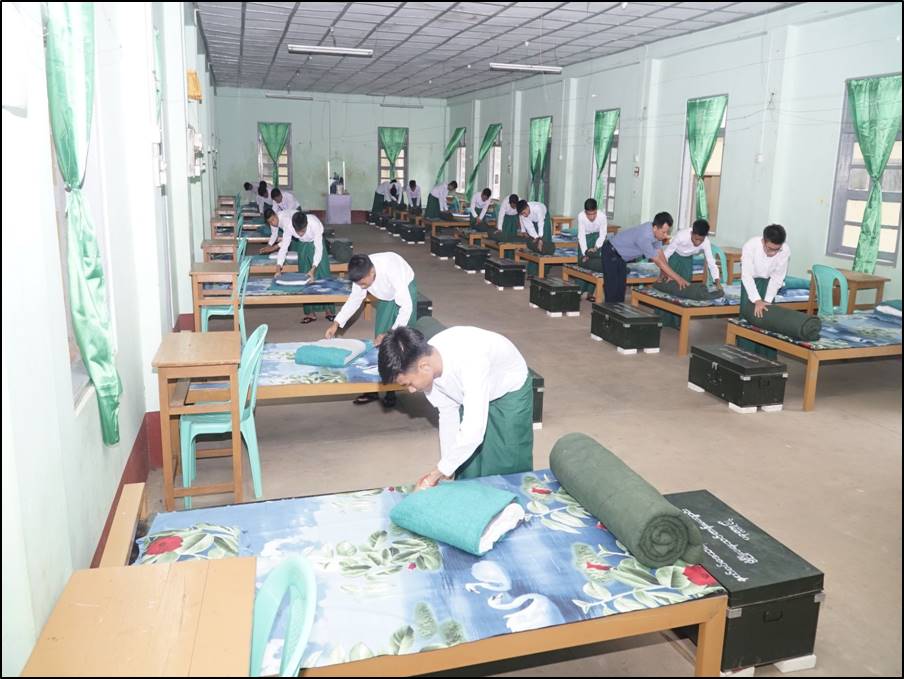
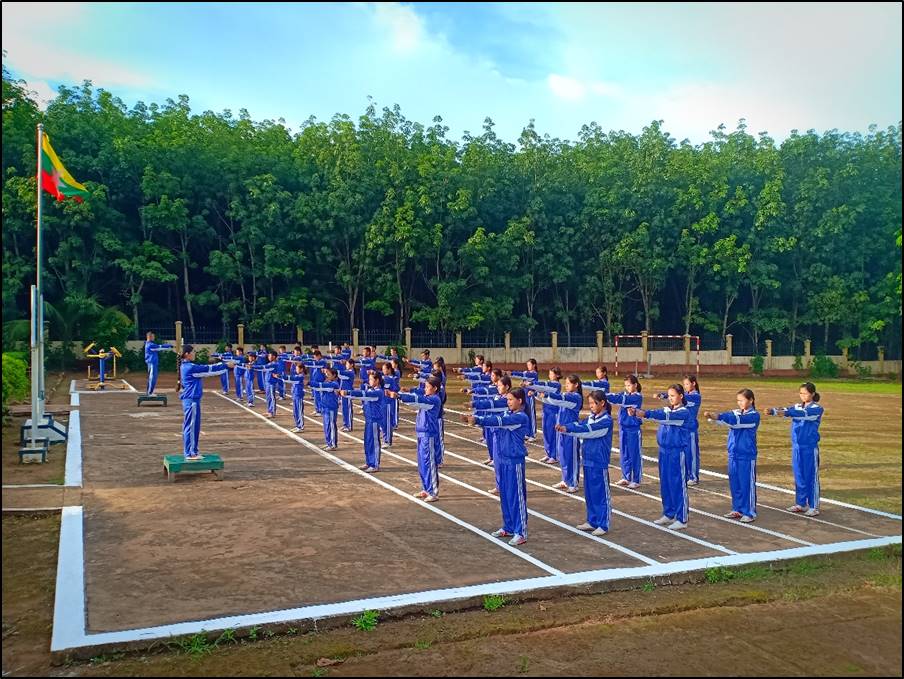
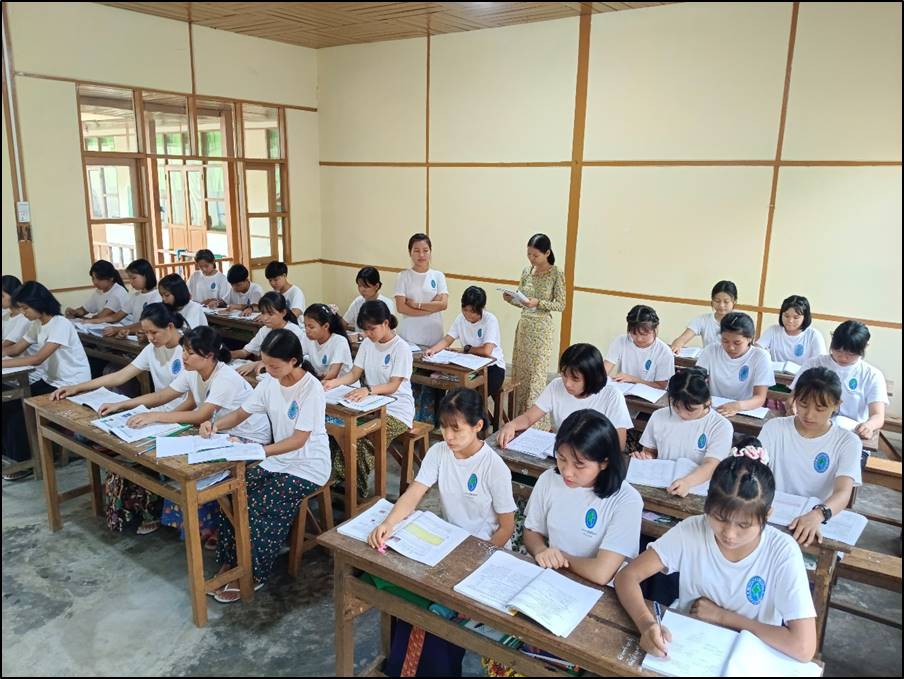
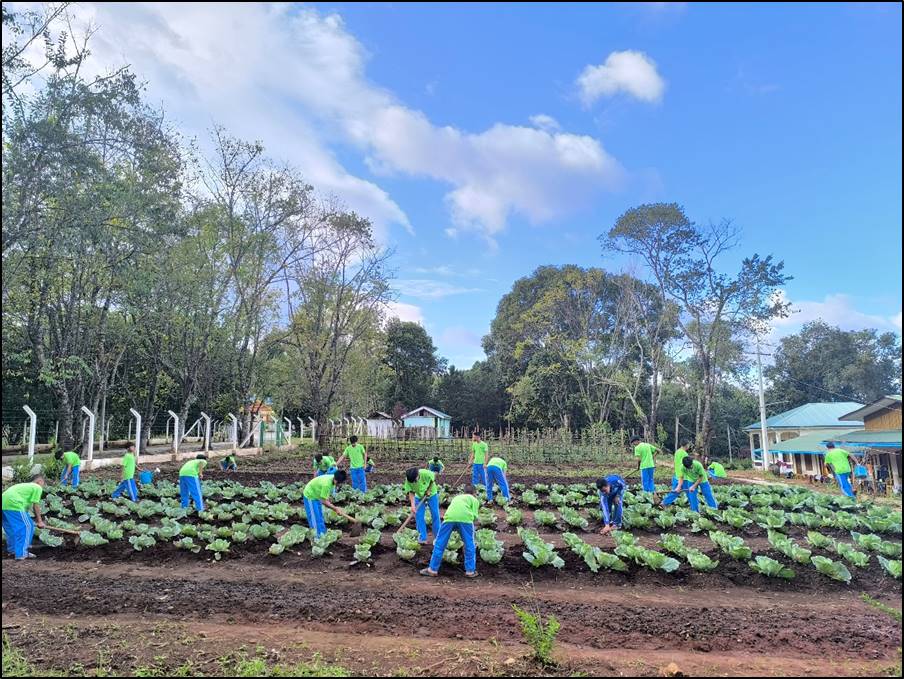
- Forty-five Training Schools for Development of Nationalities Youths from Border Areas
- Nine Technical Schools for Nationalities Youths from Border Areas
- Forty-seven Vocational Training Schools of Domestic Science for Women
Objectives of The Department
-
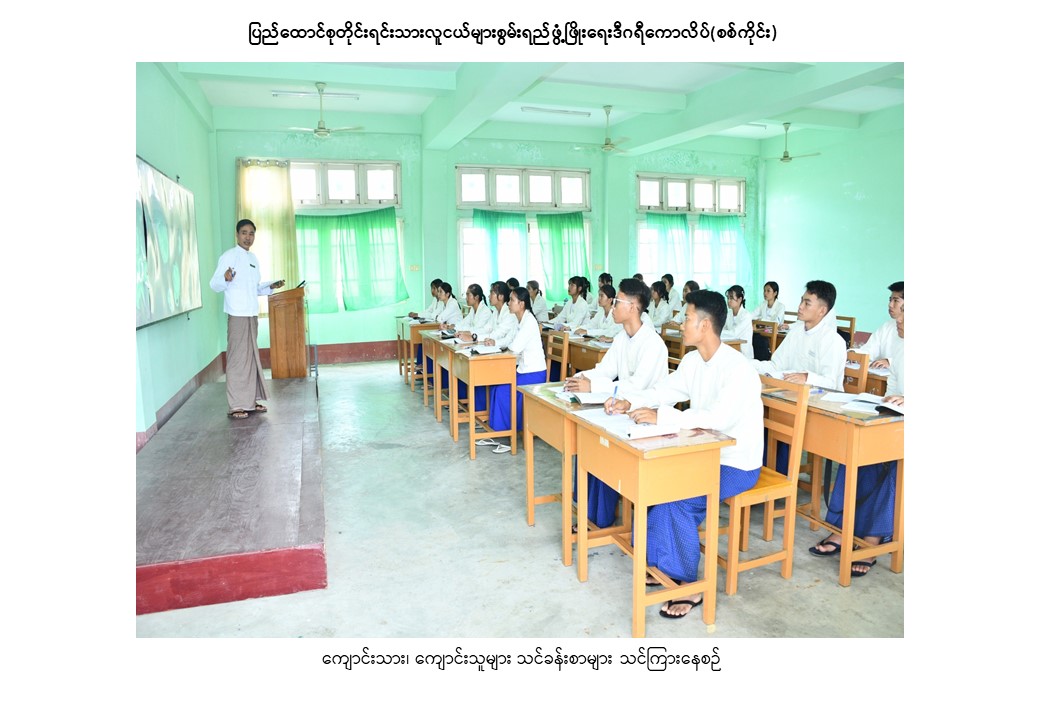
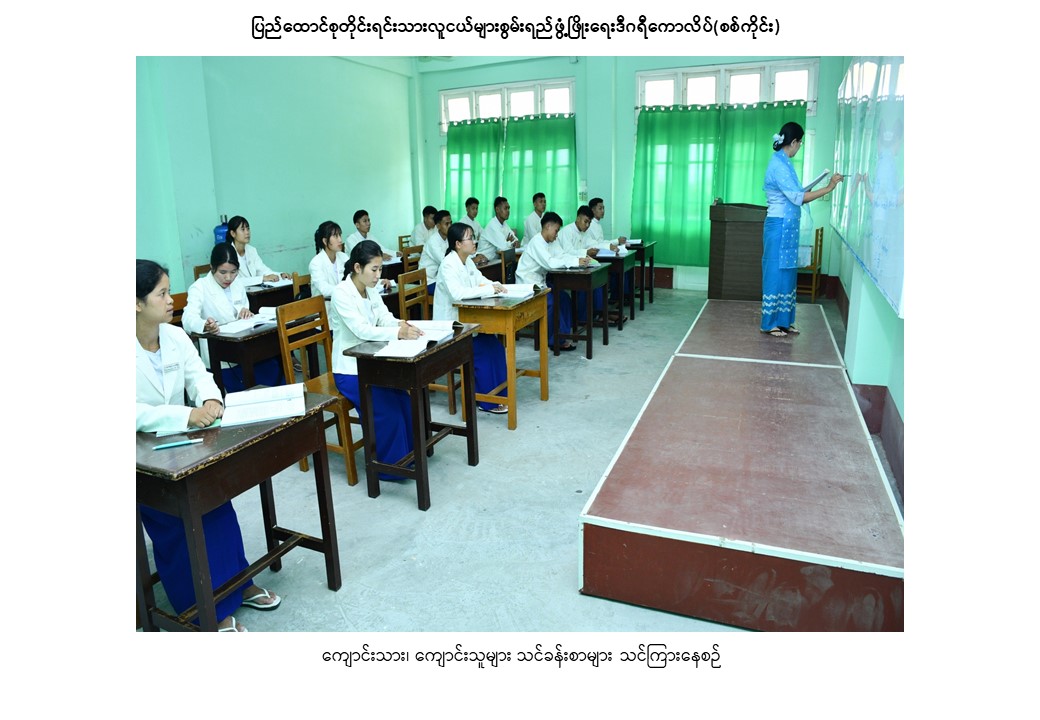
- To teach and train ethnic youth from the border areas basic, and advanced sciences and to cooperate in the department of human resources and socio-economic development of the border region.
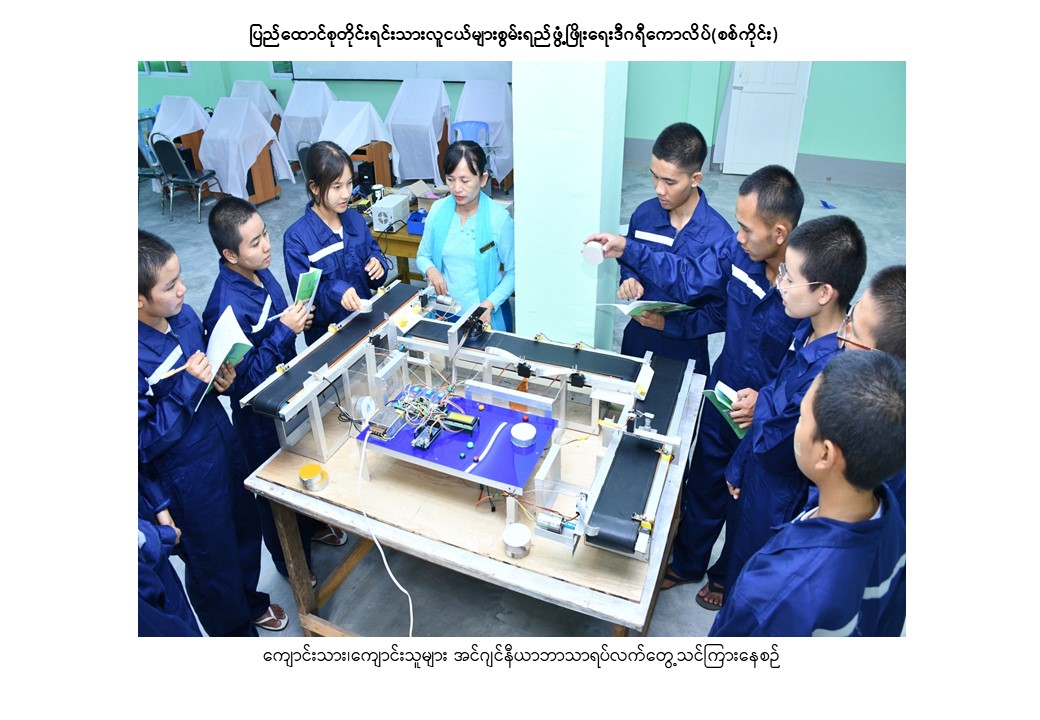
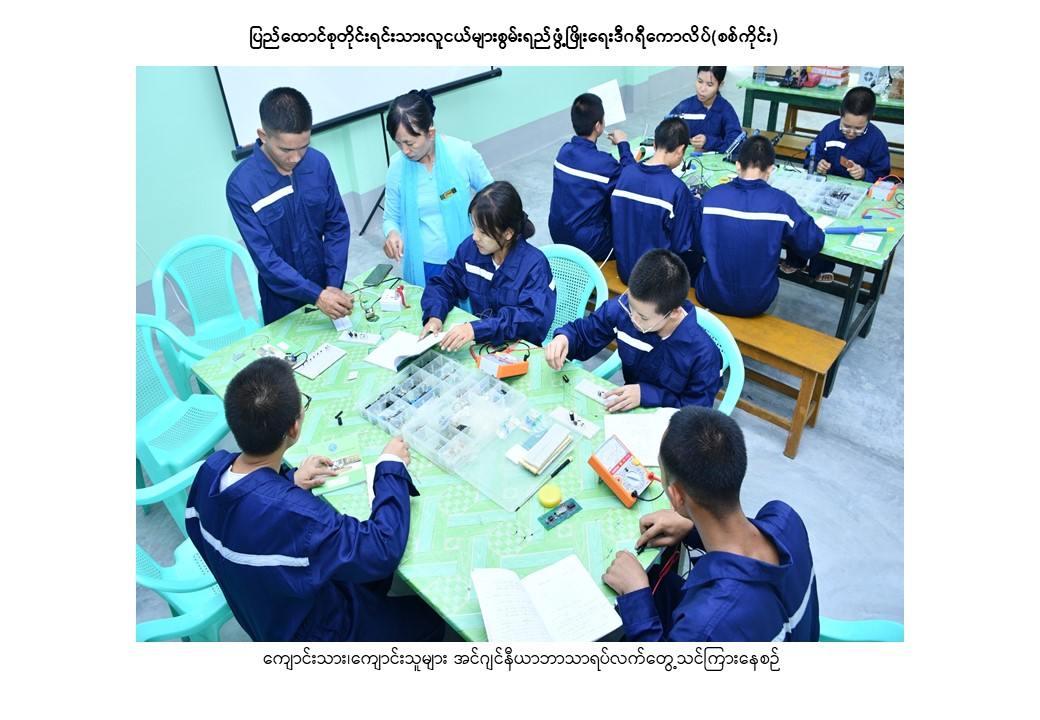
- To train the ethnic youth from the border areas in industrial and domestic vocational skills and creating job opportunities as well as to assist earn in establishing micro-business opportunities.
Mission
-
-
- To strengthen the amity among national races and to reinforce union spirit.
- To cherish and preserve the culture, literature and customs of the national races.
- To pursue basic education, higher education and professional education for the future of nationalities youth.
- To implement regional development activities by their own awareness.
-
Work Function
-
-
- To draw up the long-term and short-term plans for the development of national races residing in border areas.
- To give chances to Nationalities Youth living in different border areas to be able to attend schools from Basic Education Middle School to High School for free of charge.
- To pursue higher education for the Nationalities Youth who pass the Basic Education High School to have opportunities to study the courses in the University for Development of the National Races of the Union and Nationalities Youth Resource Development Degree Colleges and they are also allowed to attend other suitable Universities.
- To consolidate the Union Spirit and amity among the Nationalities Youth while studying together at the Colleges and to understand and cherish the culture, tradition, customs and practices of national races.
- To nurture all national people to constantly safeguard non-disintegration of the Union, non-disintegration of national solidarity and perpetuation of sovereignty.
- To assign duties to the nationalities youth at the respective Ministries after completing higher education subjects so that they can participate in their regional development works.
- To teach vocational Subject to young national races women in border areas and give them necessary aids until they can set up their own business with the vocational skills they possess.
- To teach subjects for engineering to the Nationalities Youth in border areas with the aim of becoming skilled workers and carrying out the development works for Micro Manufacturing and Micro Industrial business.
- To cooperate with the United Nations Organizations, International Organizations, Regional Organizations and persons in responsible position with the intention of implementing the development work programs in border areas more effectively.
-
Department Motto
"Must Be Outstanding Human Resources of Nationalities Youth from Border Areas"
University for the Development of the National Races of the Union
Background History
-
-
- According to the 65thmeeting of Revolutionary Council that was held on 5-2-1964, Academy for the Development of National Groups (ADNG) was established on 20-10-1964 with the aim to support the development and unity of national races.
- According to State Law and Order Restoration Council Meeting No-(18/91) that was held on 2ndMay, 1991, ADNG was upgraded into University level with the Document No- 01/Na-wa-ta(L)Sa-wa-18 of the Chairperson Office, State Law and Order Restoration Council and established with (112) officials and (400) personnel, totally (512).
- The University for the Development of the National Races of the Union was handed over to the Ministry of Border Affairs on 1stApril, 2012 and started implementing with (187) officials and (364) personnel, totally (551) are serving in this University and transformed the constitution according to the Government Meeting No. (2/2015) that was held on 15.1.2015.
-
Location Area
-
-
- The University for the Development of the National Races for the Union is located on Ywa Thit Gyi’s index (F-252619), about 4 miles south of Natkha Rine Village on the Mandalay- Sagaing-Monywa Road, 22 miles from Sagaing. The location area of University is Field No (850/851), Tenure No (96/42/138) and the area is wide about 393.90 acres.
-
Unity is Strength
The name “University for the Development of the National Races of the Union” indicates the university’s main goal of the development of the national races. Myanmar is a group of more than one hundred ethnic groups living together with mutual understanding and respect. The university’s motto is “Unity is Strength” with the belief that the real power of the state is within the country and the development of the nation depends mainly on the unity of nationalities.
Objectives
-
-
- to strengthen the union spirit among the national races of the union while residing in a friendly atmosphere.
- to produce good educational personnel who are free from party politics and who are of good moral character.
- to enhance the quality of leadership and efficiency in carrying out the development of living standards and Border areas.
- to cultivate a desire to carry out works of research with a view to the success of the measure for the development of the national races of the union.
- to make the Nationalities Youth become the youths who believe in and uphold our three responsibilities: non disintegration of the union, non-disintegration of the national solidarity and ensuring the perpetual of the sovereignty of the state.
-
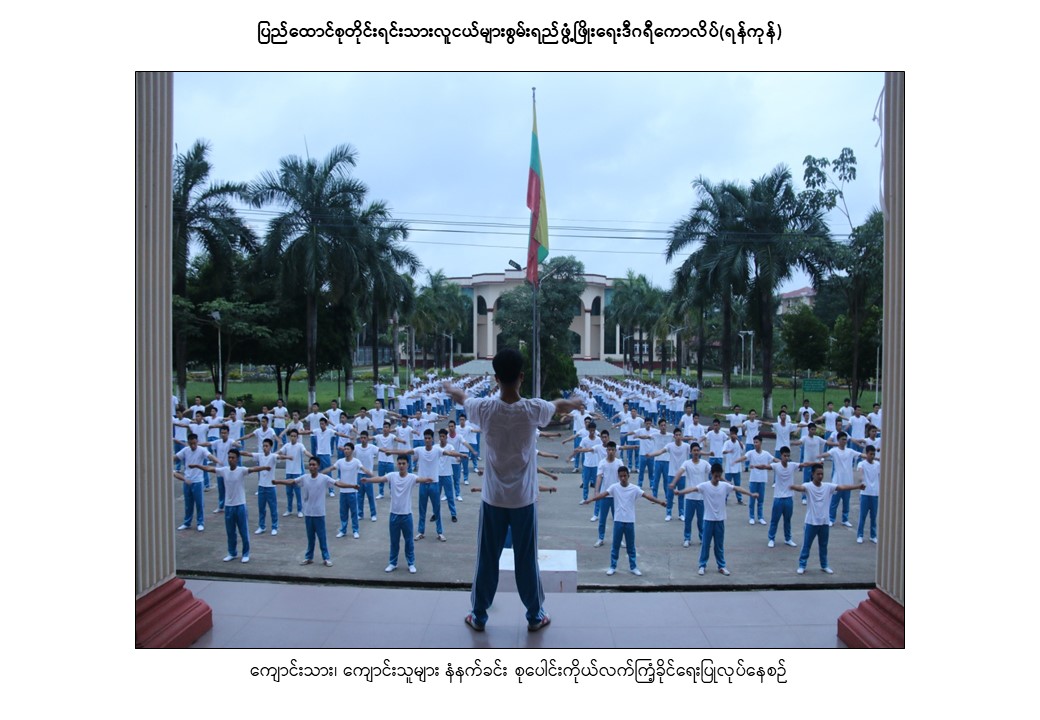
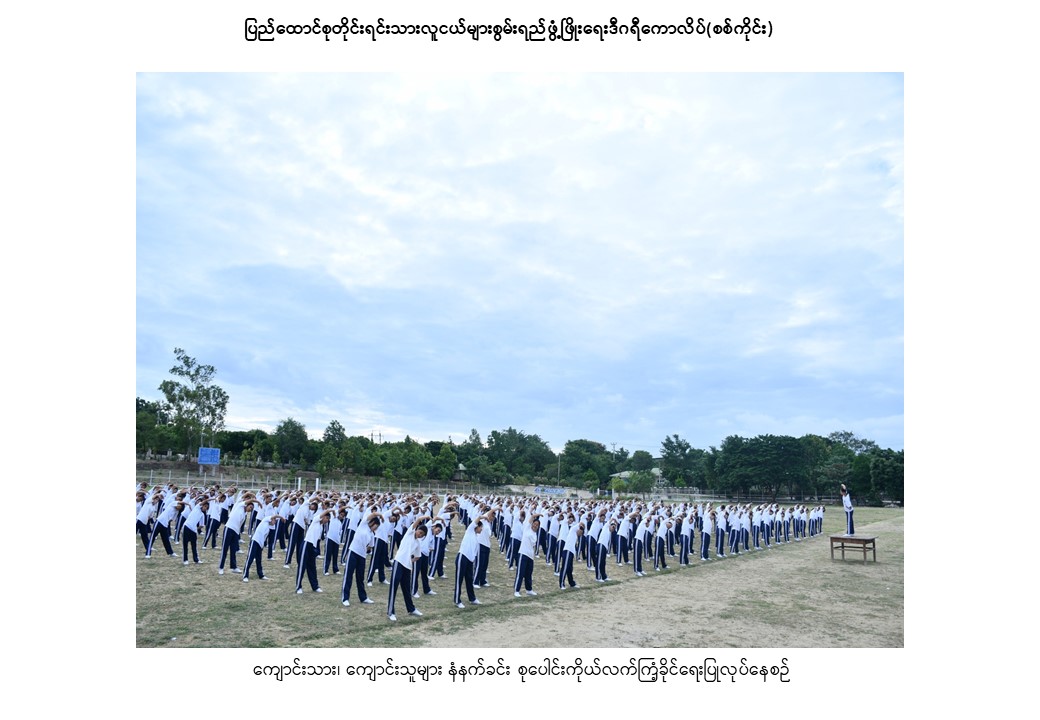
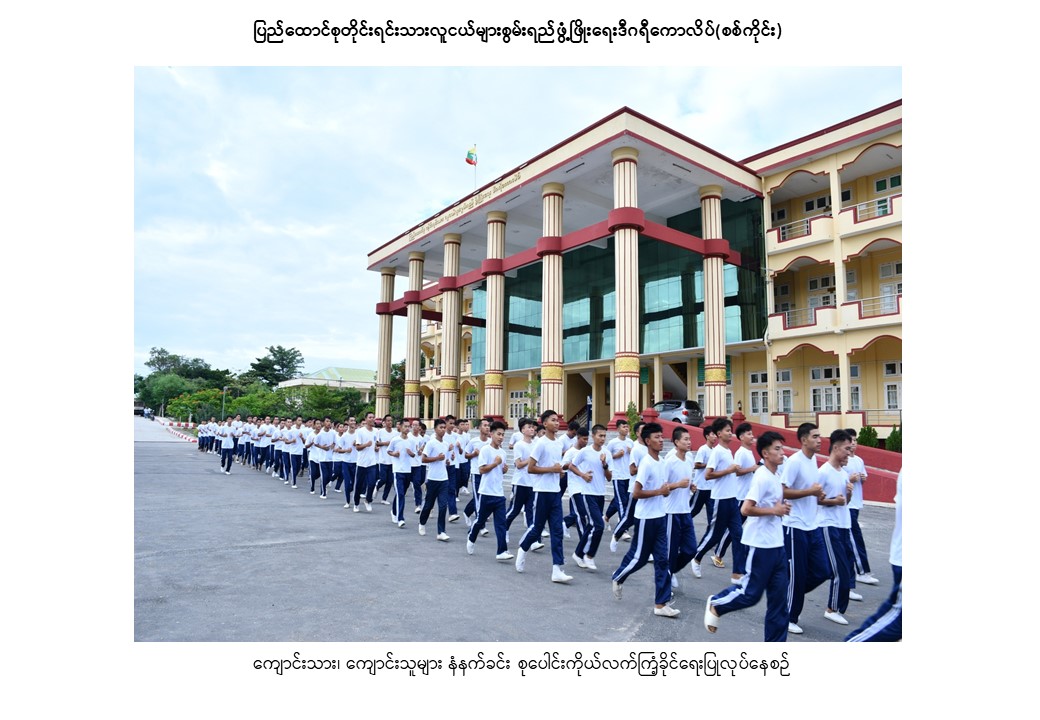
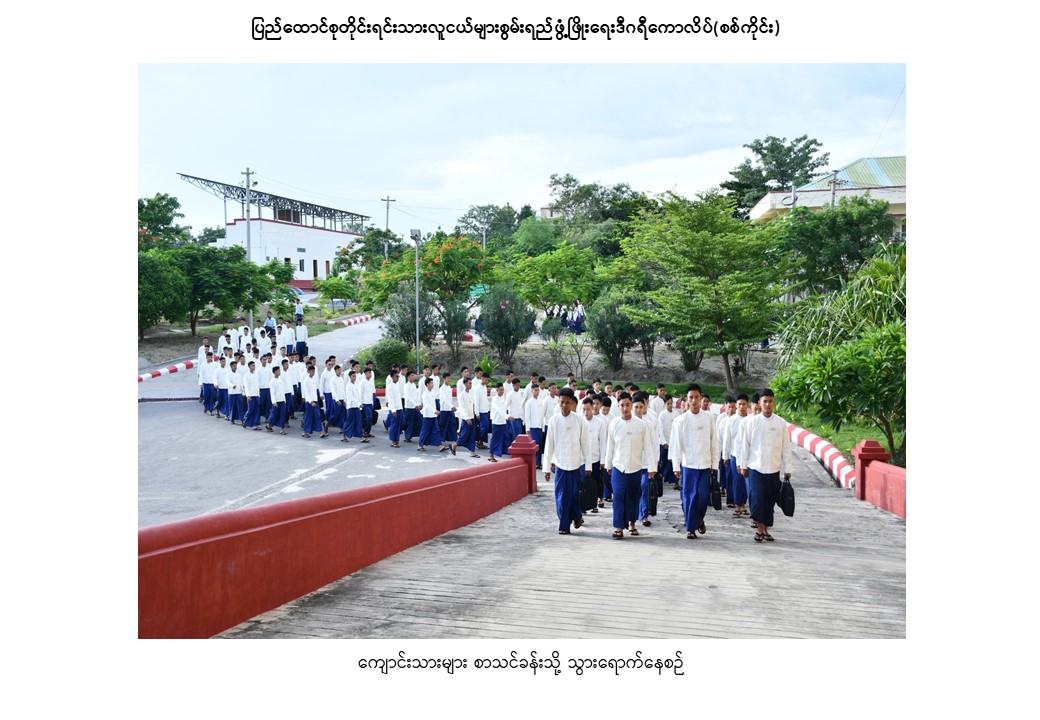
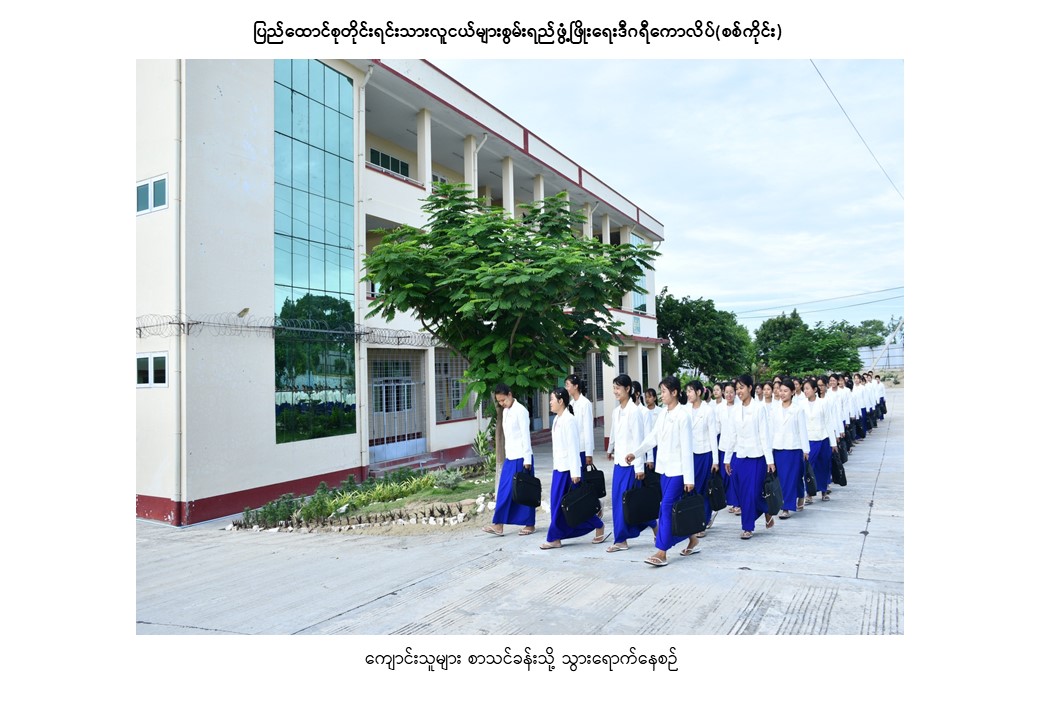
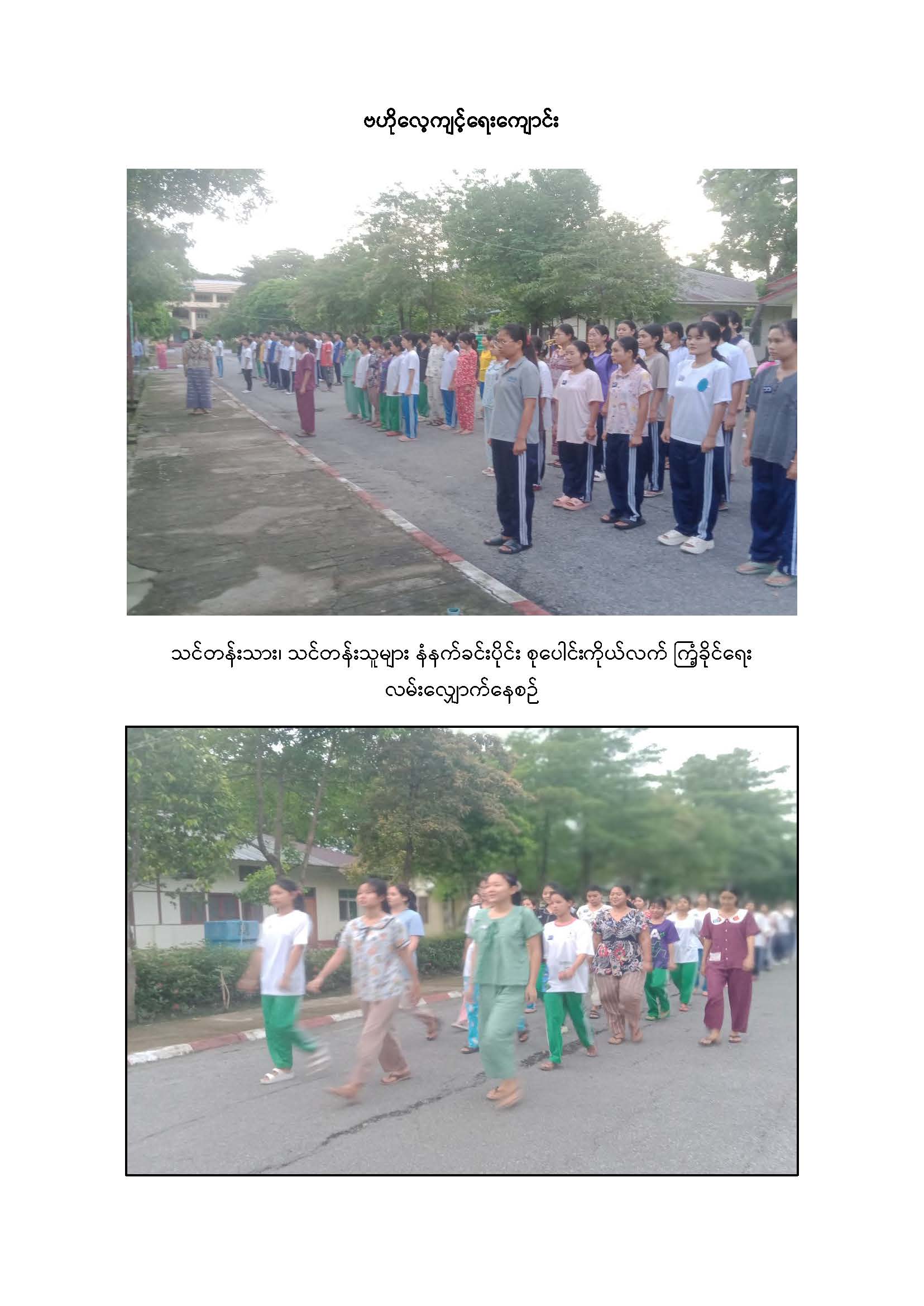
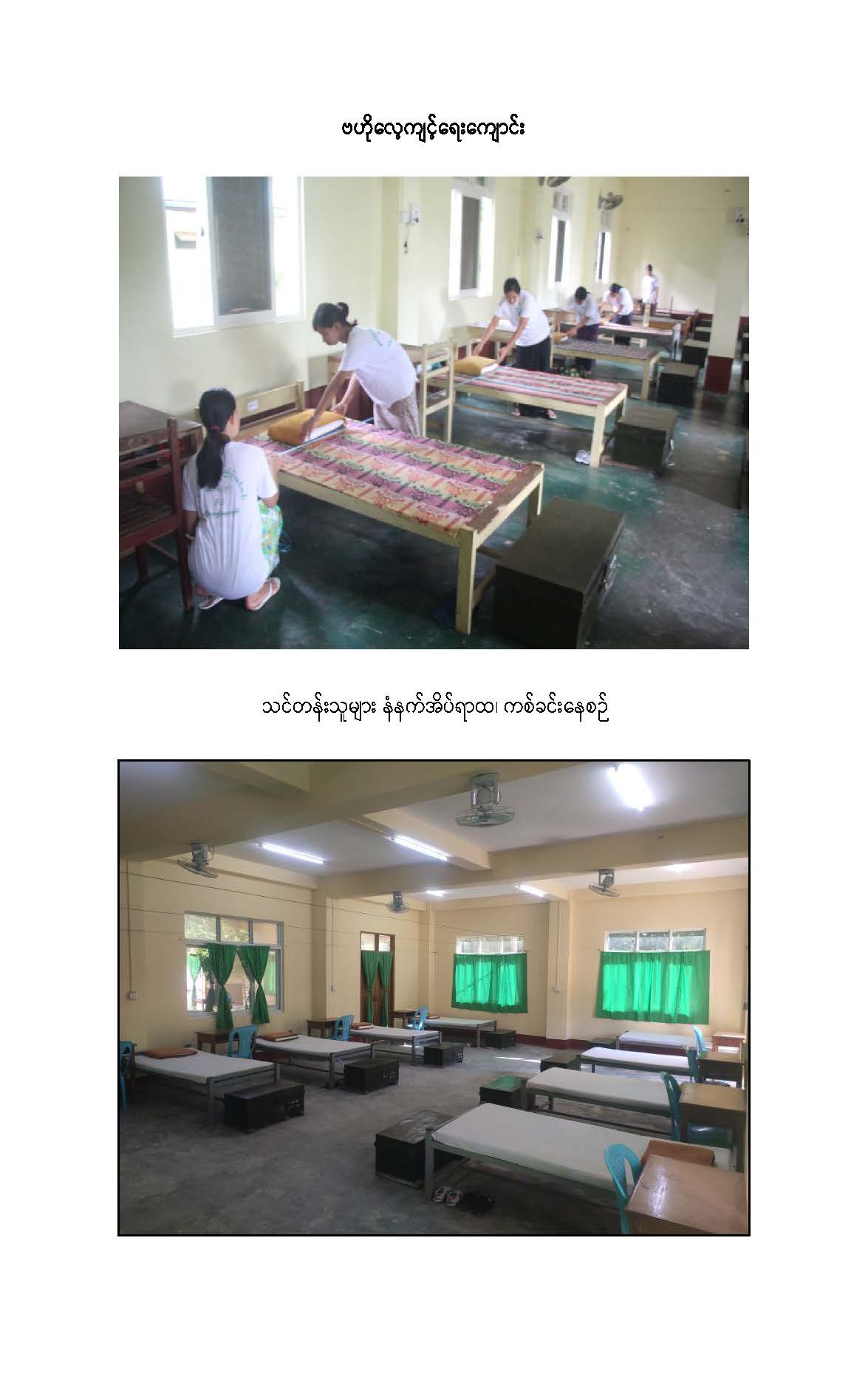
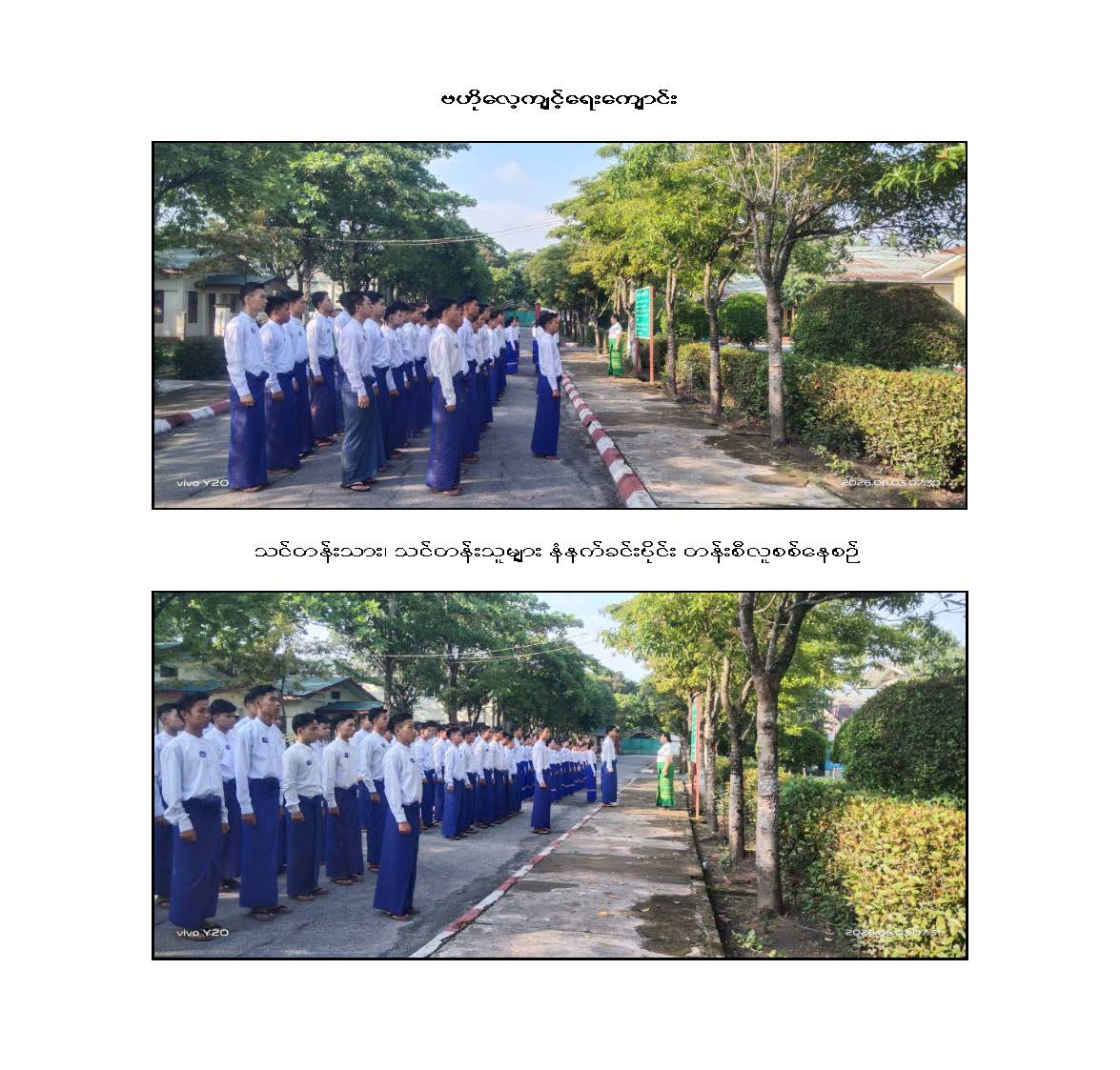
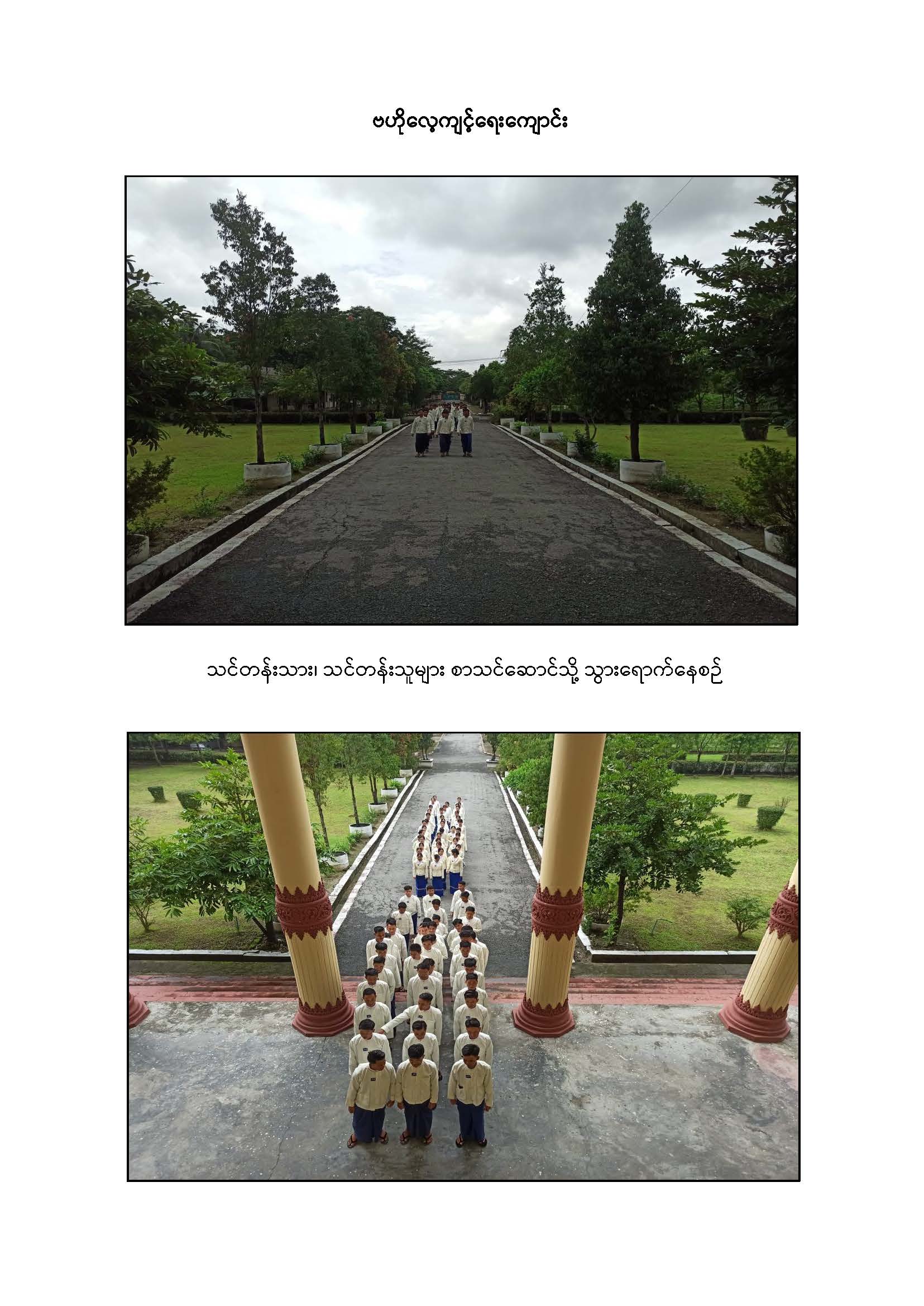
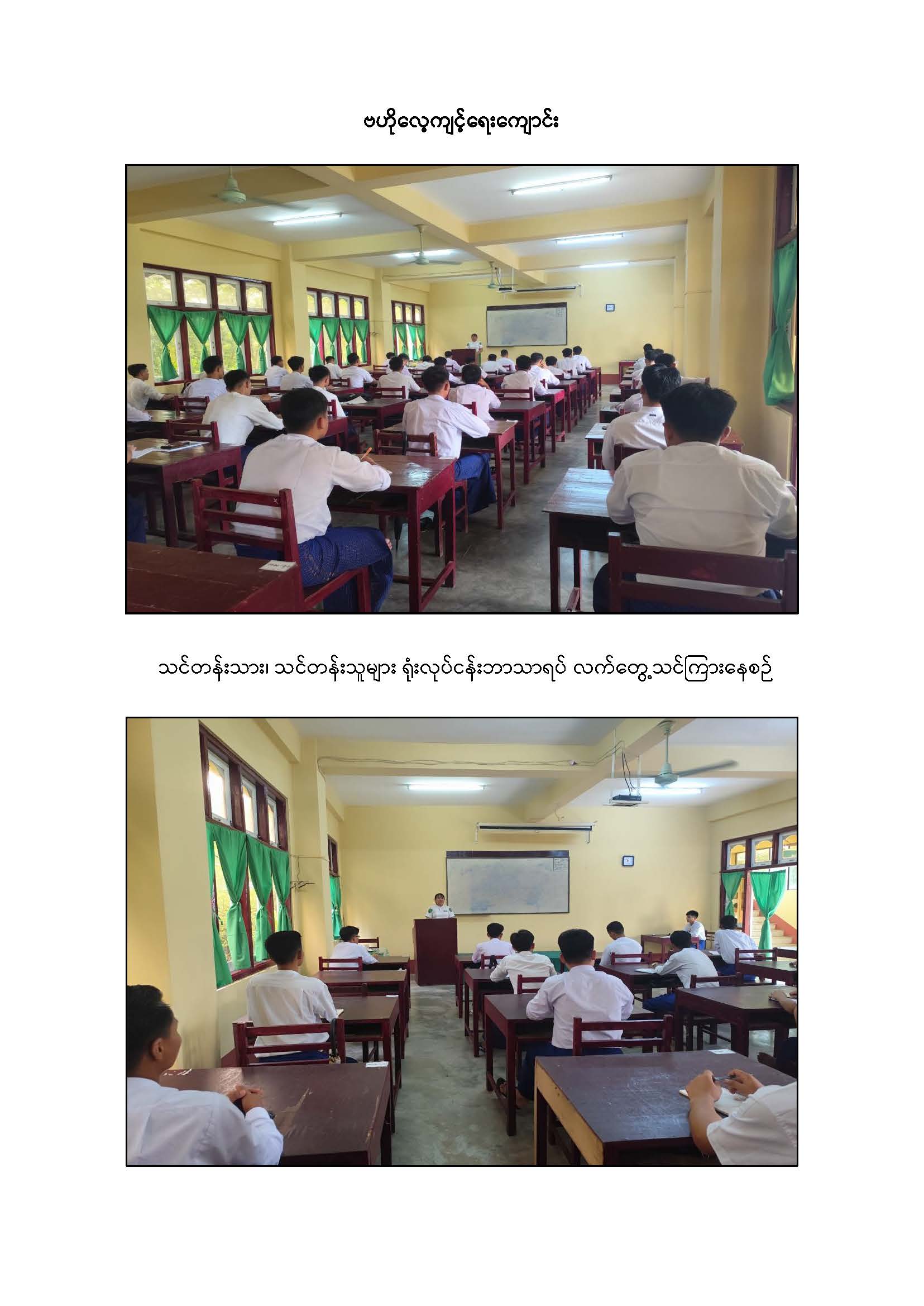
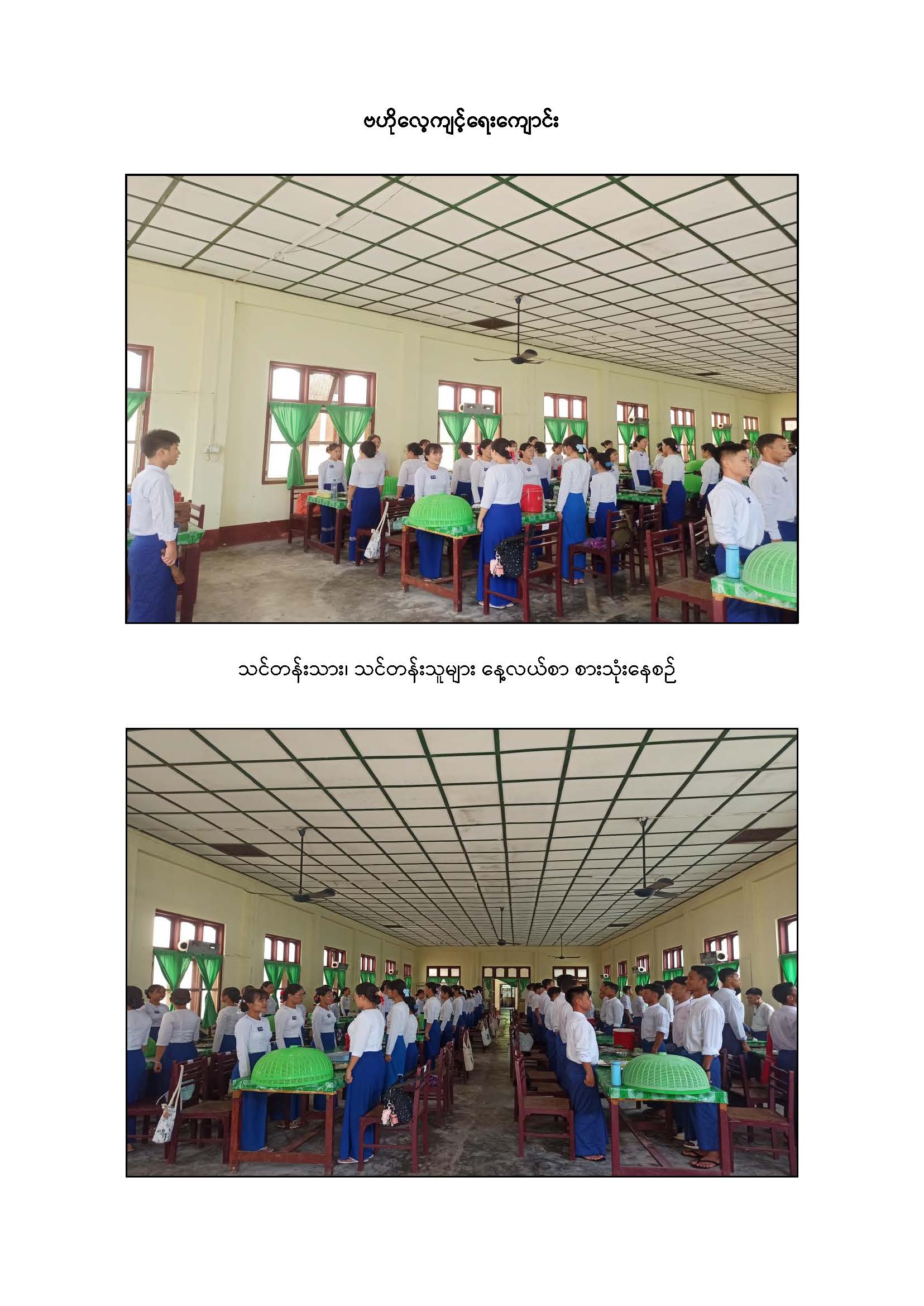
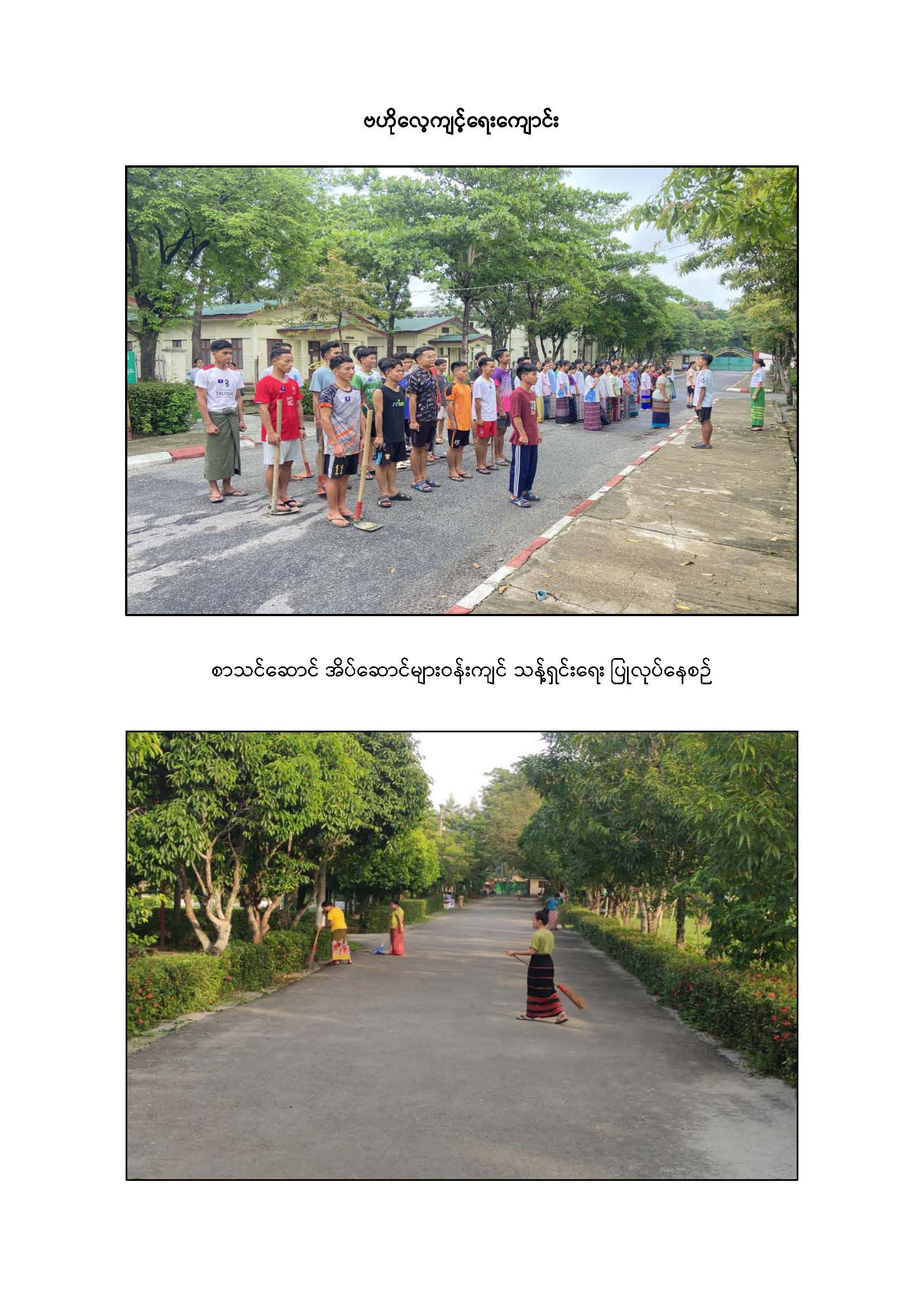
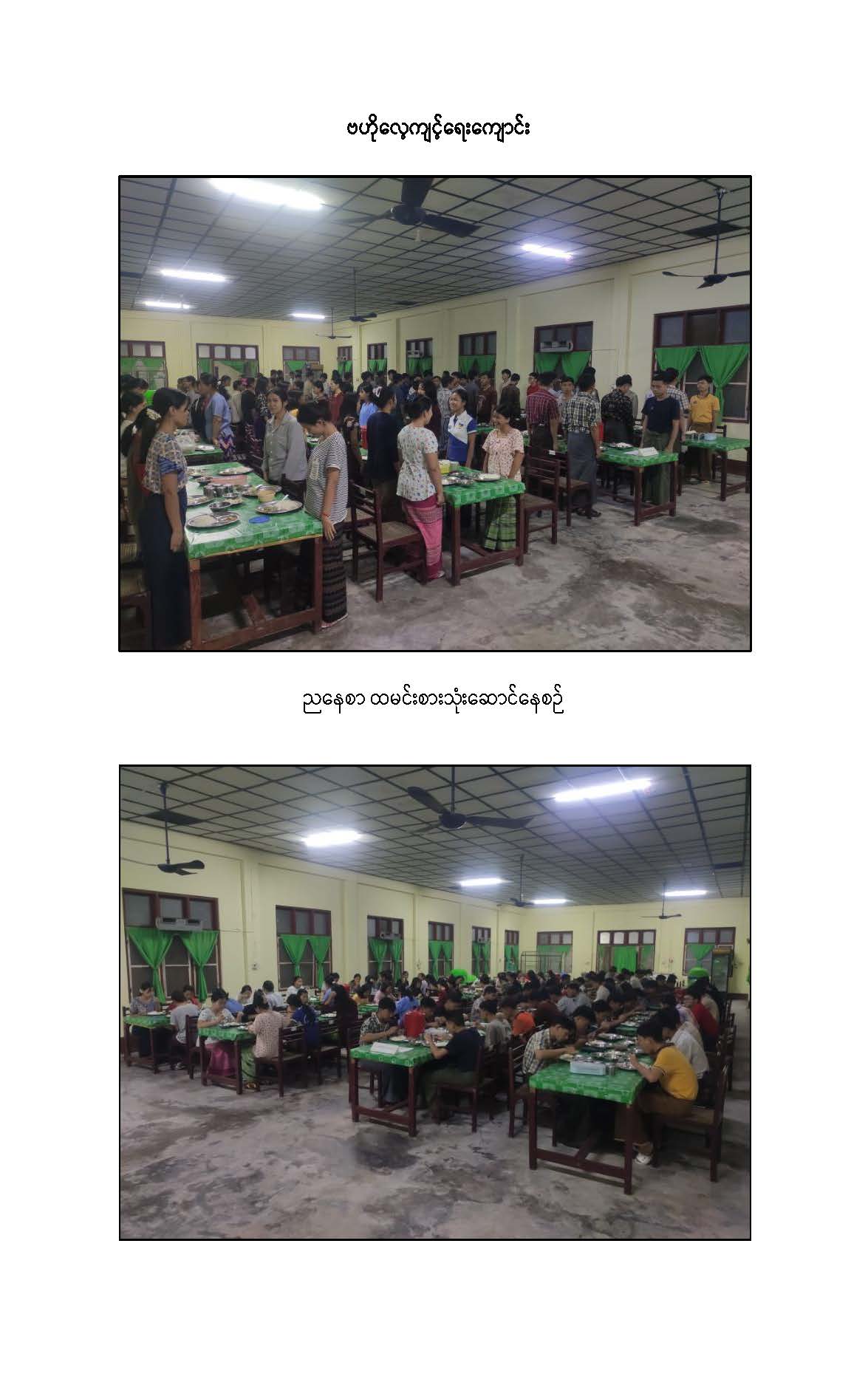
Daily Routines of the trainees
- 5 : 00 Am - Getting up Time
- 5 : 40 to 6 : 20 Am - Time for Freshen up
- 6 : 20 to 7 : 00 Am - Private time for Physical Exercises
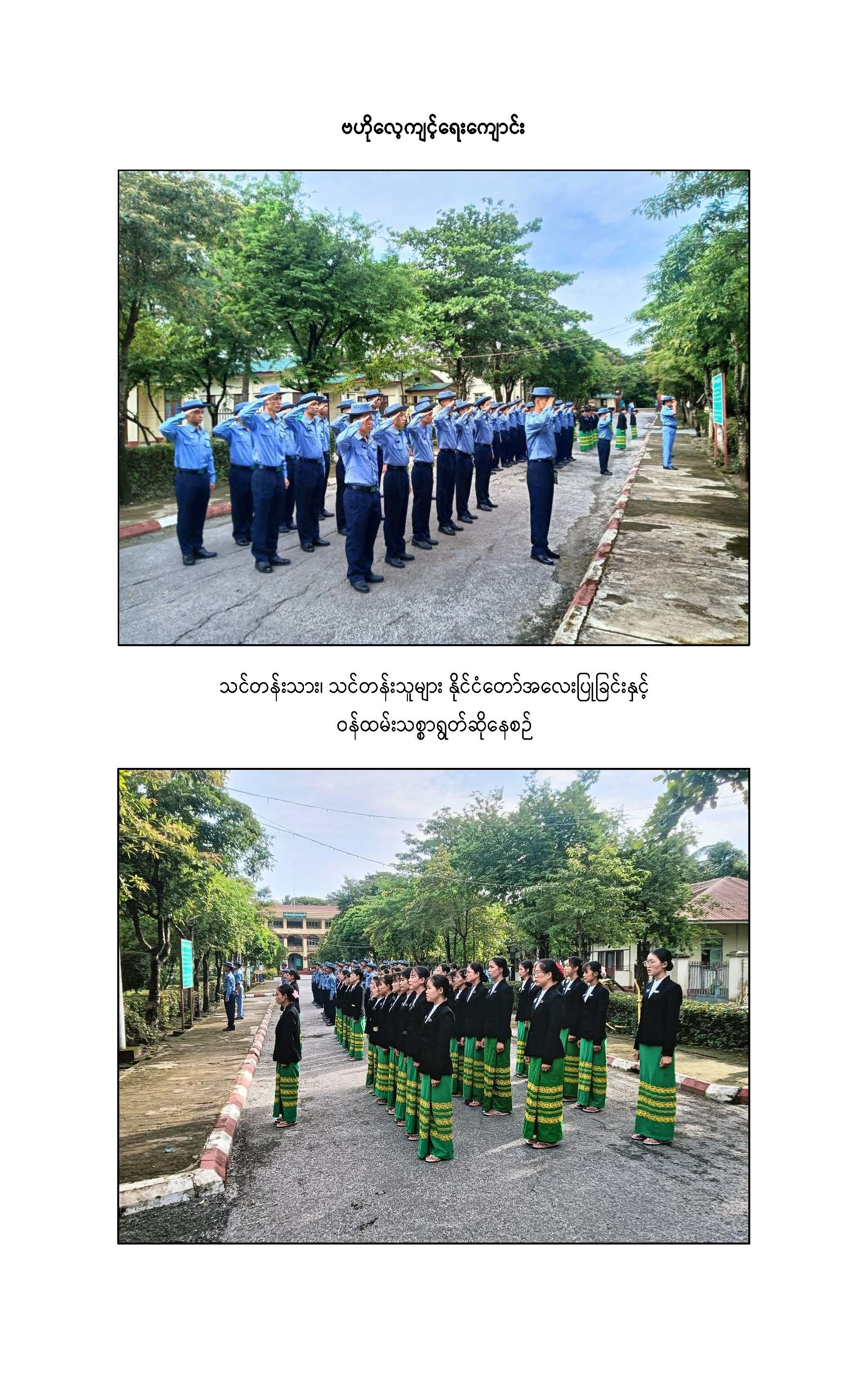
- 7 : 00 to 7 : 30 Am - Breakfast Time saying oath
- 7 : 30 to 8 : 00 Am - Preparation Time for Classess
- 8 : 00 to 11 : 30 Am - Morning Classes
- 11 : 30 to 12 : 30 pm - Lunch Time saying oath
- 12 : 30 to 15 : 10 pm - Afternoon Classes
- 15 : 10 to 16 : 00 pm - Private time
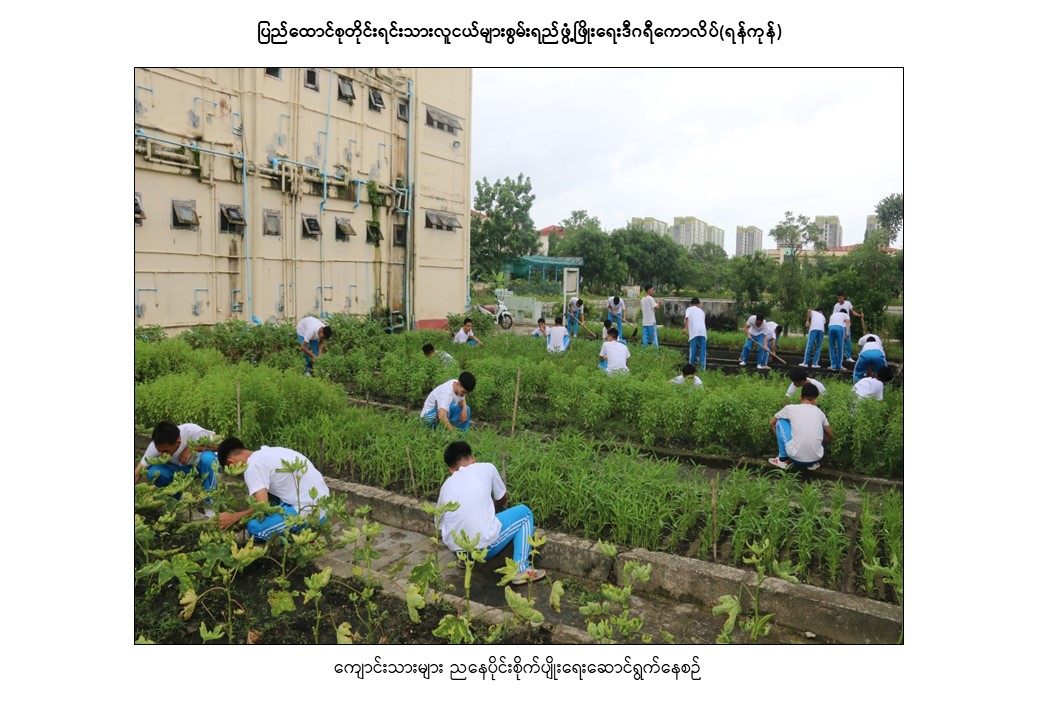
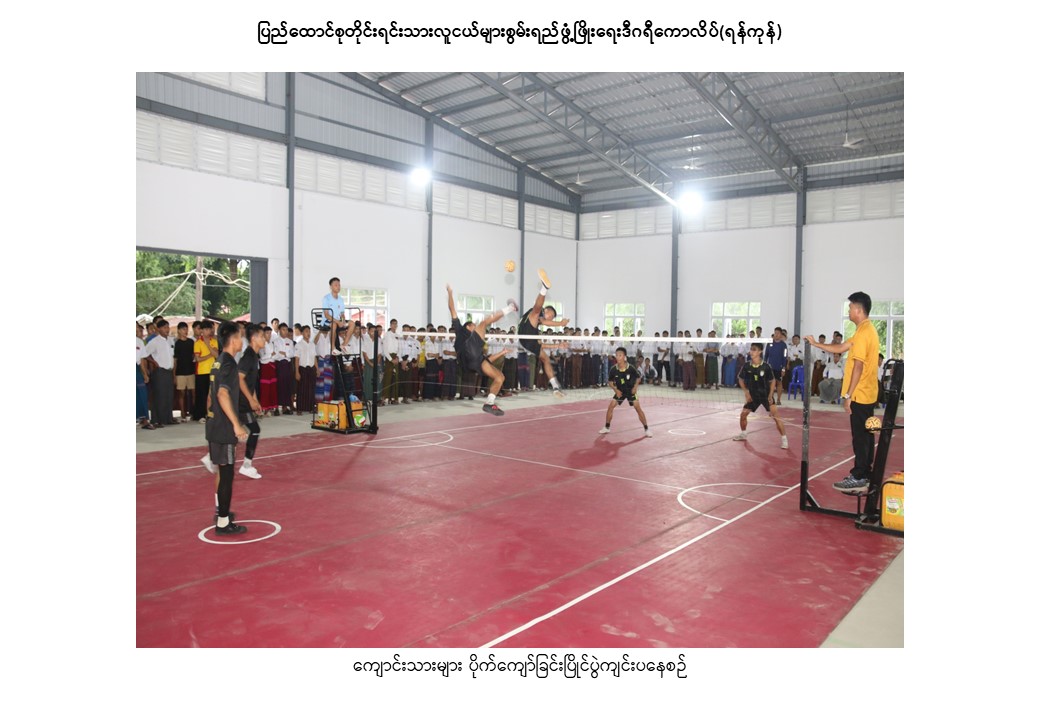
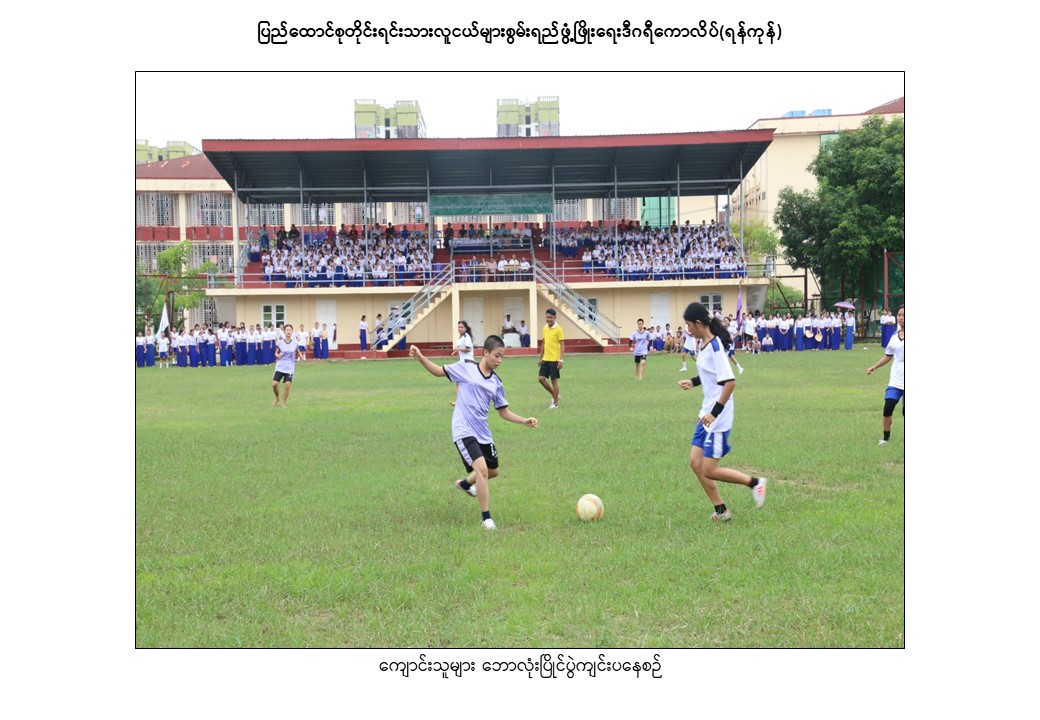
- 16 : 00 to 17 : 00 pm - Time for fatigue (sports,cleaning,gardening)
- 17 : 00 to 18 : 00 pm - Private time / Shower time
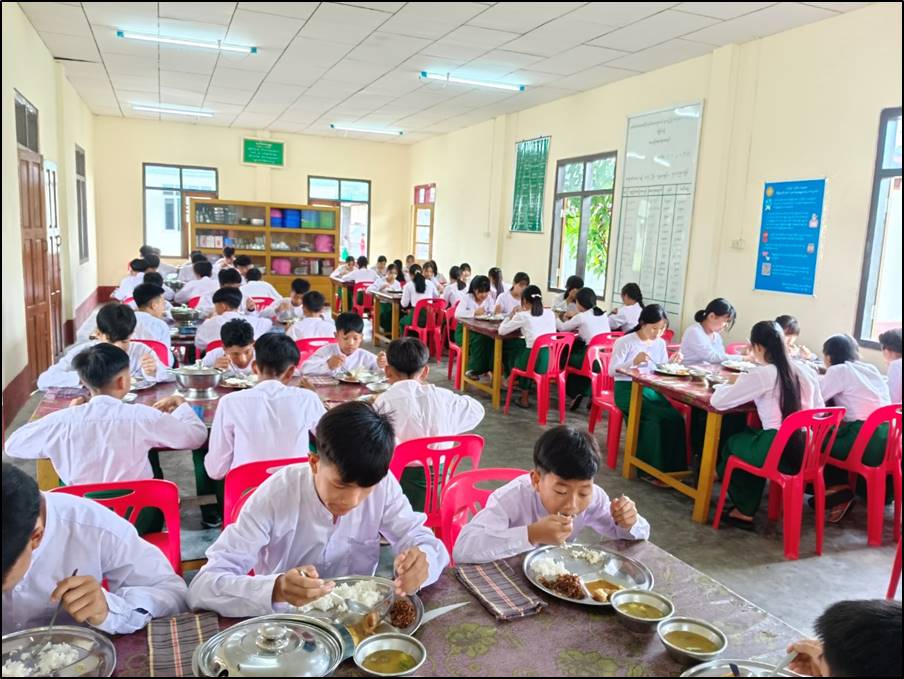
- 18 : 00 to 18 : 30 pm - Dinner Time saying oath
- 18 : 30 to 19 : 00 pm - Preparation Time for night study
- 19 : 00 to 21 : 00 pm - Night Study Time
- 21 : 00 to 22 : 00 pm - Time for assembly, taking attendance
- 22 : 00 pm - Bed Time
University for the Development of the National Races of the Union
Subsides for Each Trainee
-
-
-
- Provides Food Expenses
-
-
|
1. |
Rice |
- |
2.25 lames |
|
2. |
Oil |
- |
2.25 ticals |
|
3. |
Pea |
- |
5 ticals |
|
4. |
Salt |
- |
0.5 ticals |
|
5. |
Fresh Food (par day) |
- |
750 kyats |
|
6. |
Healthy meal |
- |
2000 kyats |
-
-
-
- Provides Clothing
-
-
|
1. |
Myanmar Jacket for men/ Safari |
- |
1 |
|
2. |
Paso/ Longyi |
- |
2 |
|
3. |
White shirt/ Myanmar jacket with an overlapping flap in front (long sleeve) |
- |
1 |
|
4. |
Slippers |
- |
1 |
|
5. |
T-shirt |
- |
2 |
|
6. |
Sportswear |
- |
1 |
|
7. |
Canvas shoes |
- |
1 |
|
8. |
Socks |
- |
1 |
|
9. |
hand bag |
- |
1 |
-
-
-
- Bedding Supplies
-
-
|
1. |
Mosquito net |
- |
1 |
|
2. |
Pillow |
- |
1 |
|
3. |
Pillowcase |
- |
1 |
|
4. |
Mattress |
- |
1 |
|
5. |
White Sheet |
- |
1 |
|
6. |
Blanket |
- |
1 |
|
7. |
Cotton quilt |
- |
1 |
|
8. |
Towel |
- |
1 |
-
-
-
- Provision of text book and stationaries
-
-
|
1. |
Pencils case |
- |
1 piece |
|
2. |
exercise book |
- |
6 dozens |
|
3. |
Pen |
- |
1 dozen |
|
4. |
Pencil |
- |
6 pieces |
|
5. |
Ruler |
- |
2 pieces |
|
6. |
Tutorial book |
- |
1 dozen |
- Stipend (1 month) – 3000 kyats
2025 – 2026 Academic Year
University for the Development of the National Races of the Union
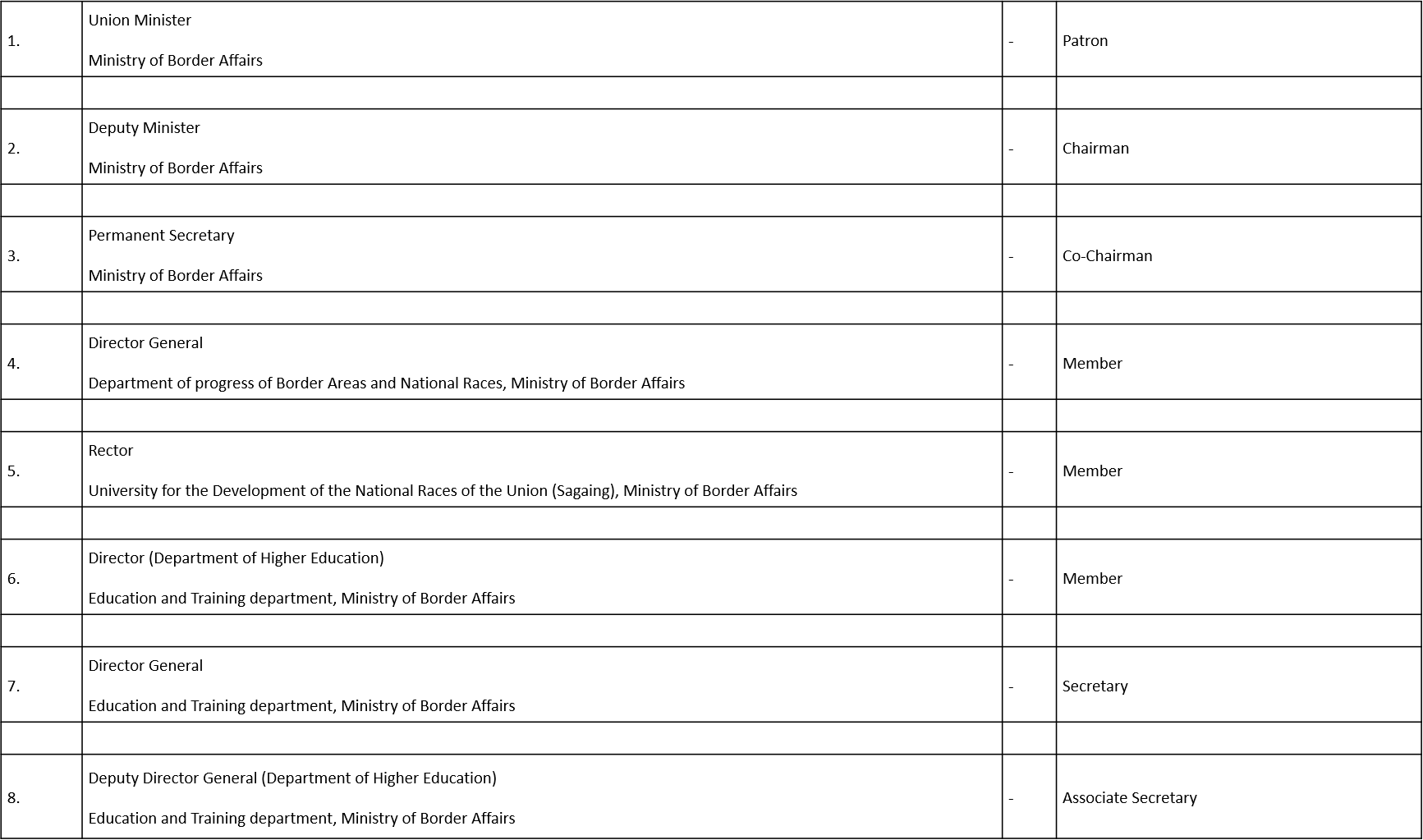
Central Committee for Selection of trainees
2025 – 2026 Academic Year
University for the Development of the National Races of the Union
General Eligibility of Selection of Five-Year BEd Degree trainees
The applicants must have the following general eligibility:
- Be a Citizen born by national Parents from the Republic of the Union of Myanmar
- Be a Person who is loyal to the Republic of the Union of Myanmar
- Be a Person who follows the "Our Three Main Courses," who keeps alive the human resource development of the nationalities with love, and who has mutual-understanding and mutely respect among nationalities
- Only applicant who passed the University Entrance Examination held in 2025 and 2026 will be considered for admission, subject to the following criteria-
- The applicants who get 370 marks and above for science Course, and who get 325 and above total marks for Arts course will be chosen
- The applicants who are eligible to apply by the recommendation of represented Naypyidaw Council region, Regions/ States and self-Administrative Regions, States and self-Administrative Regions, and who pass the entrance examinations. (written & Oral)
- The applicants who pass the entrance exams from Training school for Development of Nationalities Youth from Border Areas authorized by Education and Training Department, Ministry of Border Affairs.
- The trainees (selected and reserve) chosen by Naypyidaw Council region, Regions/ States and self-Administrative Regions MUST be interested in the course and Must have the desire to attend in the course and MUST have the desire to attend the university aster they pass the medical test. The related Regions States and self-Administrative. Regions have to send the priority list of applicants to control committee of trainee’s selection. and it will be scrutinized and selected
- If the selected trainees fail the medical test, the substituted applicants will be chosen from the priority list within nor minted period (other reasons are not allowed)
- If the trainees give up attending the university or intend to move another University there will be no chance to substitute for the resigned trainees (In order to save the trainees who have great intention to attend this university, the selection committee will give guarantee and select the trainees carefully)
- The students who have been selected to attend the first year course and are sent back after failing the medical examination will be required to re –apply as a fresher student without being allowed to return to the school directly.
- If you are not selected not as a trainee, you can apply to other universities and colleges to avoid any inconveniences.
- The applicants MUST take medical check-up (for yellow fever B/C, HIV, syphilis, tuberculosis, chronic disease and epidemic) in their related Health care centers of Regions, and States and self-Administrative Regions and bring the original medical certificate with them. (Without it, they must return) If the trainees are firstly selected by the Central Committee of trainee’s selection, they must take psycho-test and medical test conducted by the inspection team of the University The trainees are allowed to attend the University if they pass those tests (The result by the inspection team will be adopted) Only those who have received two doses of the COVID -19 vaccine will be selected.
- The trainee’s selection central committee take responsibility of trainee’s selection as special schedule. (The trainees will be thought to select if they pass the entrance exam)
- The applicants must be not over 21 years on 1th January 2027. Male trainees must be at least 5 feet and 2 inches high and above. Female trainees must be at least 5 feet height.
- Students should have a body weight appropriate for their height and maintain a suitable BMI.
- Only the applicants who can show the original national registration card (NRC) can get the form in their applying entrance and must show the copy of their NRC.
- The applicants and their parents must actually live in their related regions.
- The applicants must be free from party politics.
- The applicants must have good moral character. Morality recommendation got within one month related police station, or general administrators of township Quarter must be proved.
- The applicants must be healthy without diseases (chronic or contagious disease). The ones who are disabled, in articulate, have mental illness and falter are not selected. The applicants must have the manners of a teacher. They are not allowed to have tattoo on their body.
- If the selection committee finds out the applicants with tattoo and without strong desire to attend this university when the viva voce is on, they have to return and there will no substitution for them.
- The applicants must be unmarried singles.
- Tom boys or Tom girls are not allowed.
- The ones who are interested in social and developmental processes of their regions.
- The applicants must be the citizen of the union of Myanmar and must be able to speak one traditional language.
- The Matriculation certificate and the original marks report from Myanmar Government Evaluation or Education office must be proved.
- The applicants must promise to take responsibility of regional development at posted regional development at posted regions after they have graduated from the university.
- The applicants must sign a contract to be taken action if they fail to take the given responsibility from the Union and they must have the certificate of the respective township, Region/ State Government Organization.
- After graduation, the applicants must be able to understand that the appointment of staff in the state will be based on the level of outcome of the individual's efforts to obtain a degree according to the staffing requirements of the relevant ministry of education and the needs of the region / race.
- The central committee will select the one that meets the following criteria:
- Being the Locals from border area
- The applicant must be nationalities
- Being Orphan or motherless or fatherless
- Being the poor and who is interested to learn
- Being the ones who can serve for the region where they represent or everywhere if necessary
- The applicants from remote area where the teachers are urgently needed will be prioritized for the benefits of regional development.
Remark: The central committee will not select the ones who passed the matriculation exam from private high schools.
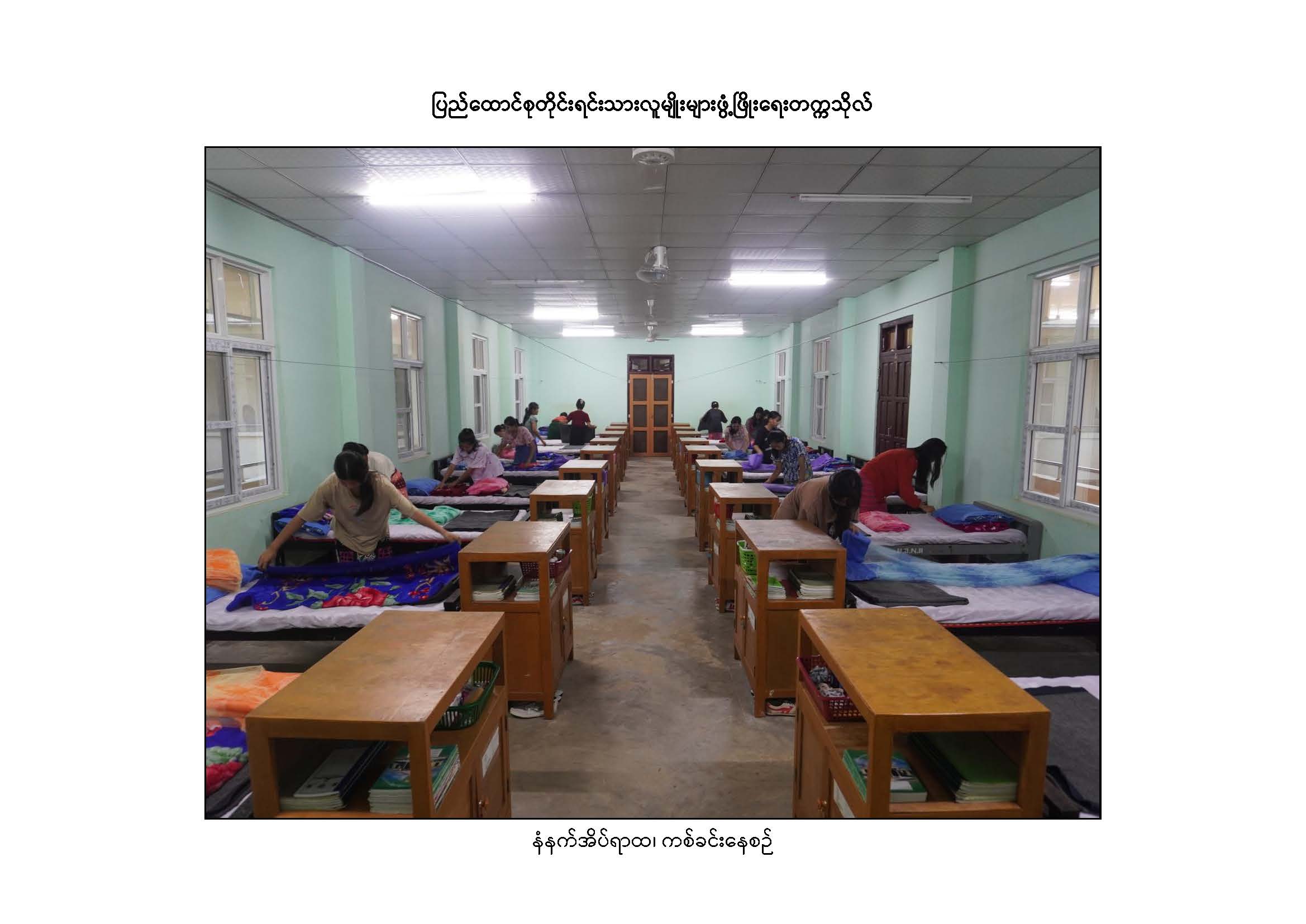
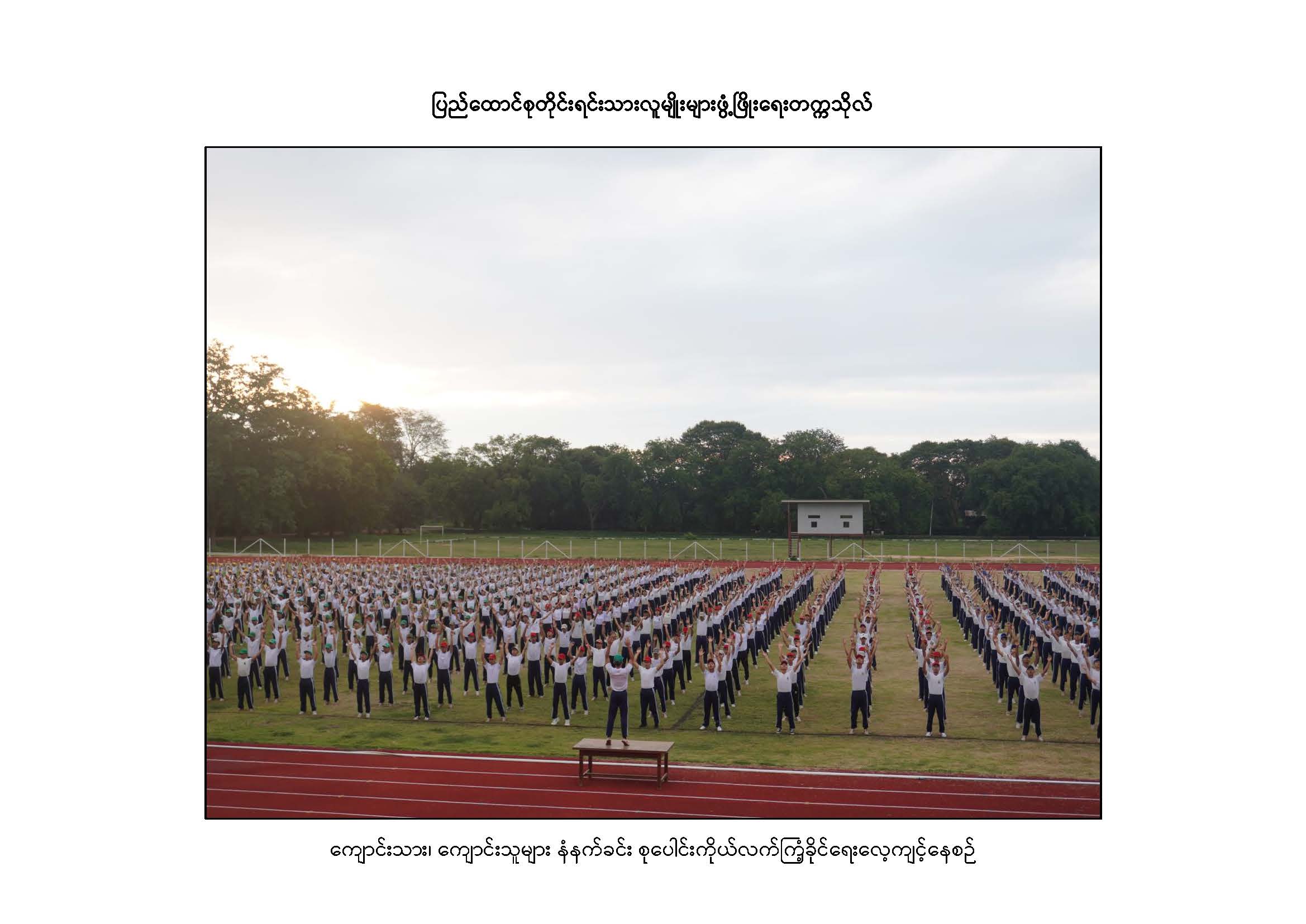
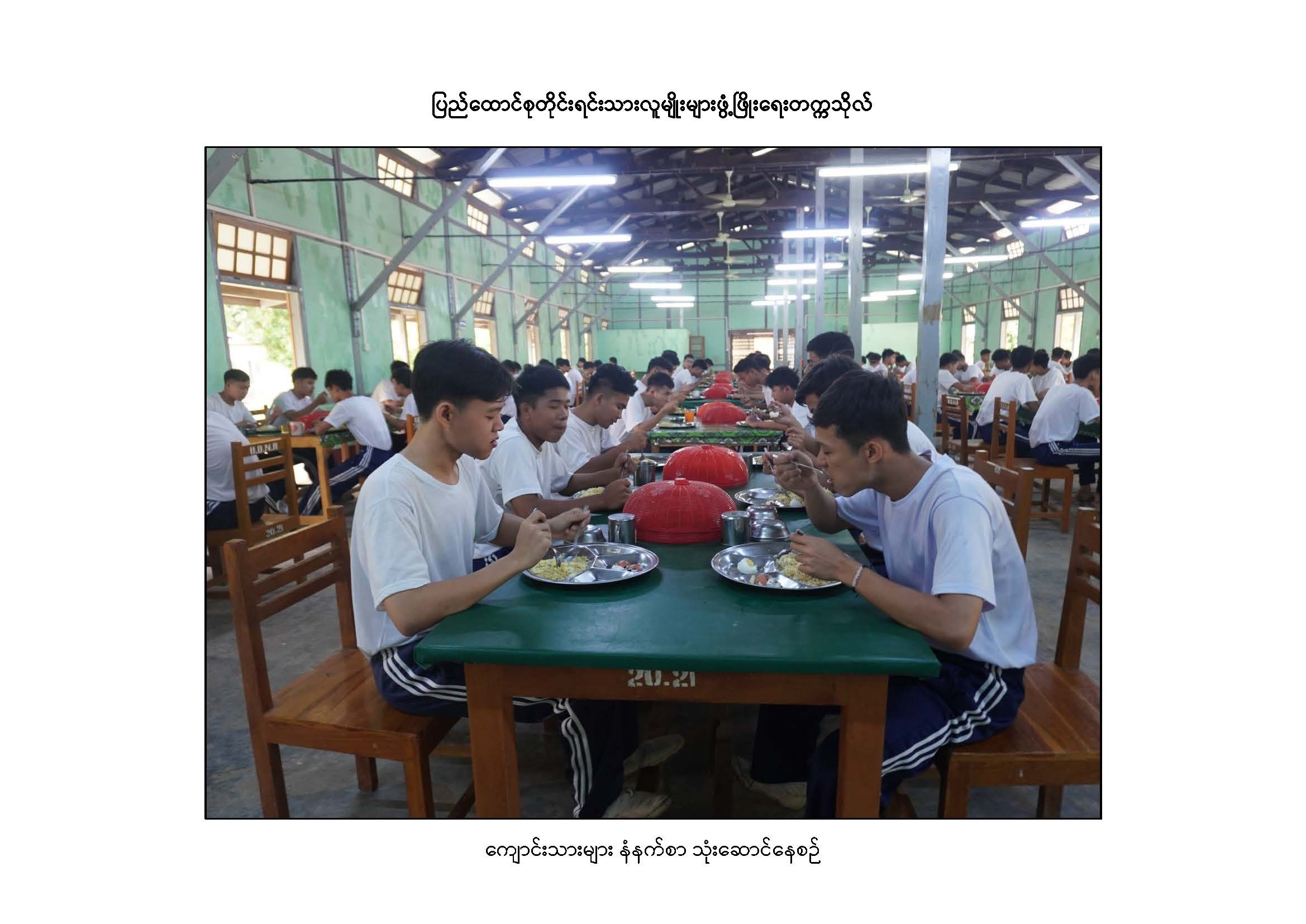
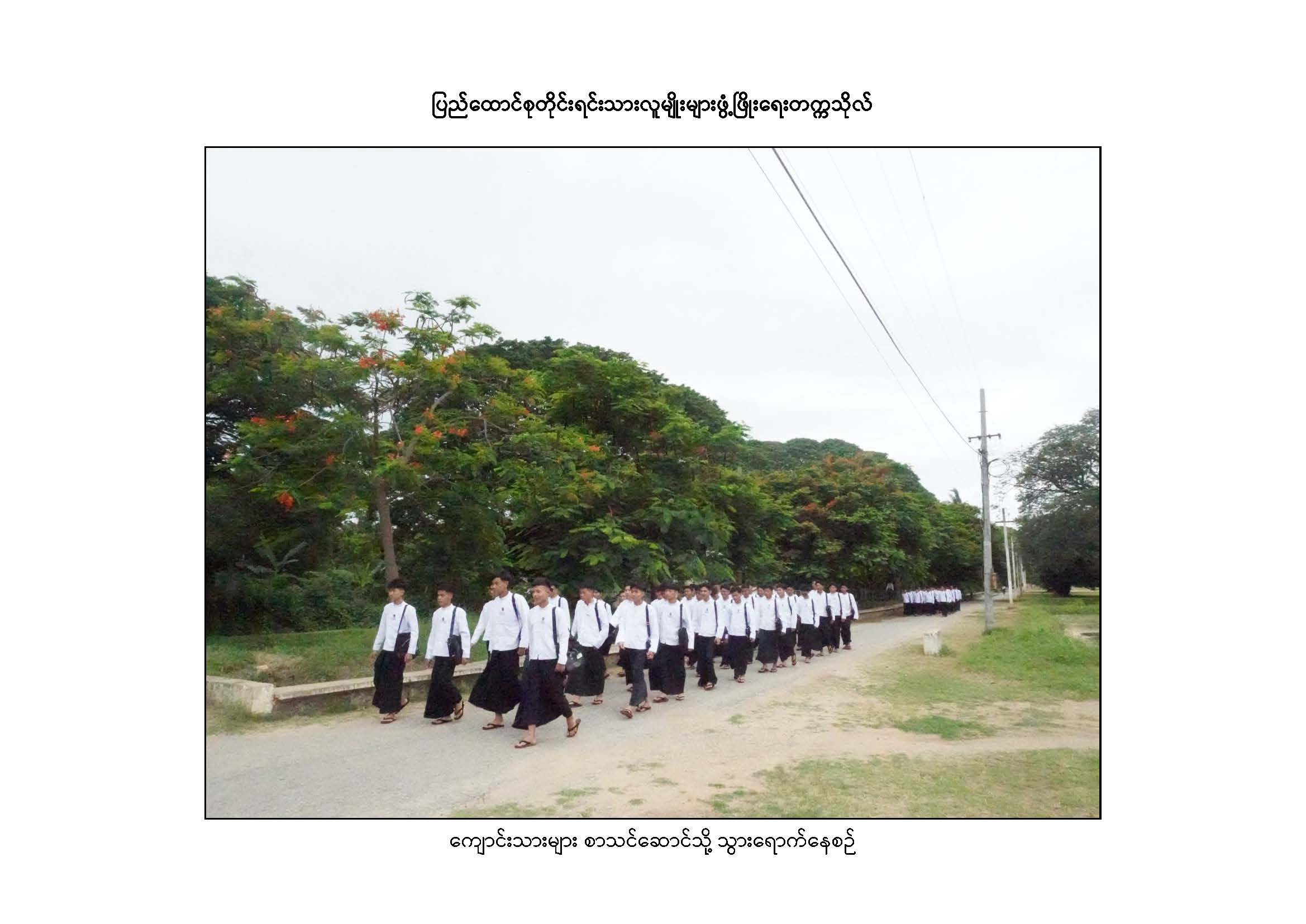
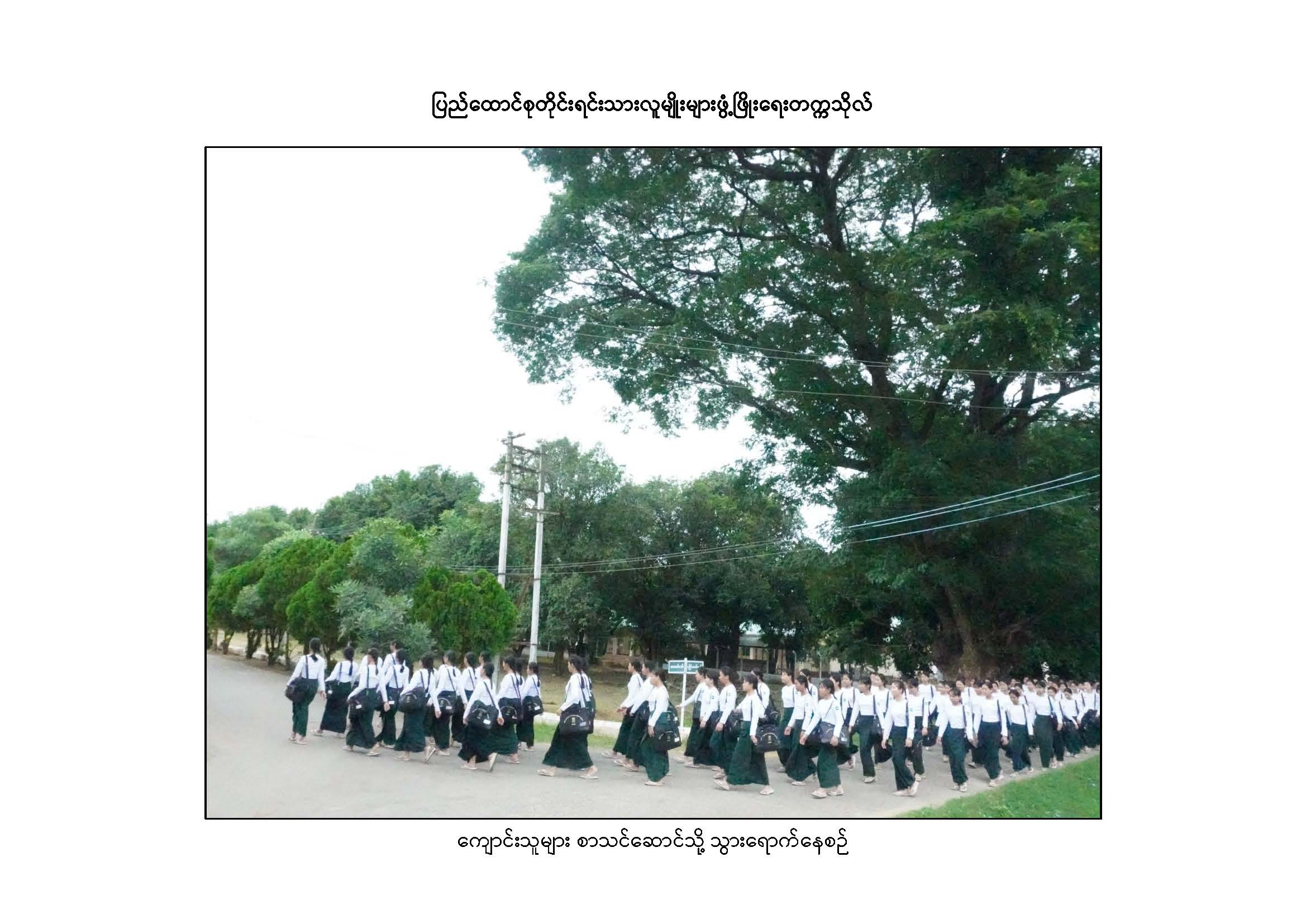
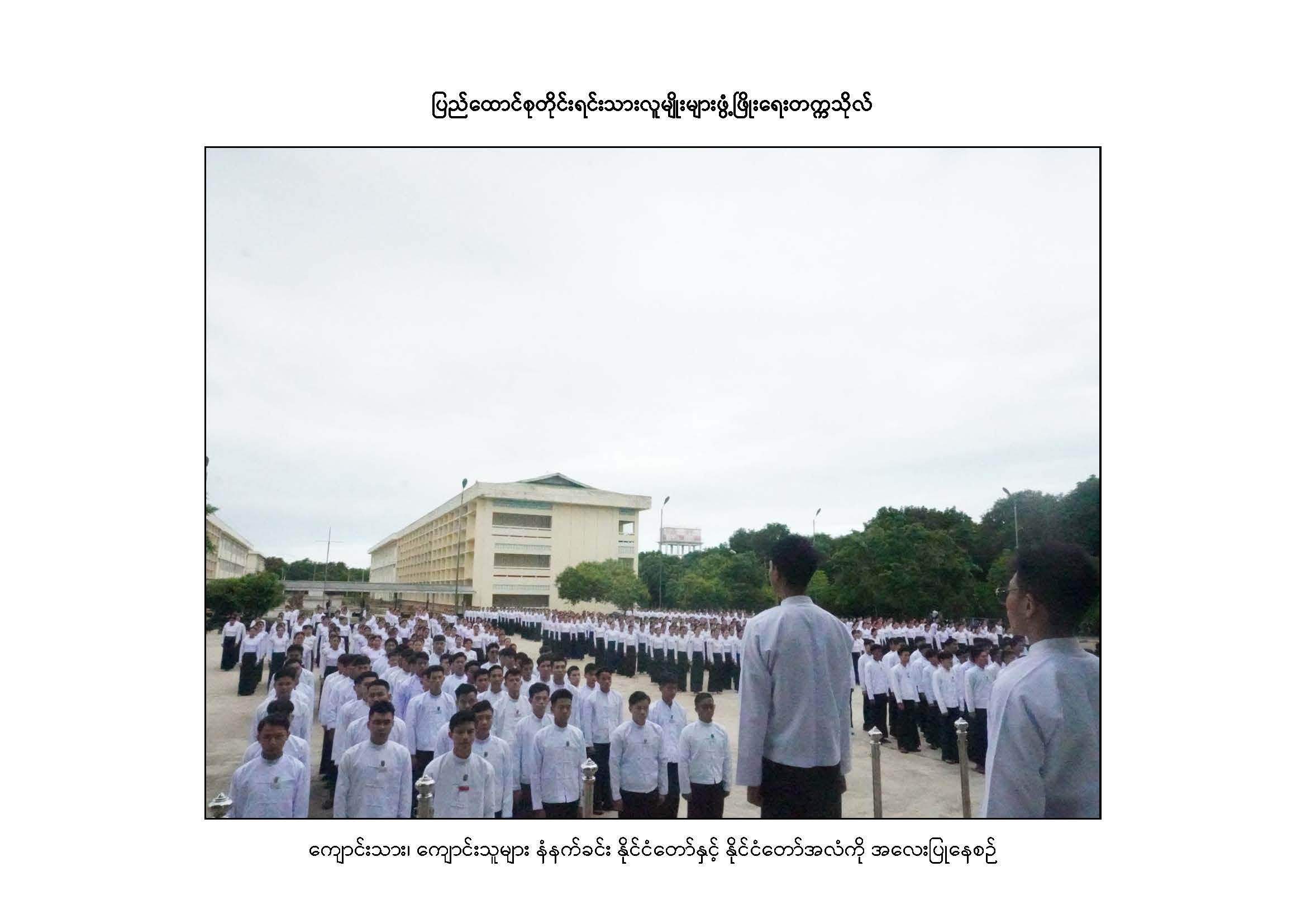
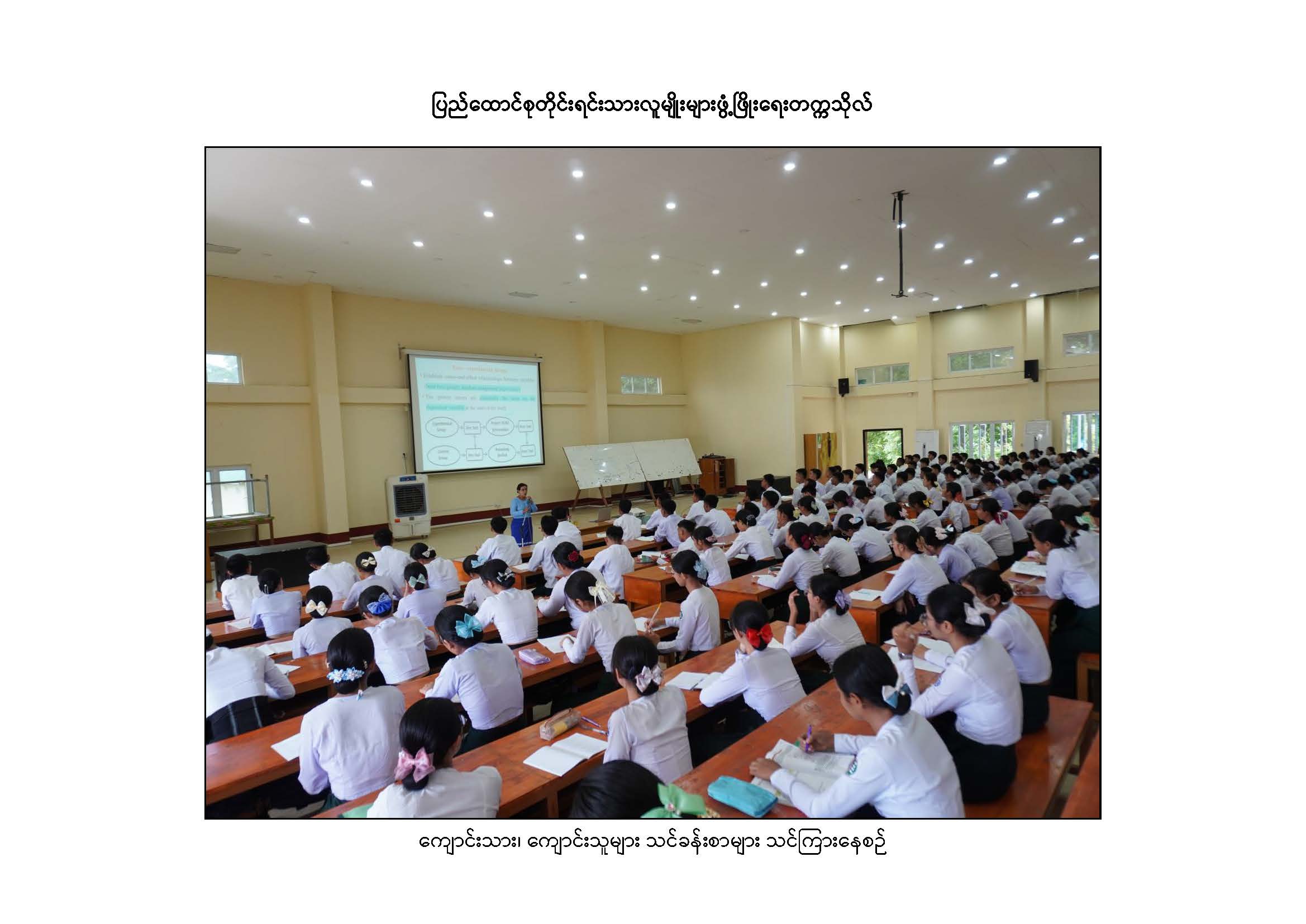
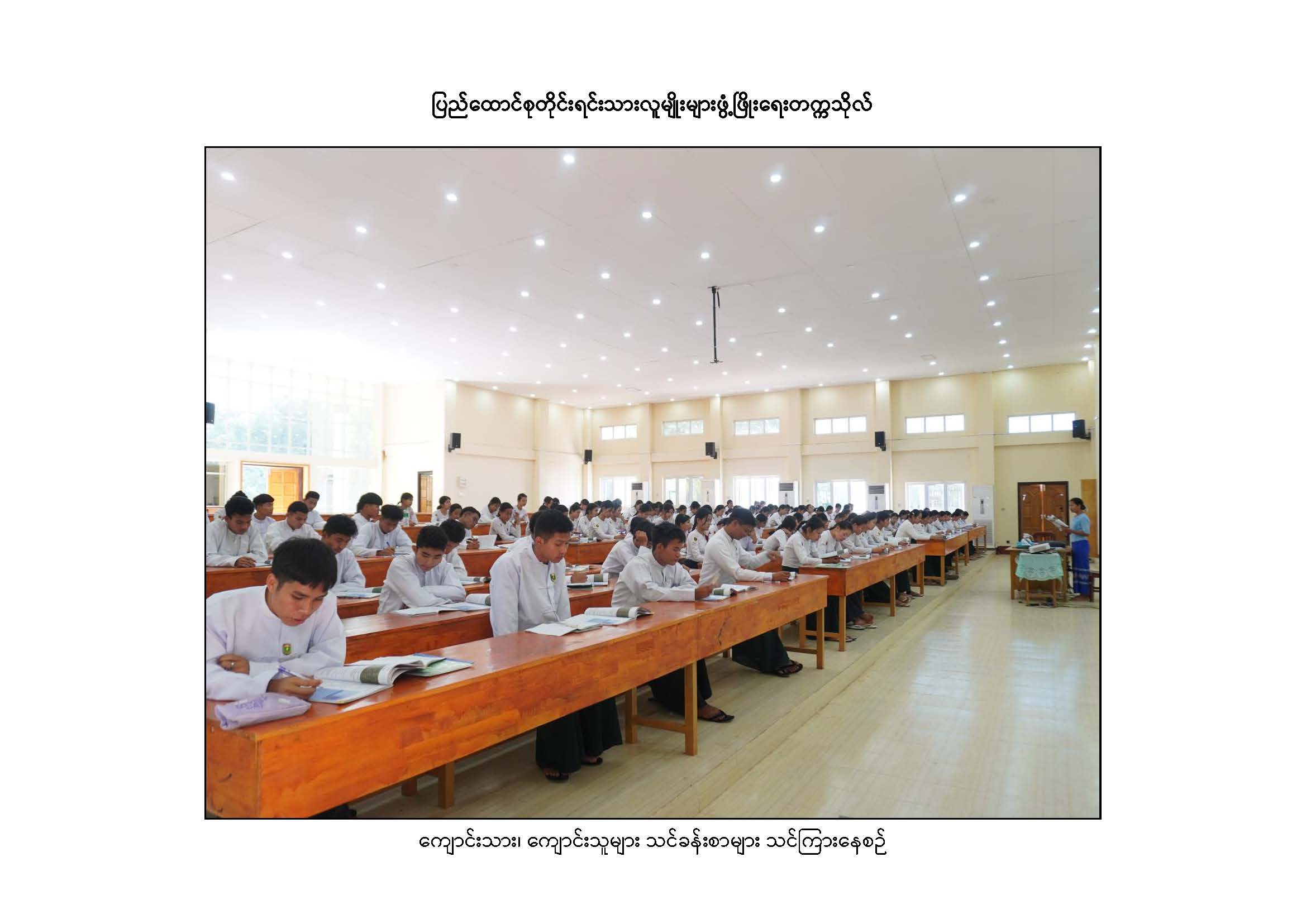
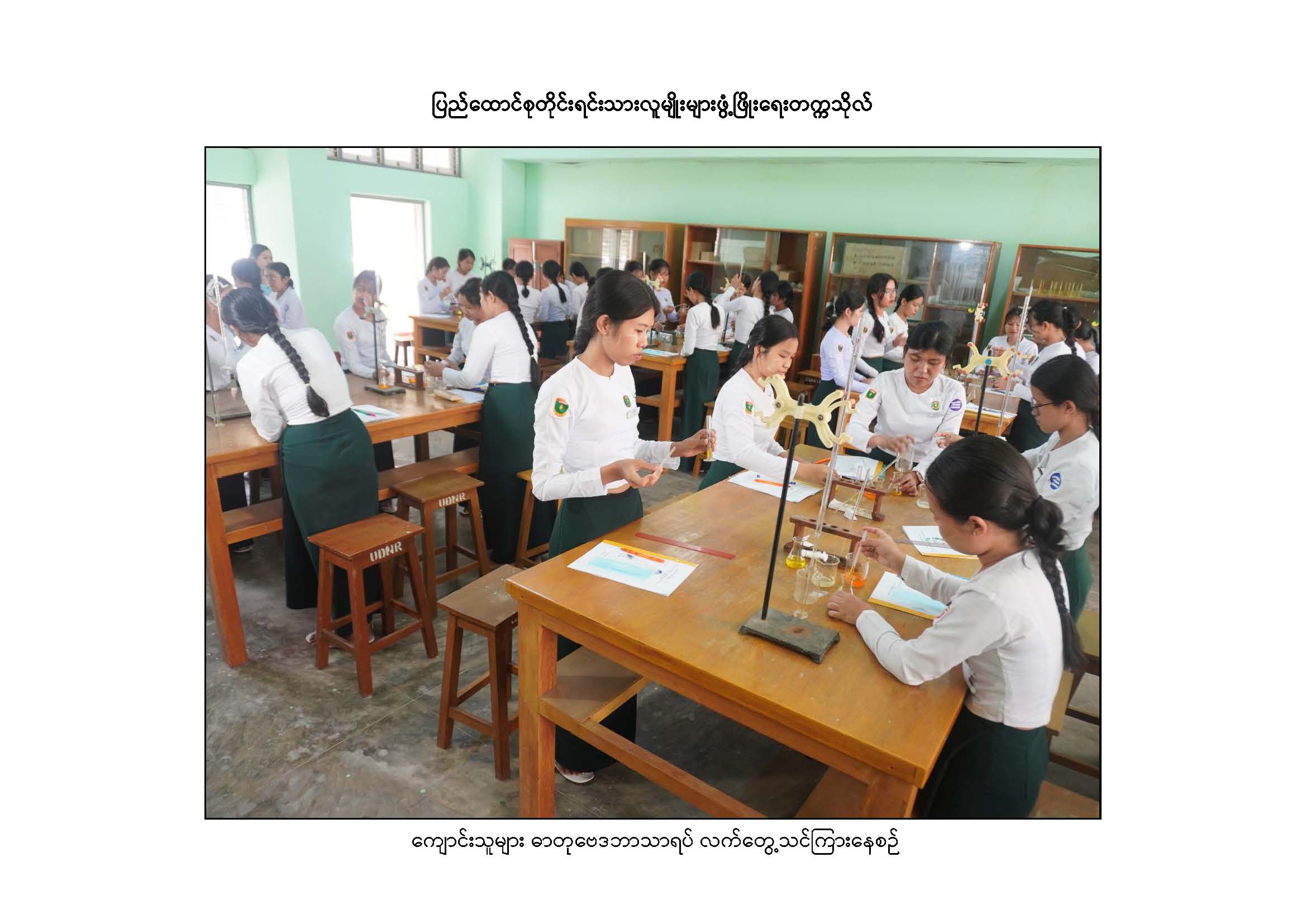
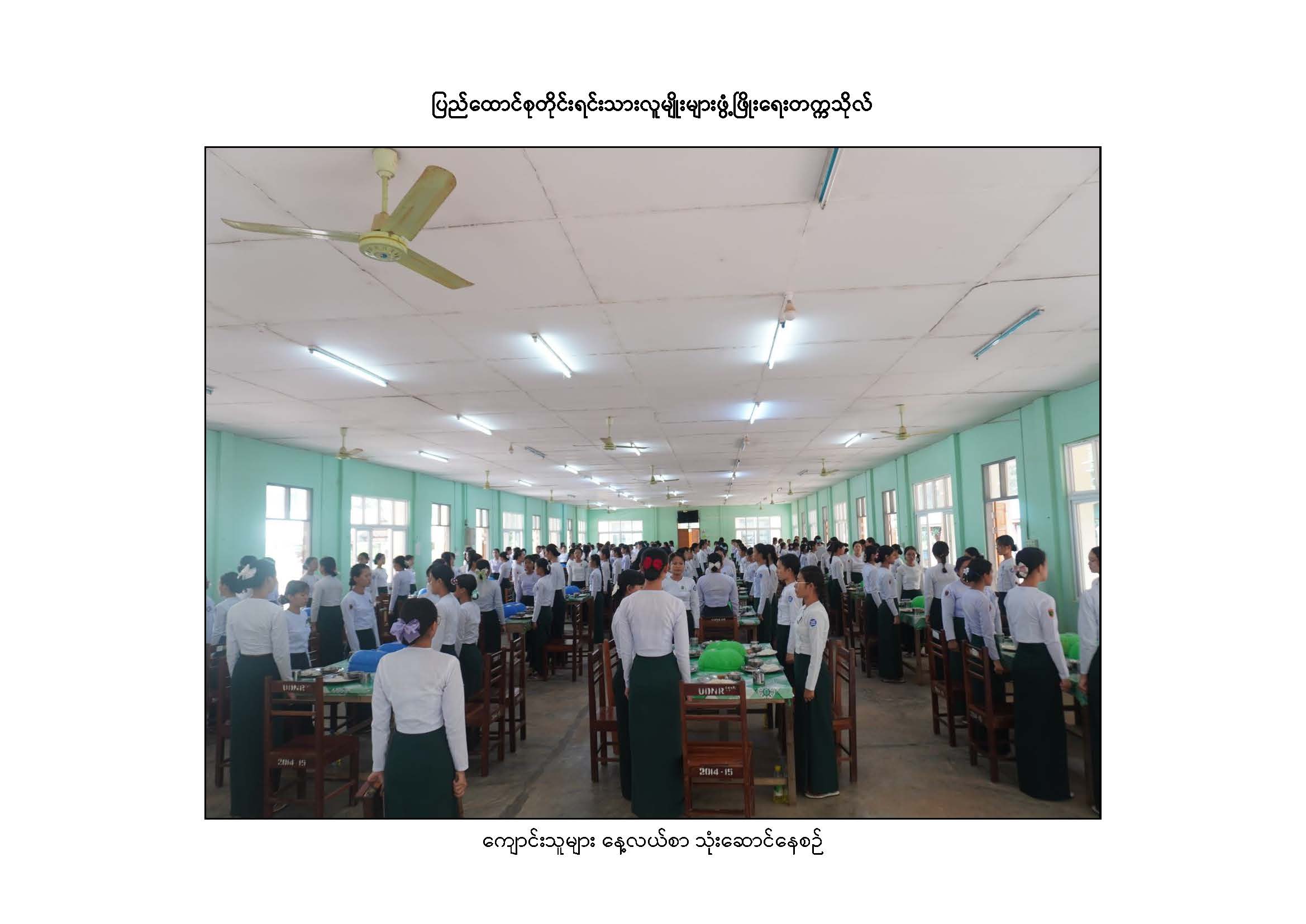
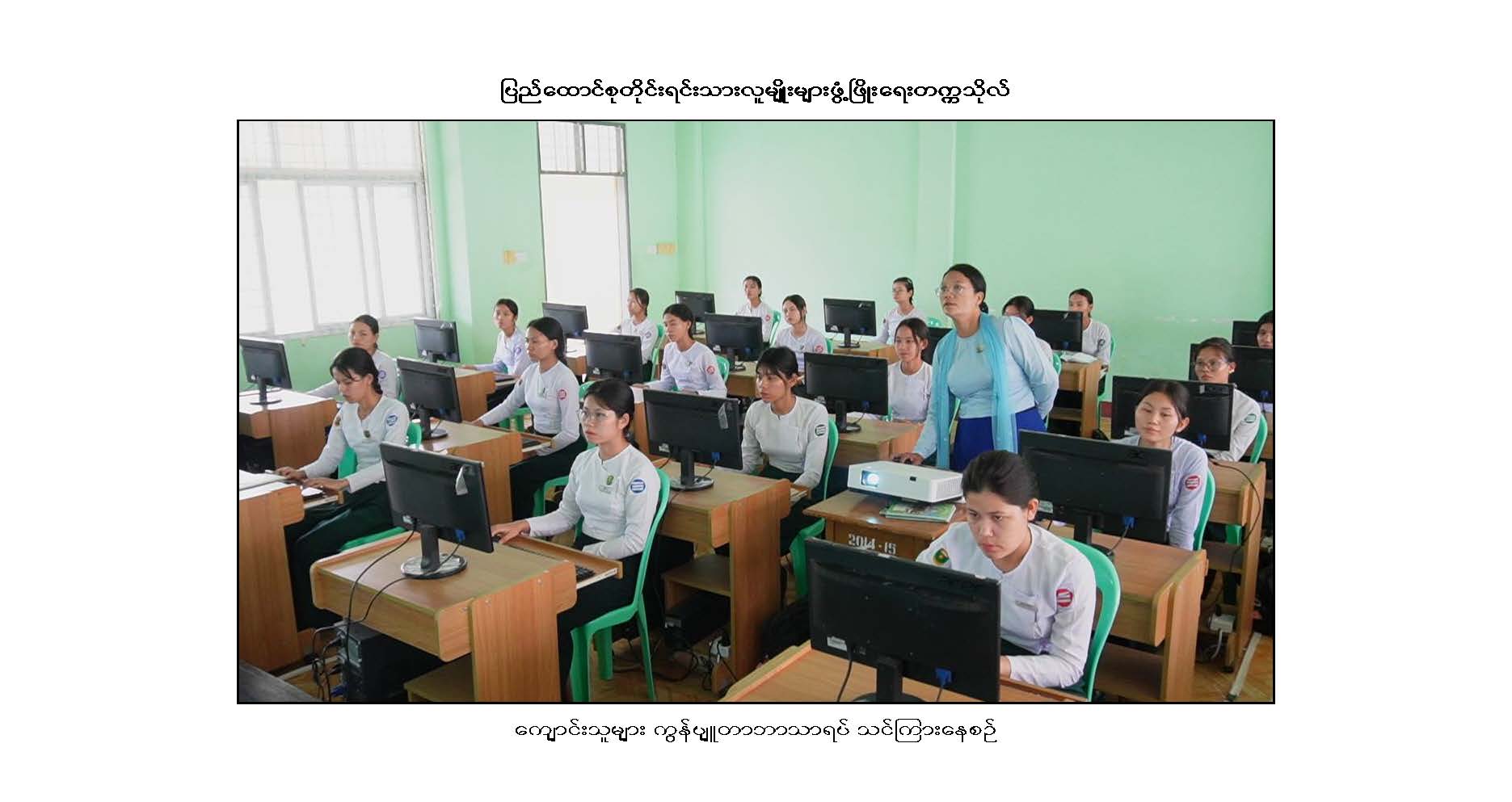
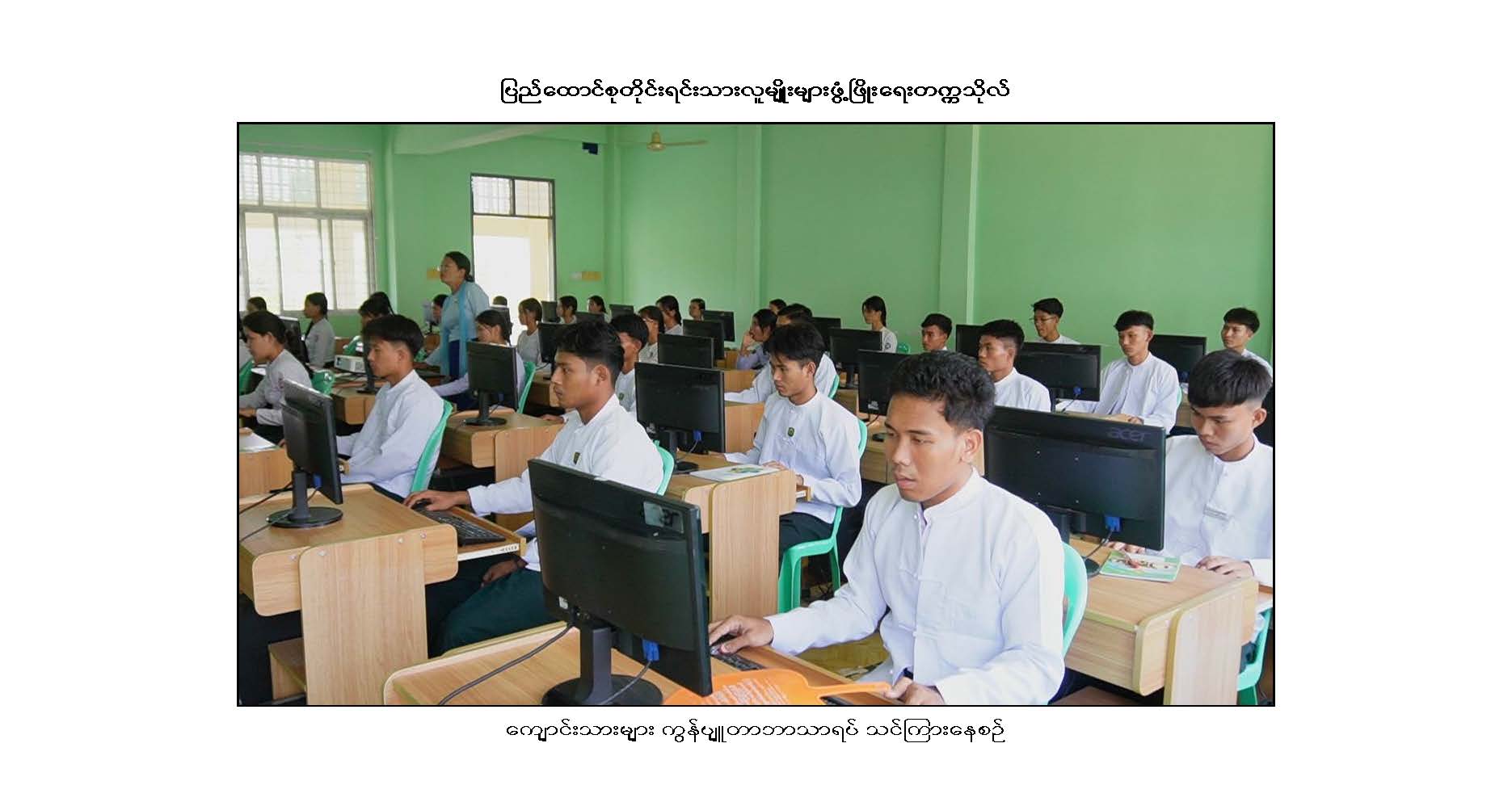
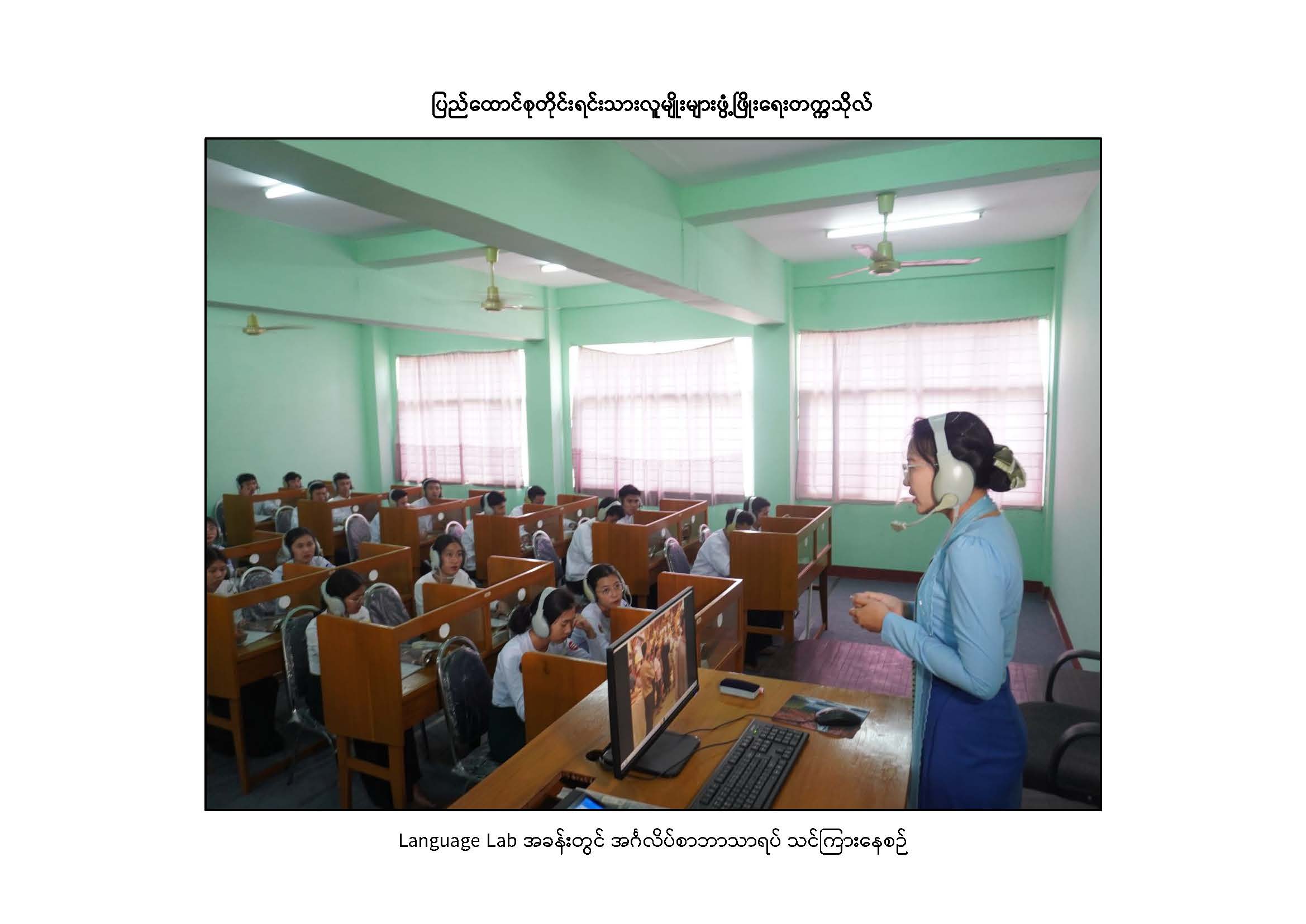
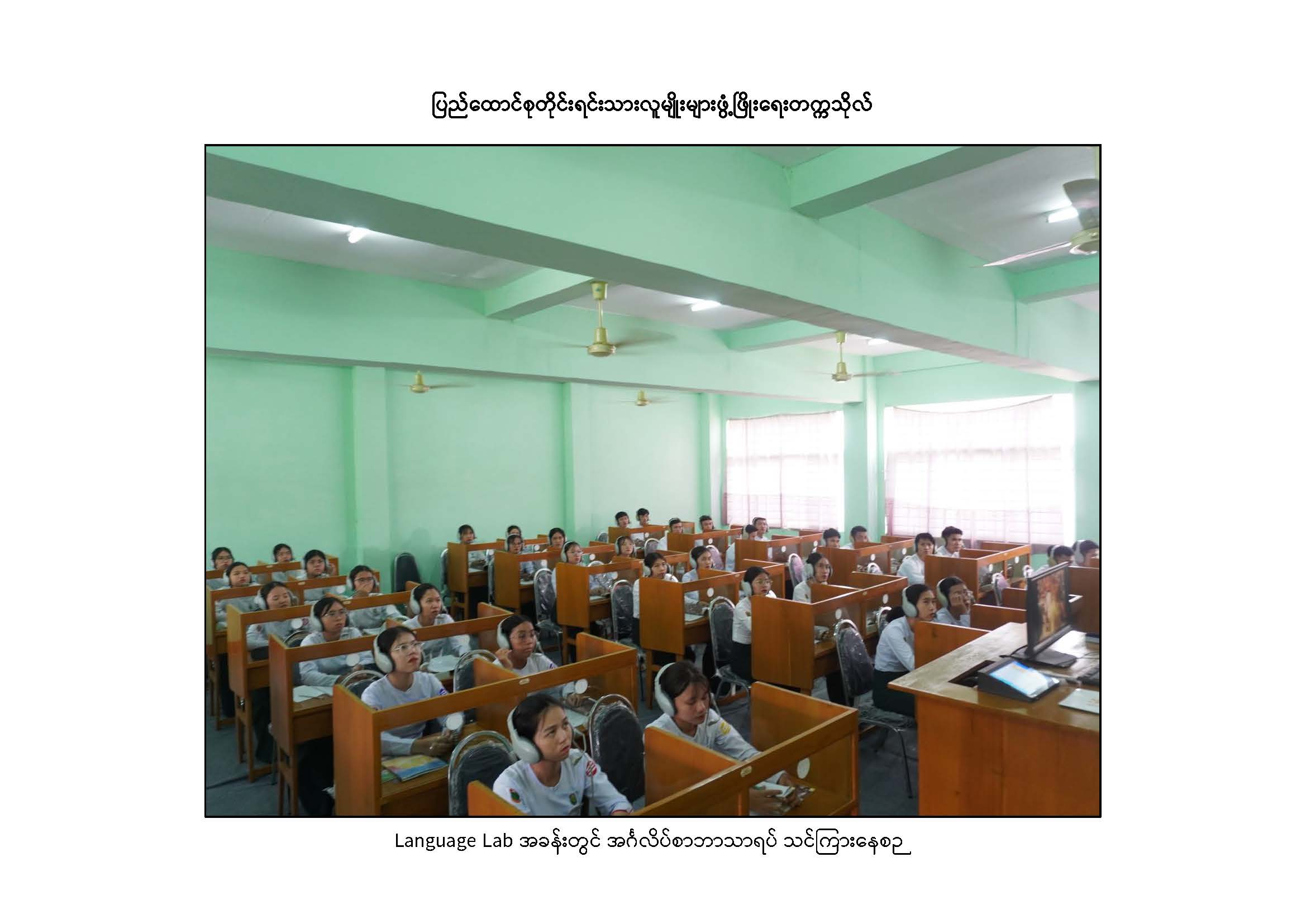
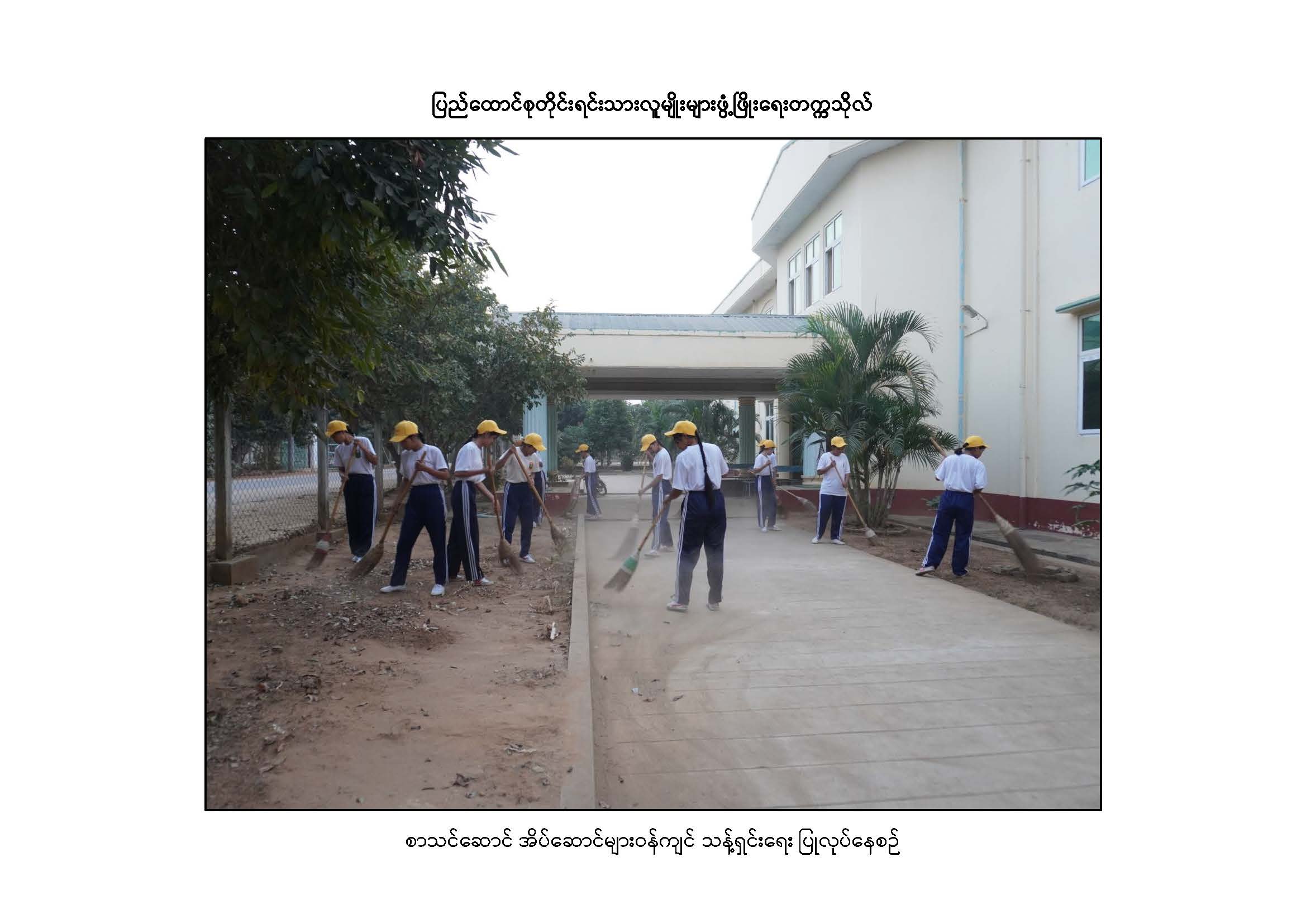
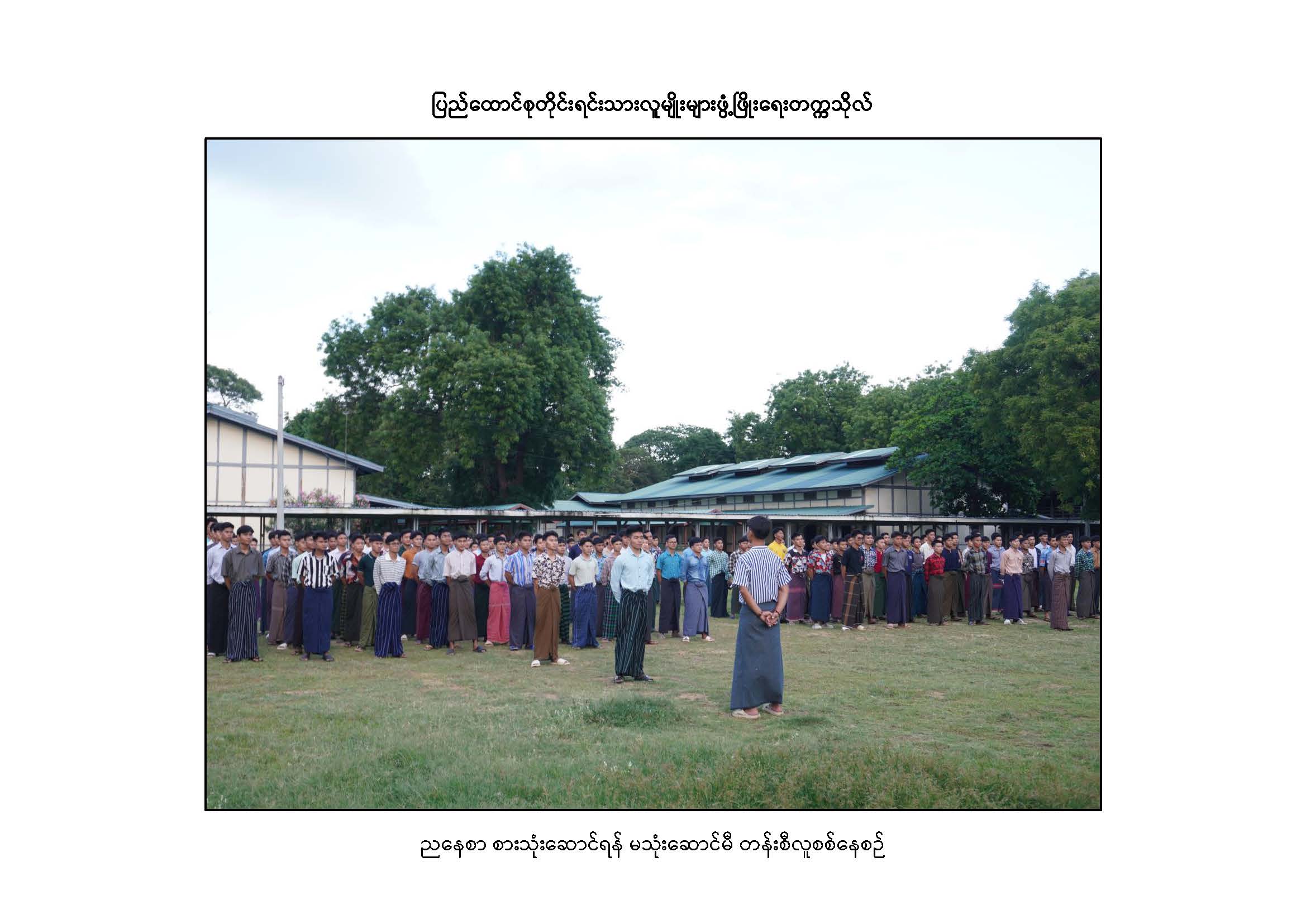
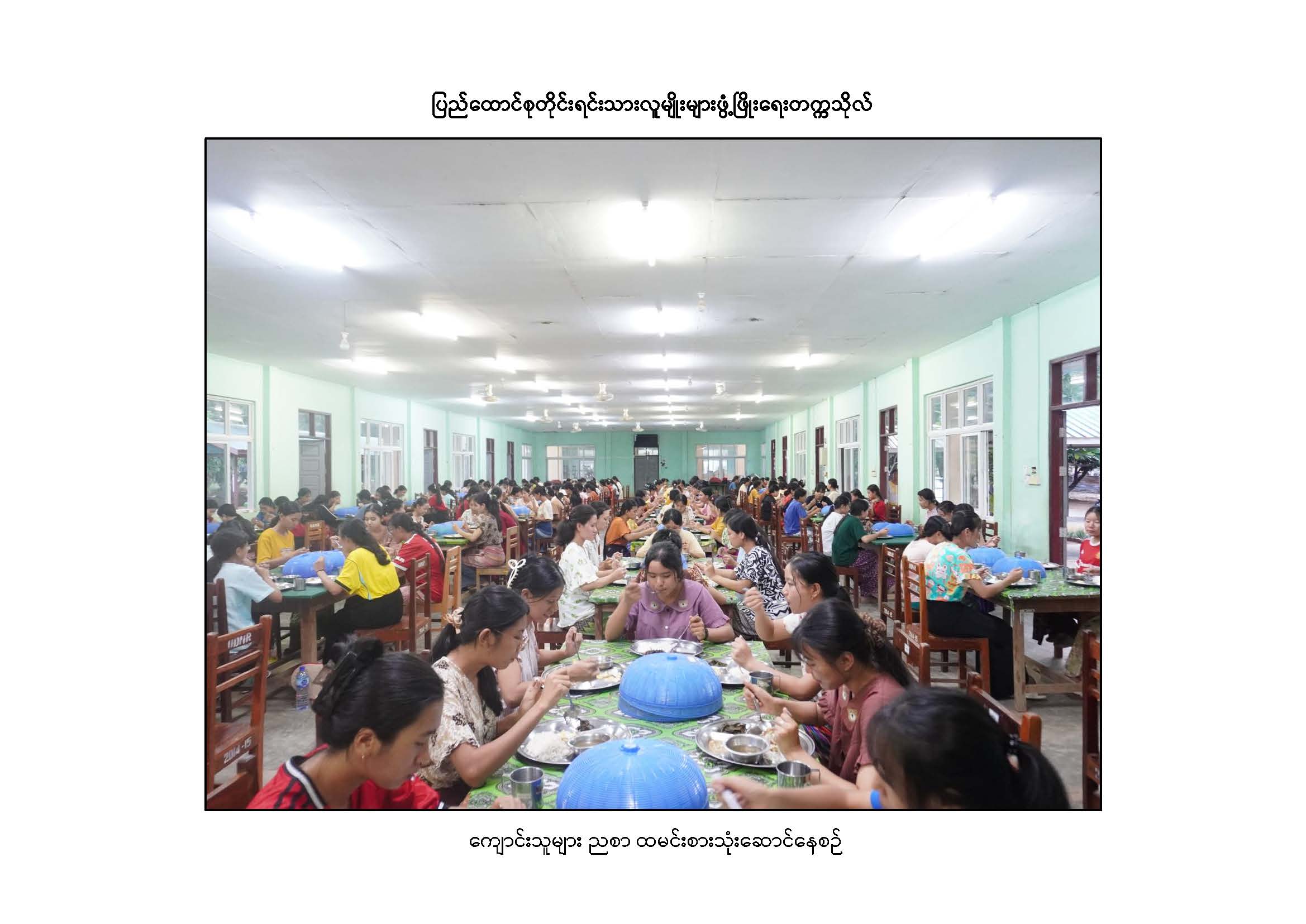
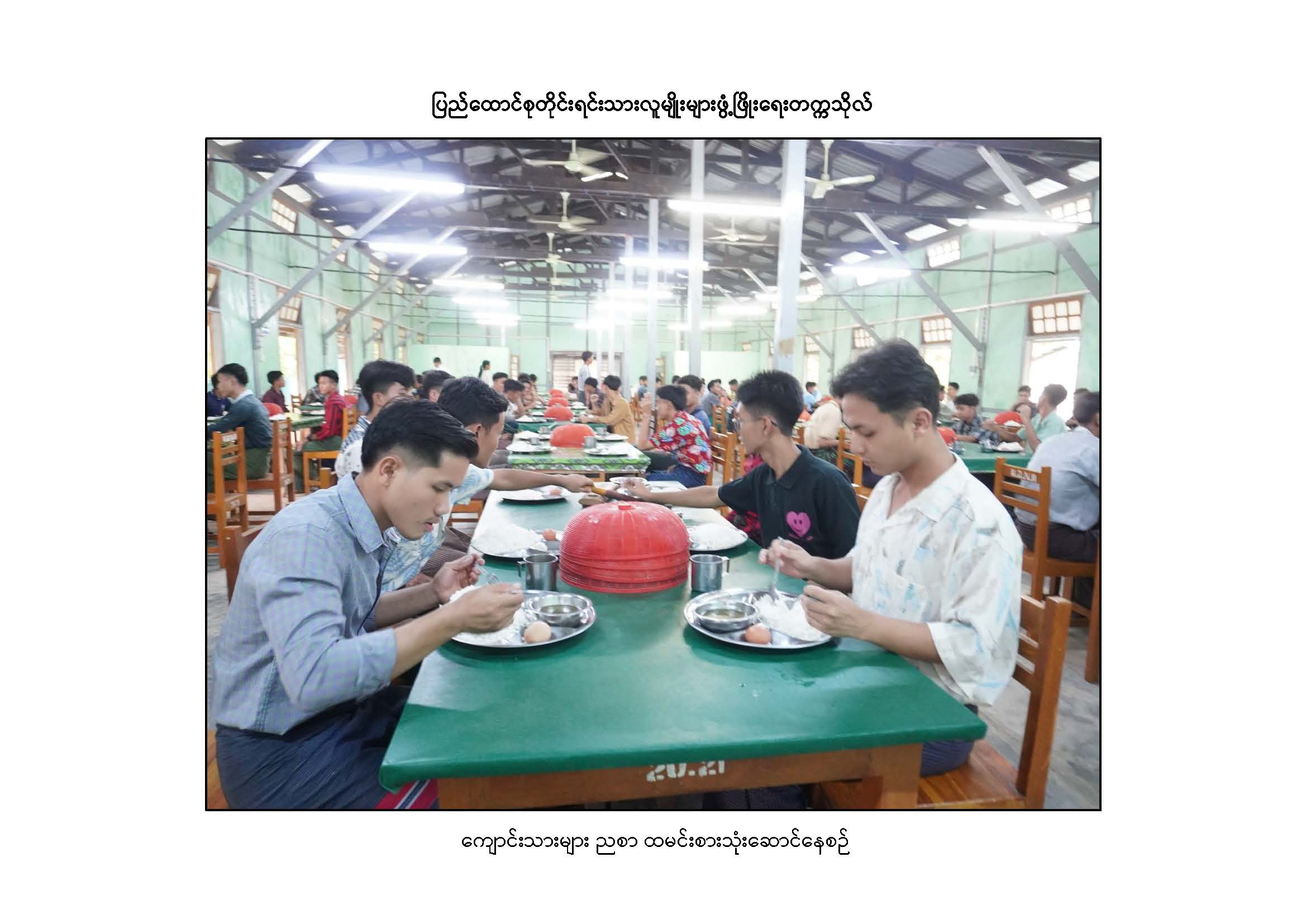
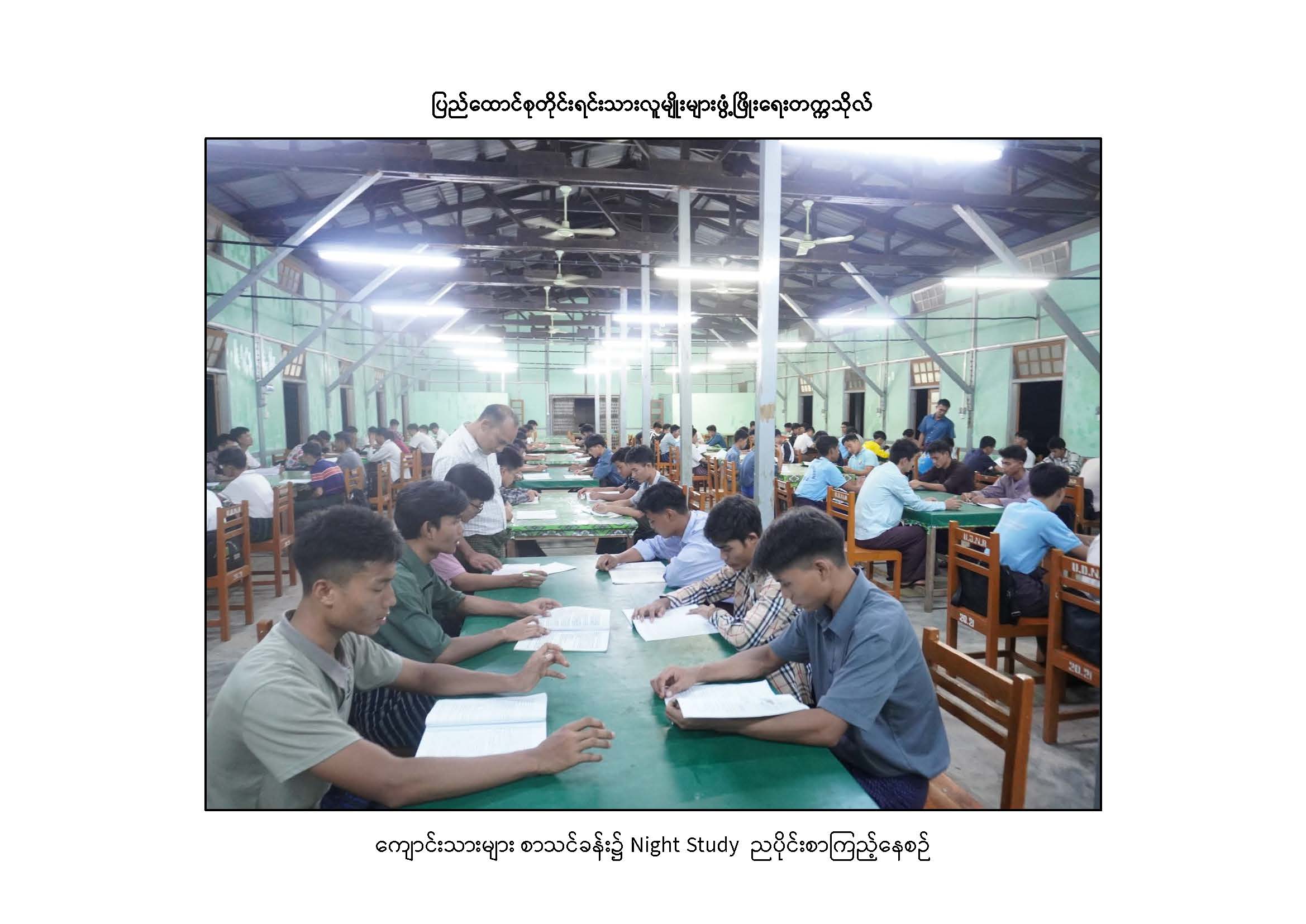
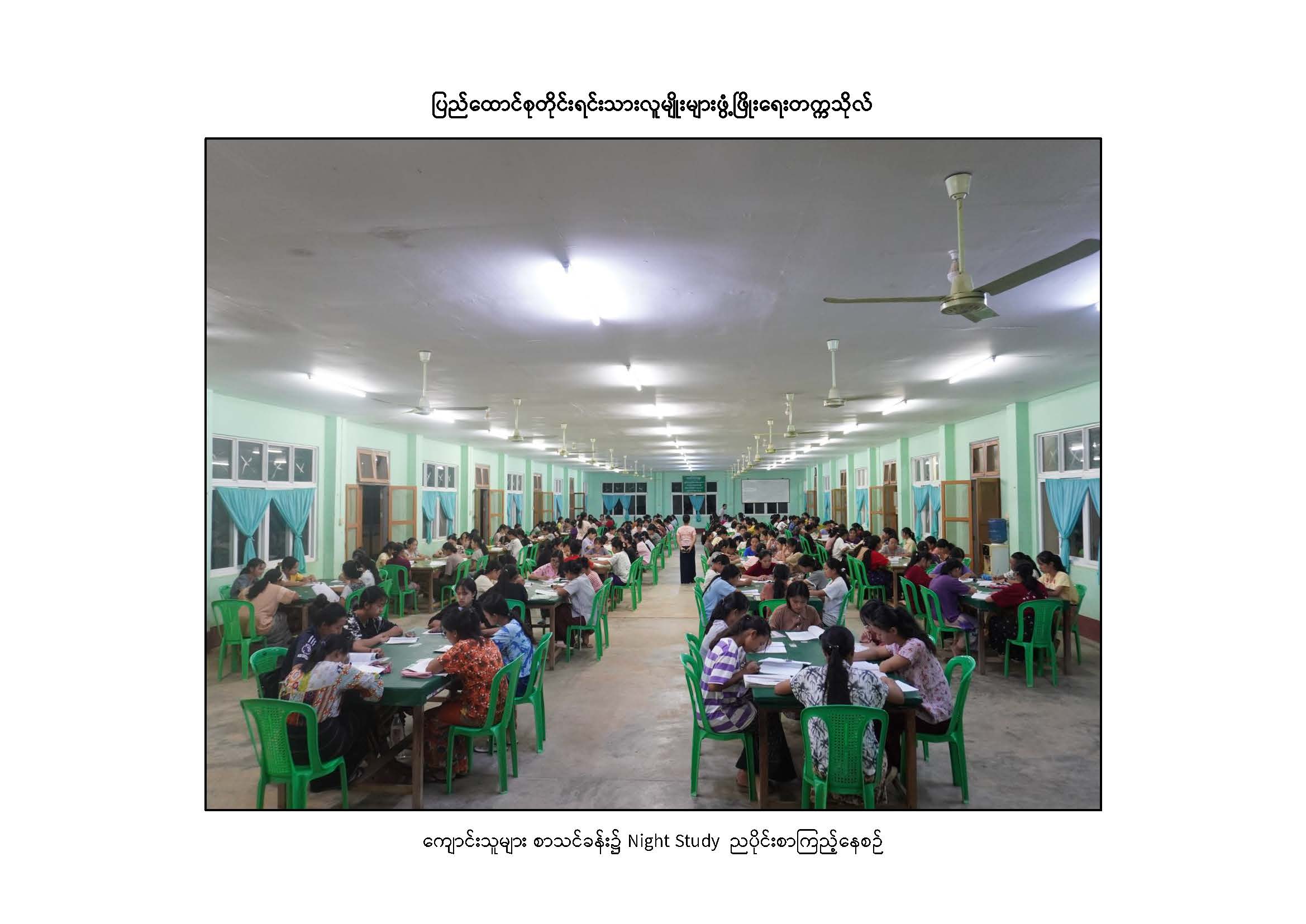
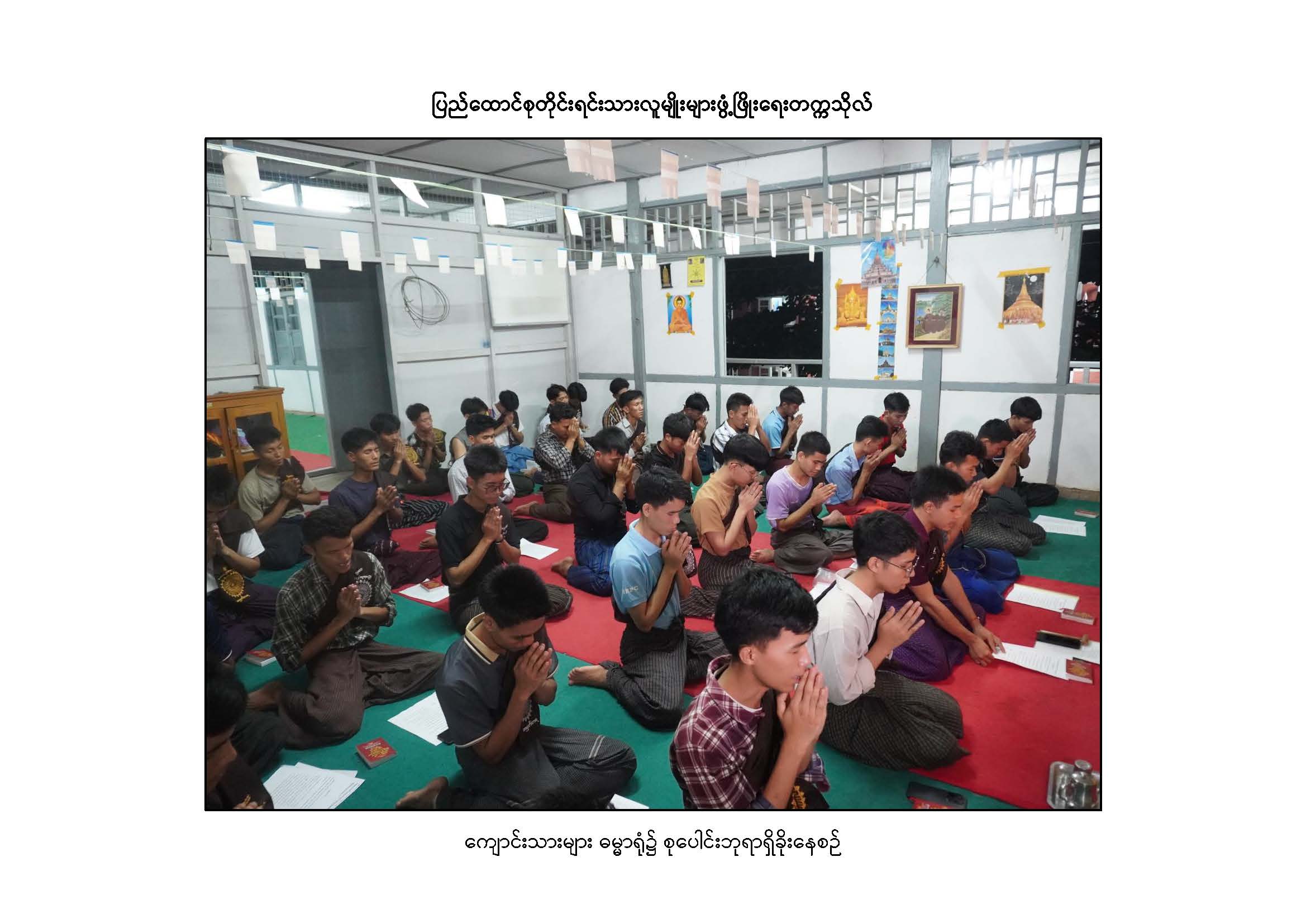
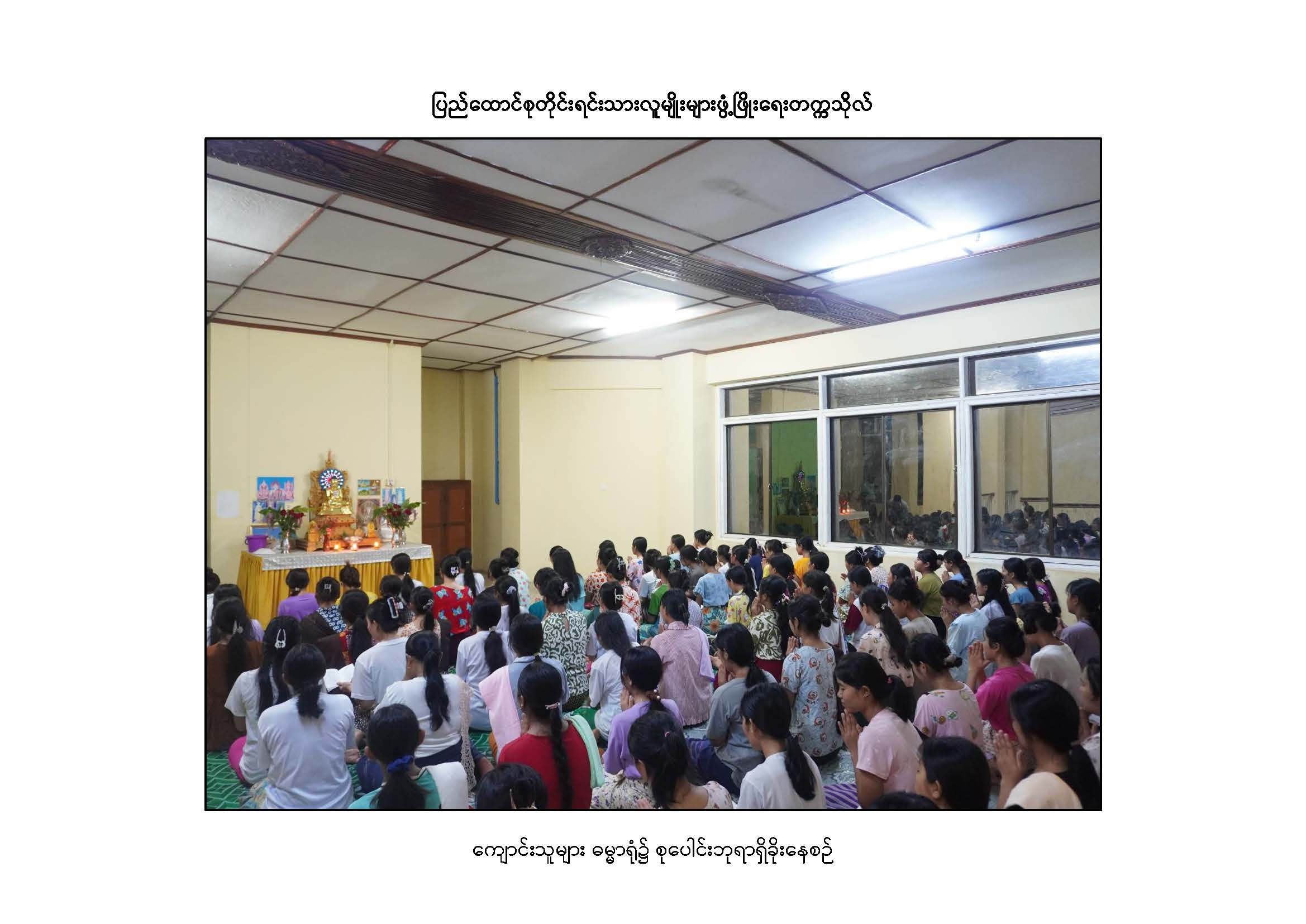
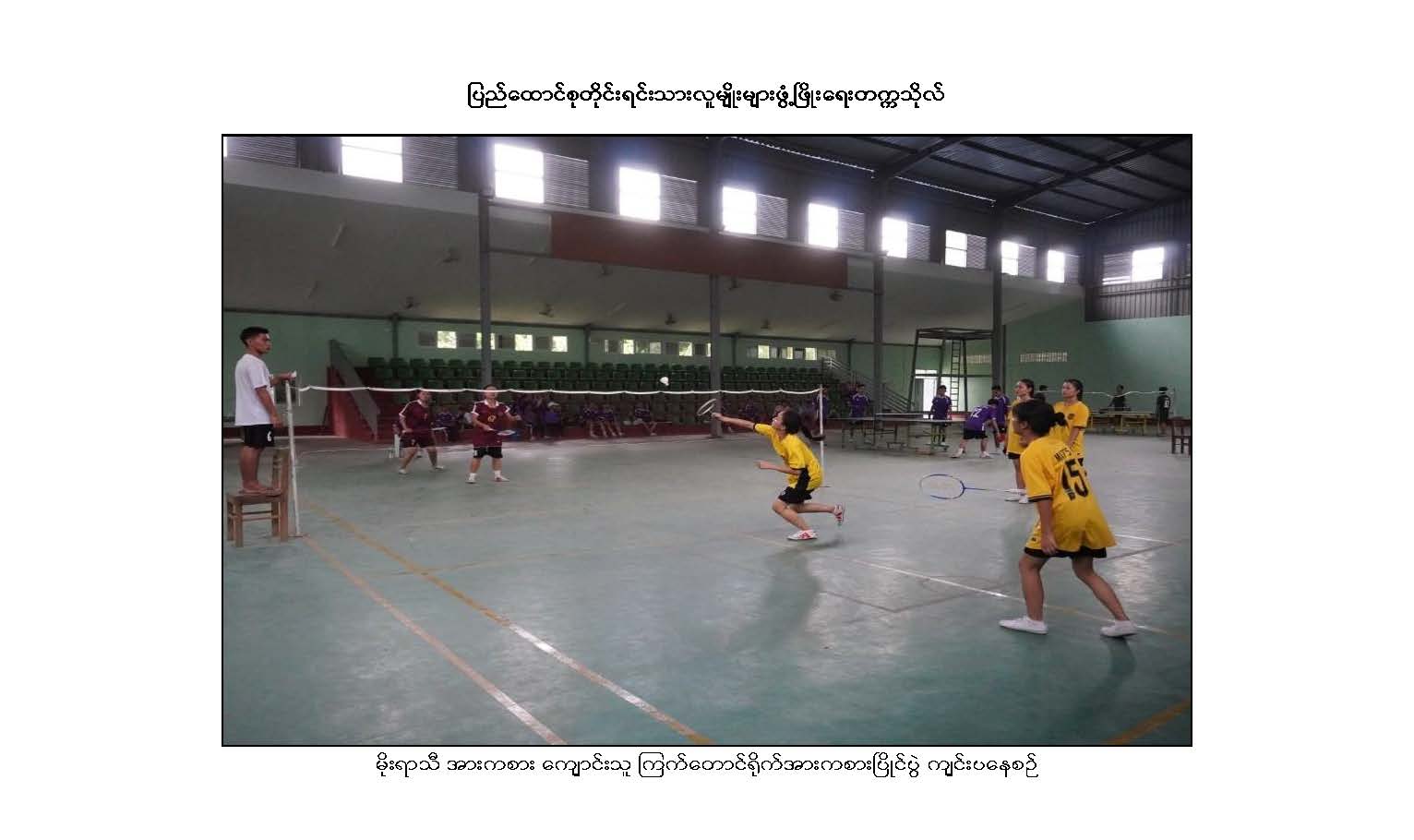
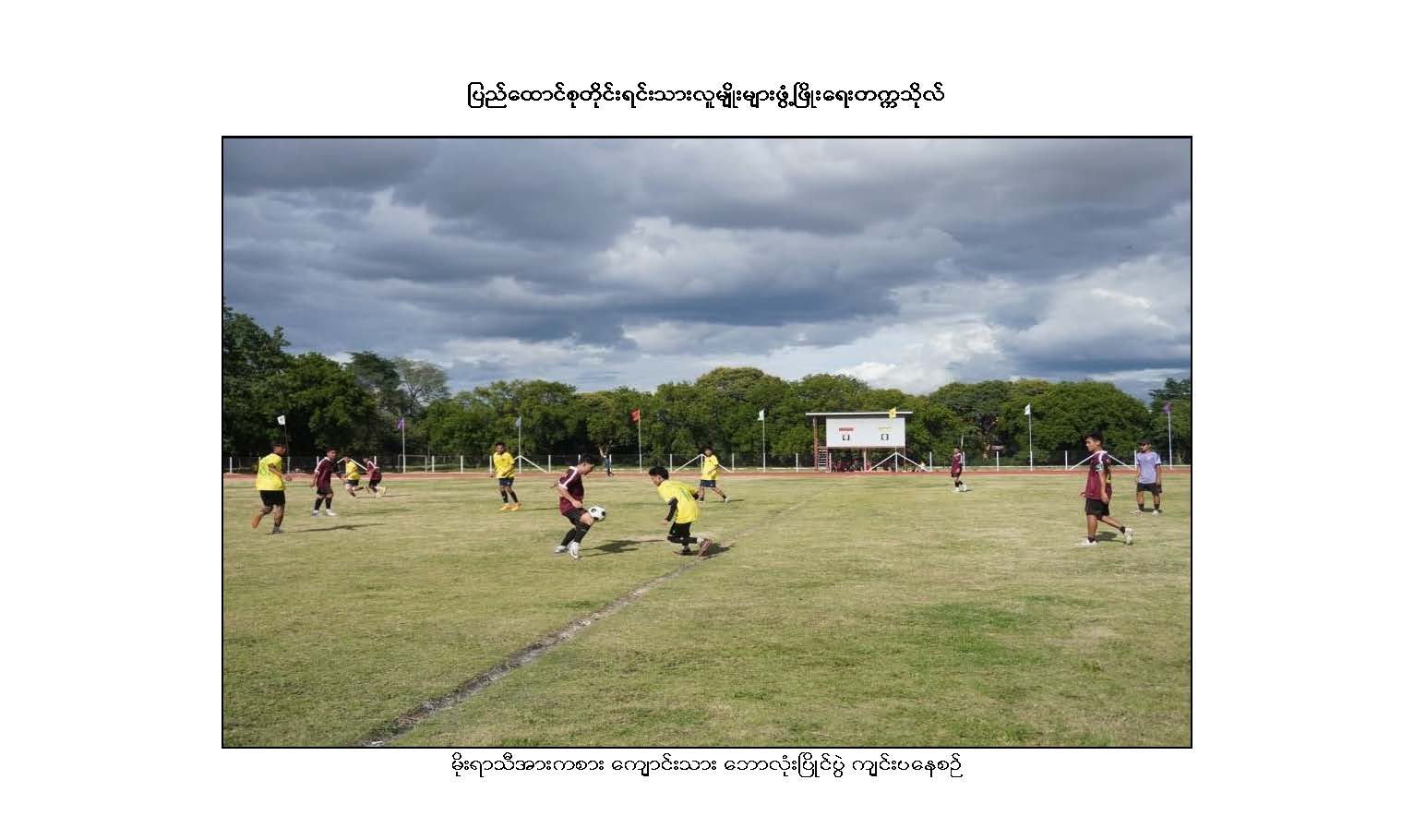
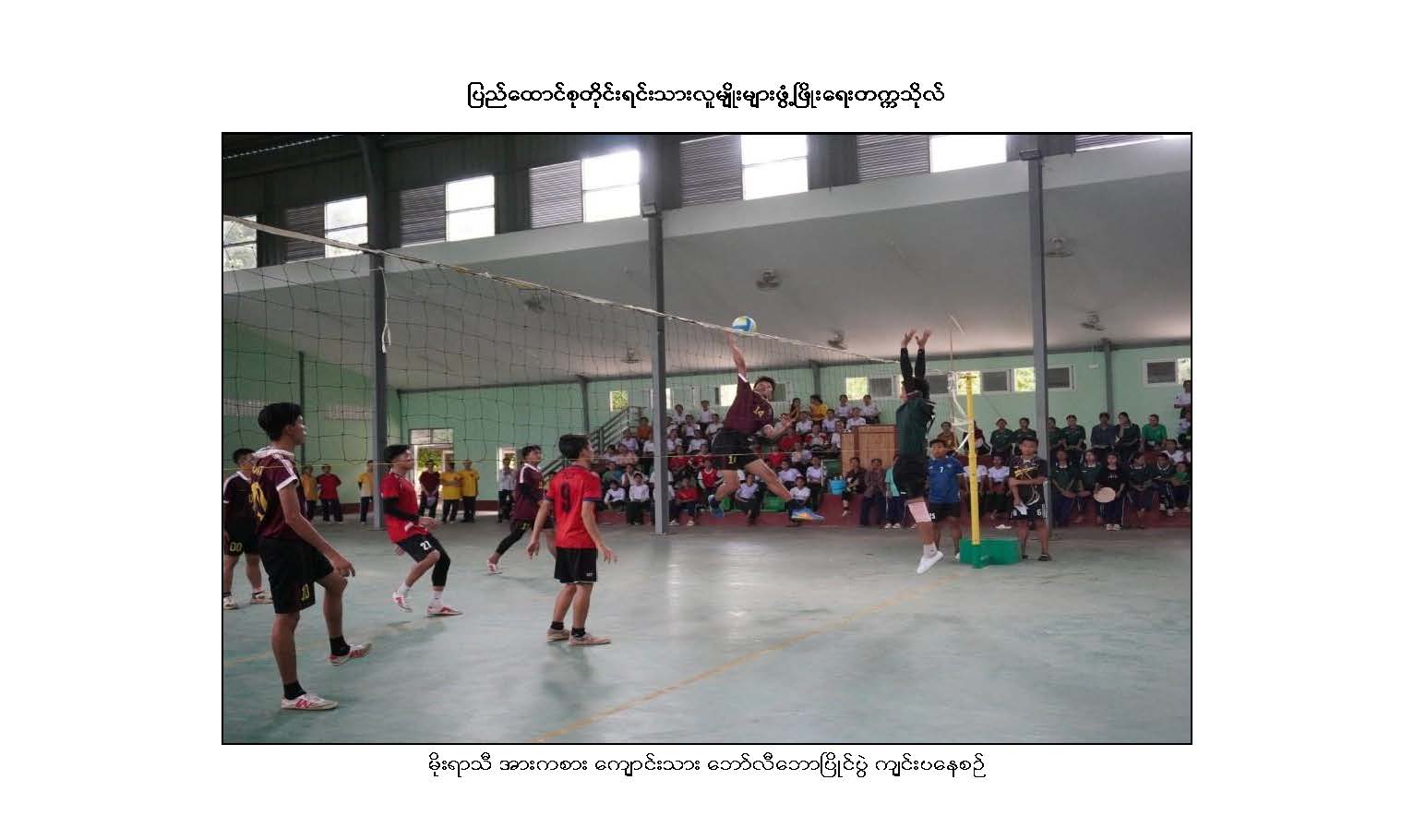
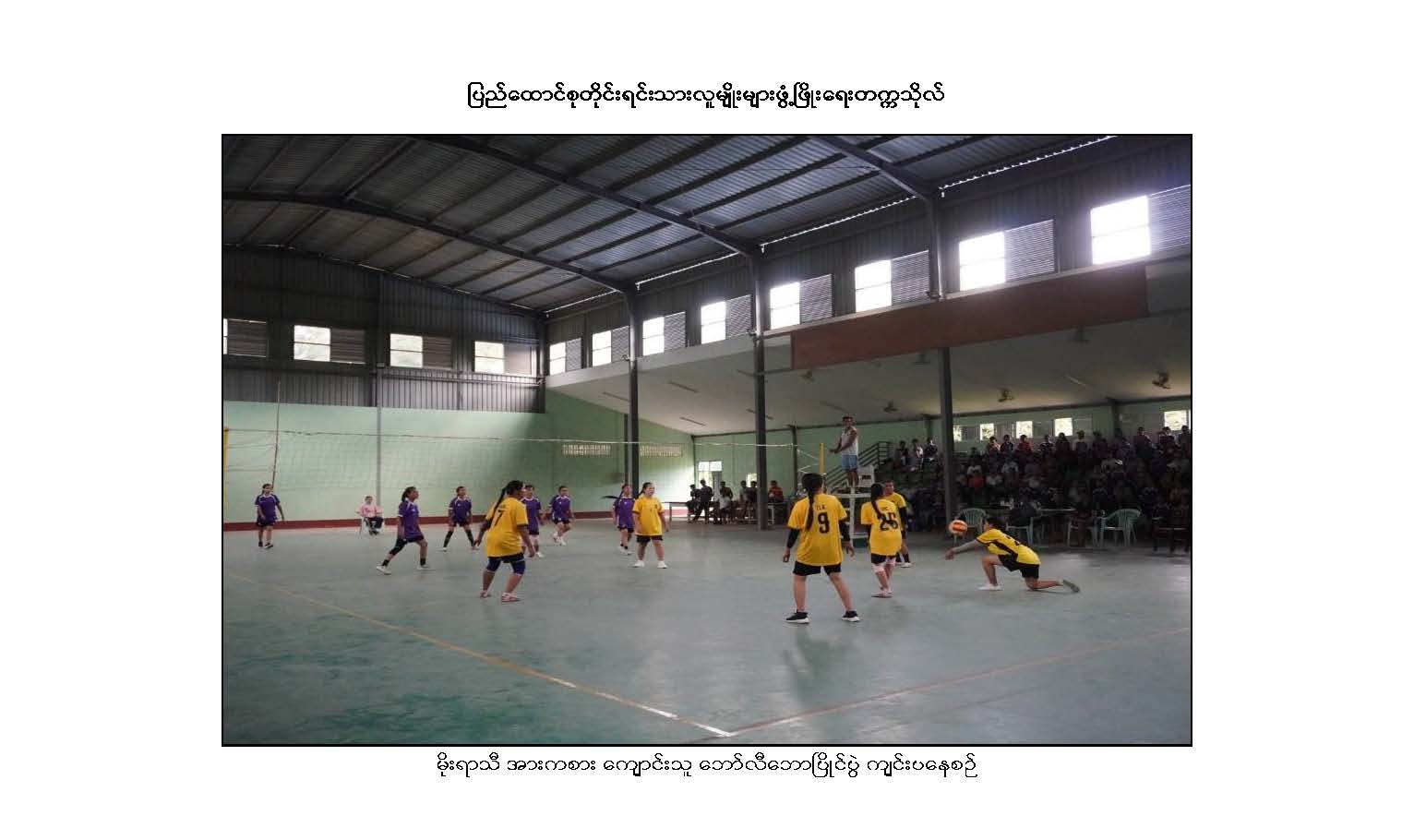
Nationalities Youth Resource Development Degree College, Yangon
College History
According to the meeting decision of the Union of Myanmar Government Meeting (21/ 99) held on 17thJune, 1999, the Working Committee for the Implementation of the Development of Border Areas and National Races submitted it to the State Peace and Development Council. Thus, on 30thJune, 1999, with the official letter no. 21/99, AhPhaYa 99 (72), the constitution of the Department of Education and Training was permitted and it was established on that day. Afterwards, the two Nationalities Youth Resource Development Degree Colleges (Yangon & Sagaing) were established starting from 2000-2001 academic year, under the supervision of the Department of Education and Training. The Nationalities Youth Resource Development Degree College, Yangon was firstly opened at Kamayut Station Street, Hlaing Township on 15thJune, 2000 and then the college was transferred to plot No.3383, Land surveying Quarter No. 61, Sittaung Road, Dagon Seikkan Township and was opened on 5thJuly 2005.
Location and Area
Nationalities Youth Resource Development Degree College, Yangon is located at plot No.3383, Land-surveying Quarter No.61, Sittaung Road, Dagon Seikkan Township, Yangon Region. It is 31.516 acres in area. The permission on land-use has been approved with the official letter no. Makha/ Matha/ 36 L-2002 (2036) by the Department of Urban and Housing Development, Ministry of Construction on 24th, September 2002.
Nationalities Youth Resource Development Degree College,Sagaing
College History
The implementation work committee for the development of border regions and national races presented to the National Peace and Development Council in the meeting No.21/99 of the Government of the Union of Myanmar held on 17thJune 1999. Education and Training Department was organized on 30thJune, 1999 with the letter No. (21/ 99) Ah Pha Ra 99(72) by government organization. Then, the two degree colleges, Nationalities Youth Resource Development Degree College, Yangon and Mandalay were comprised under the supervision of Education and Training Department. Nationalities Youth Resource Development Degree College, (Yangon / Mandalay) started opening in 2000-2001 Academic Year.
In accordance with the instruction of the Head of the State, the Degree College in Amarapura township, Mandalay was opened from 12thJuly 2000 to 14thSeptember 2012 and then it was transferred to Ministry of Education on 14thNovember. It was temporarily moved to University for the Development of the National Races of the Union at Ywarthitgyi village on 1stOctober 2012 and it was opened as Nationalities Youth Resource Development Degree College, Sagaing.
According to the instruction of Union Minister, Ministry of Border Affairs and Prime Minister of Sagaing Region, Nationalities Youth Resource Development Degree College, Sagaing, was opened near Ohn-Taw village on the land with 61.93 acres beside Mandalay – Monywa Highway, on the left side of mile stone No. 26/2 and 26/4, fourteen miles far away from Sagaing from 2013-2014 academic year to till now.
Location and Width
Nationalities Youth Resource Development Degree College, Sagaing is located in 61.93 acres beside Mandalay – Monywa Highway, on the left side of mile stone No. 26/2 and 26/4, Sagaing Region.
Nationalities Youth Resource Development Degree Colleges (Yangon & Sagaing)
Daily Routine of the Students (Training Timetable)
|
Time |
Routine |
|
1. 05:00 a.m |
Time to get up |
|
2. 05:40 - 06:20 a.m |
Time for doing physical exercises |
|
3. 06:20 - 07:00 a.m |
Time for personal hygiene |
|
4. 07:00 - 07:30 a.m |
Time for assembly, taking attendance and saying oaths |
|
5. 07:30 - 08:00 a.m |
Breakfast time |
|
6. 08:00 - 11:45 a.m |
Morning classes |
|
7. 11:45 - 12:30 p.m |
Lunch time |
|
8. 12:30 - 15:30 p.m |
Afternoon classes |
|
9. 15:30 - 16:00 p.m |
Time for relaxation |
|
10. 16:00 – 17:00 p.m |
Time for doing sports and gardening |
|
11. 17:00 - 18:00 p.m |
Time for relaxation |
|
12. 18:00 - 18:30 p.m |
Dinner time |
|
13. 18:30 - 19:00 p.m |
Time of preparing for night study |
|
14. 19:00 - 21:00 p.m |
Study time |
|
15. 21:00 - 22:00 p.m |
Time for relaxation, assembly, taking attendance |
|
16. 22:00 pm |
Bedtime |
Clarification:
-
-
-
-
- Students must arrive 10 minutes earlier than the class time for every Morning session, afternoon session and night study.
- Since the second week of each semester, there is the students’ assembly to be examined for proper dress code every Tuesday at 7 o’clock.
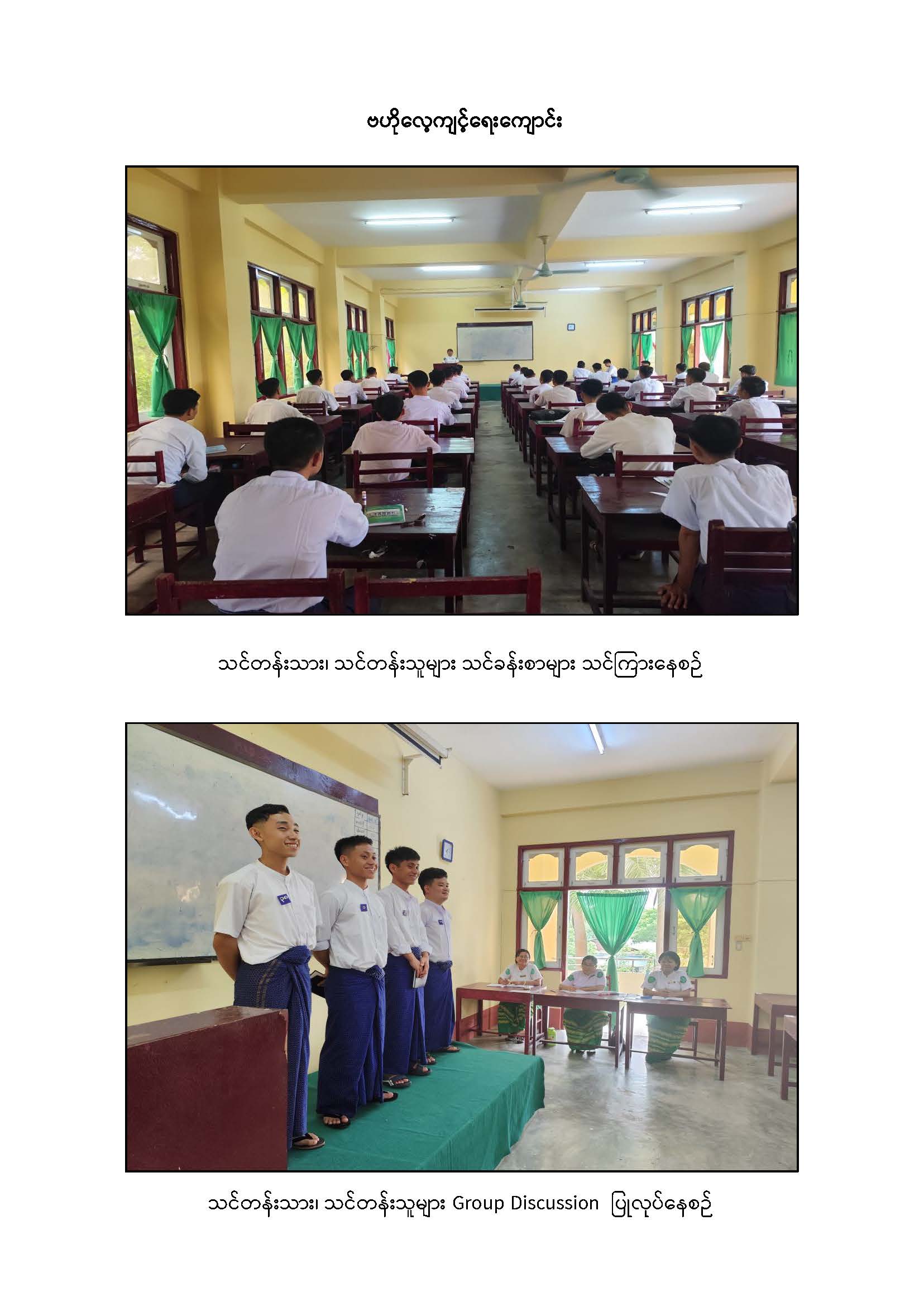
- It takes 45 minutes for each class period and there are altogether nine class periods: five periods in the morning session and 4 periods in the afternoon session.
-
-
-
Nationalities Youth Resource Development Degree Colleges (Yangon & Sagaing)
Conferred Degrees
- Bachelor of Arts (B.A) Degrees (four-year course)
- B.A (Myanmar)
- B.A (History)
- B.A (Geography)
- B.A (English)
- B.A (Law)
- B.A (Eco)
- Bachelor of Science (B.Sc) Degrees (four-year course)
- B.Sc (Physics)
- B.Sc (Mathematics)
- B.Sc (Chemistry)
- AGTI Diplomas (three-year course)
- Civil
- Mechanical
- Electrical Power
- Electronics
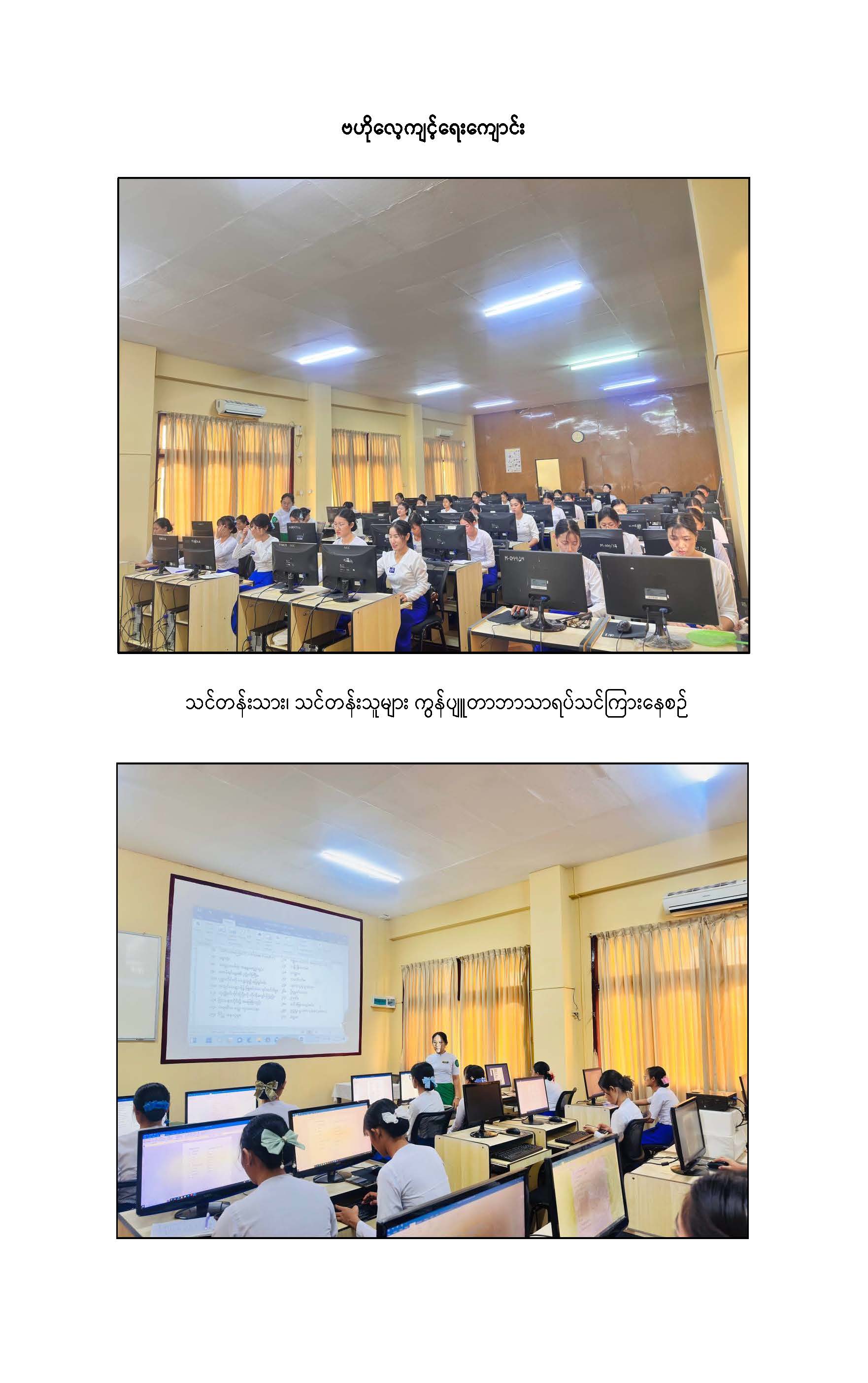
- Information Technology
- Computer (Certificate)
Provision per student
- Providing rations and food expense
Rice - 2.25 cans
Oil - 2.25 ticals
Beans/ Peas - 5.00 ticals
Salt - 0.50 ticals
- Food (per day) - 750 kyats
Nutritional supplements - 2000 kyats
- Providing clothes
Traditional Jacket/ Safari Coat - 1 piece
Longyi - 2 pieces
- Shirt/ Myanmar Traditional Blouse (long sleeve) - 2 pieces
T-shirt - 2 pieces
Trousers - 1 pair
Schoolbag - 1 piece
Slippers - 1 pair
Canvas shoes - 1 pair
Socks - 1 pair
- Providing Bedding Sets
Mosquito net - 1 piece
Pillow - 1 piece
Pillowcase - 1 piece
Mattress - 1 piece
White bed sheet - 1 piece
Blanket - 1 piece
Quilt - 1 piece
Towel - 1 piece
- Providing Stationery
Pencase - 1 piece
Notebook - 6 dozens
Pen - 1 dozen
Pencil - 6 pieces
Ruler - 2 pieces
Tutorial Book - 1 dozen
- Pocket Money (per month) - 3,000 kyats
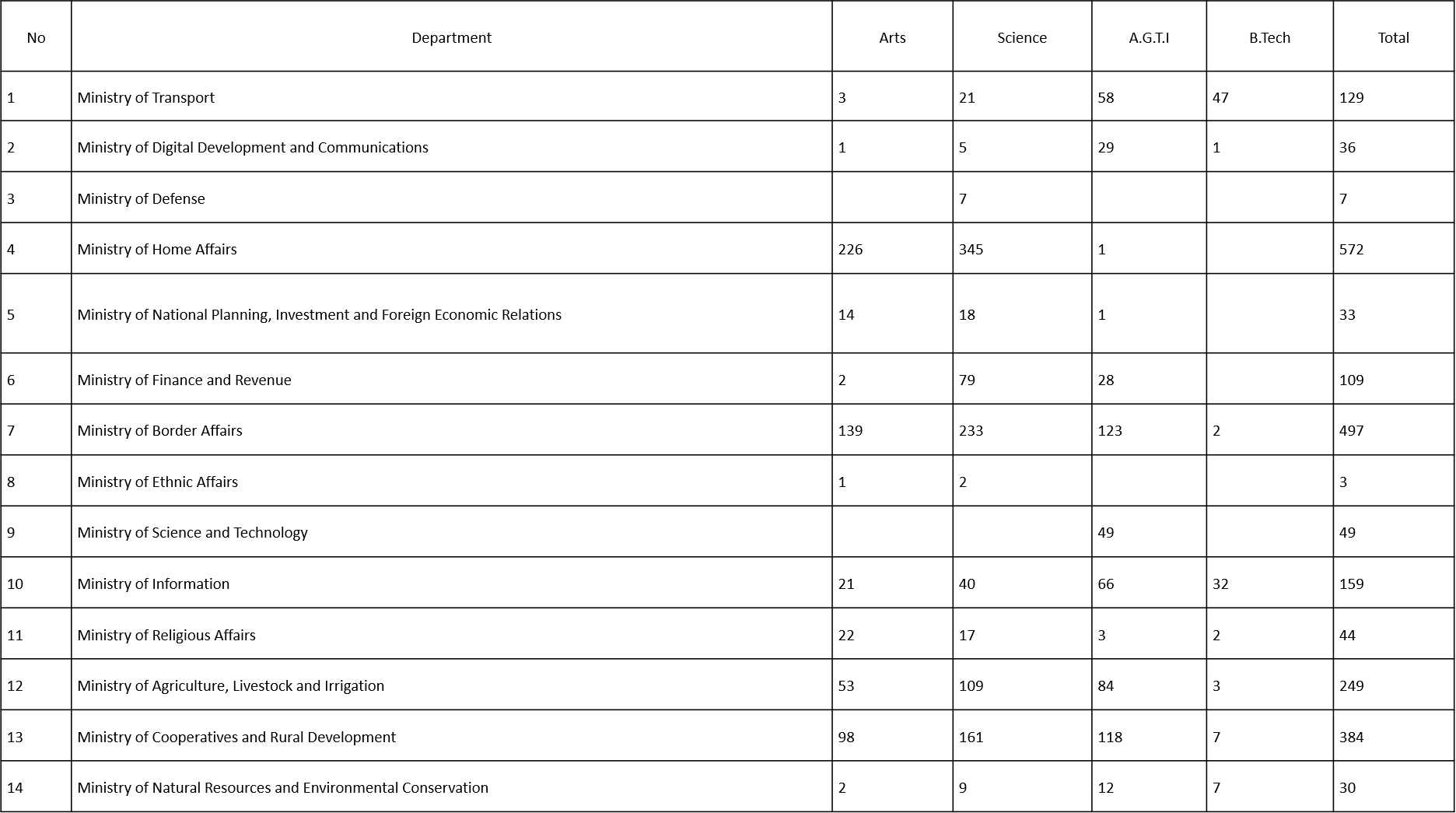
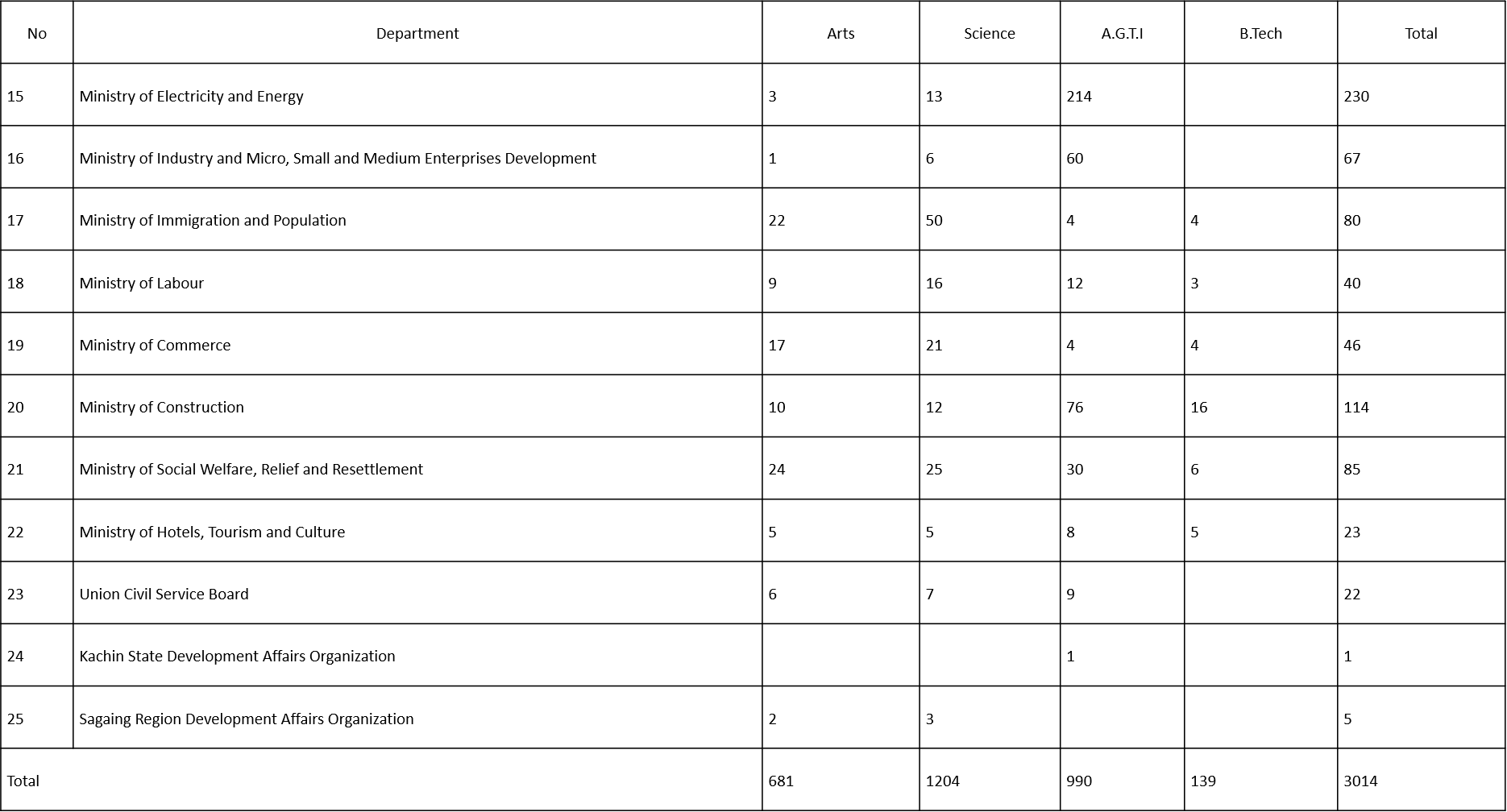
List of Graduates from the Nationalities Races Youth Resource Development Degree Colleges (Yangon, Sagaing) Assigned by Ministry
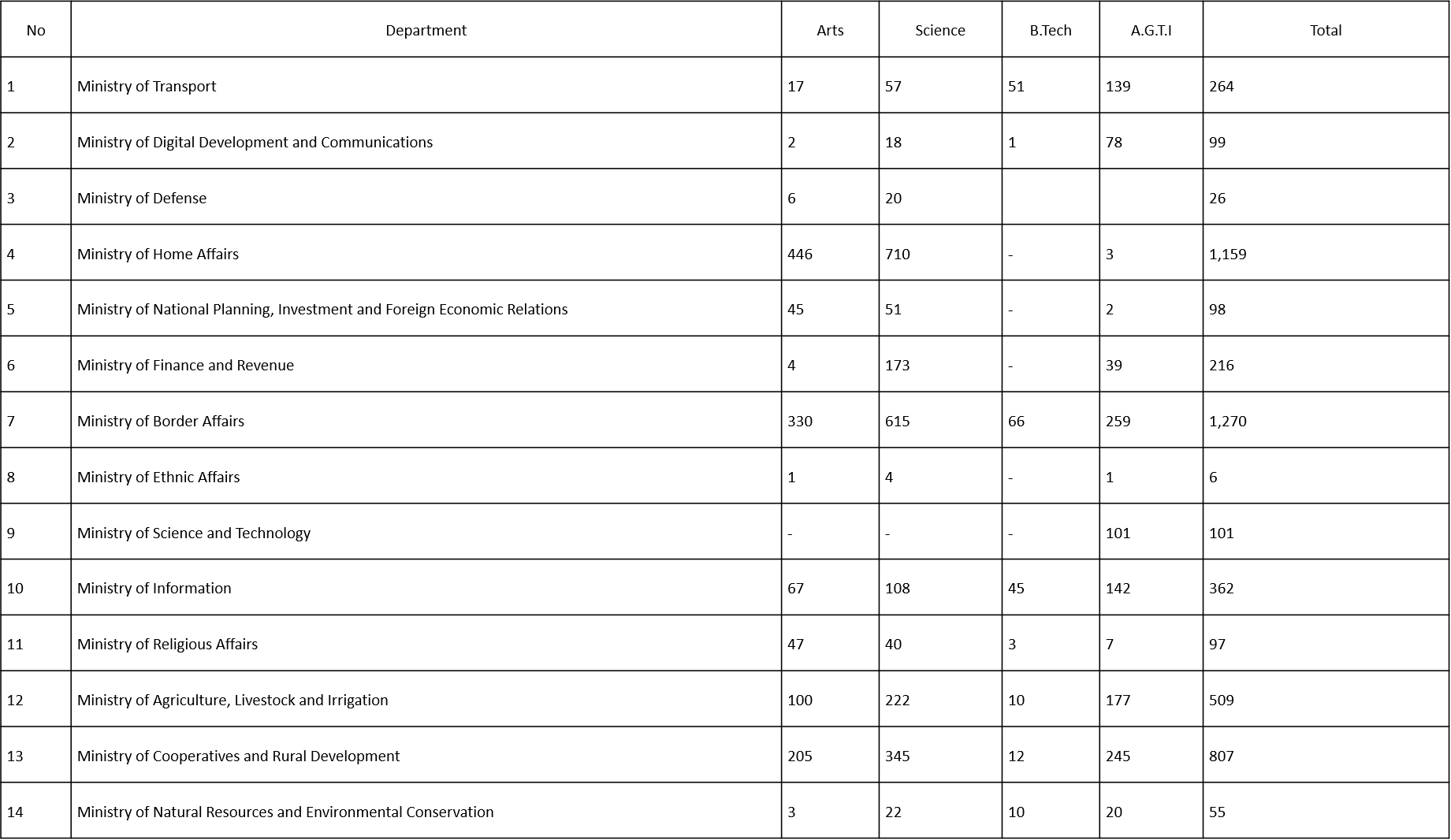
List of Graduates from the Nationalities Races Youth Resource Development Degree Colleges (Yangon) Assigned by Ministry
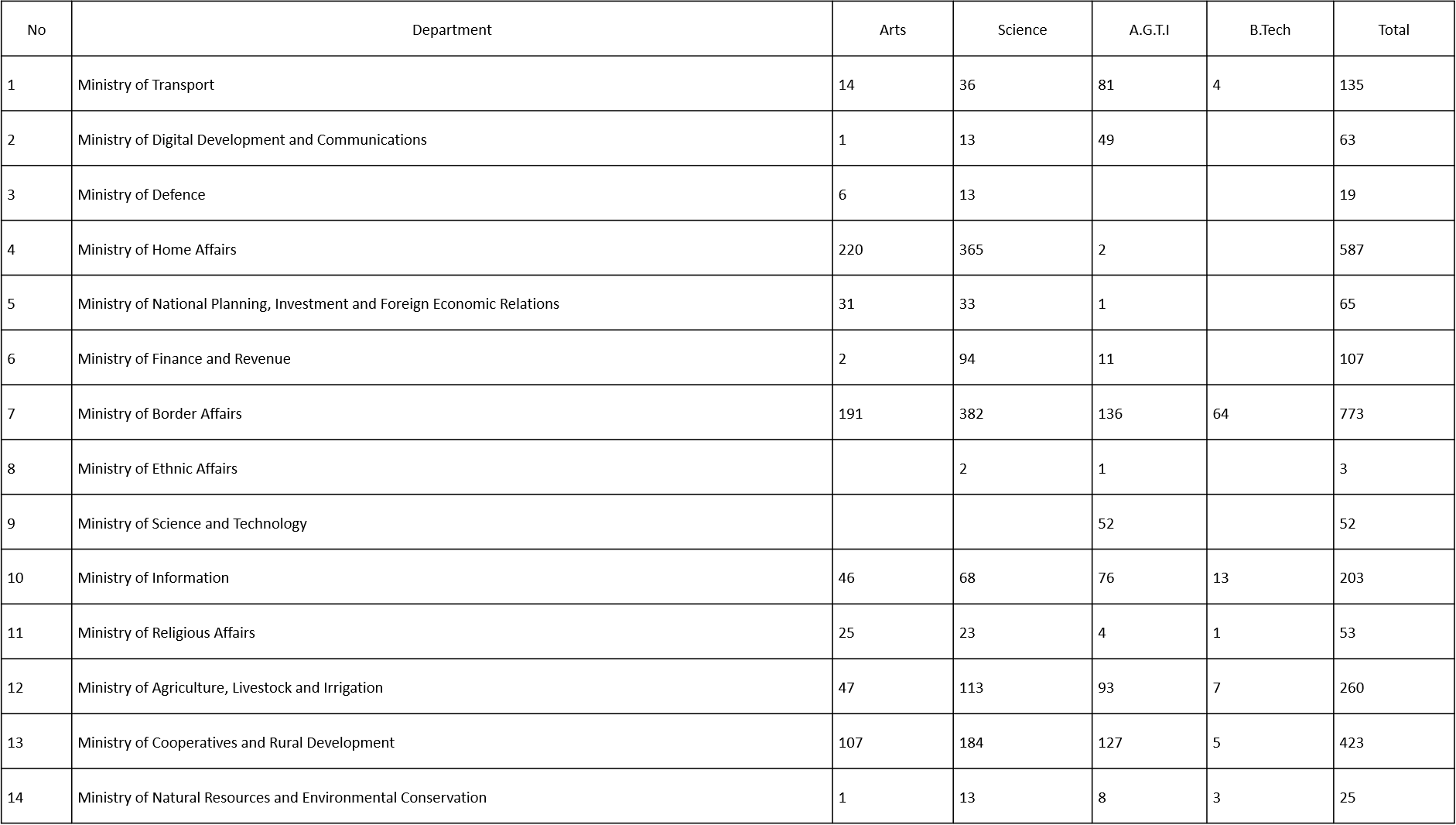
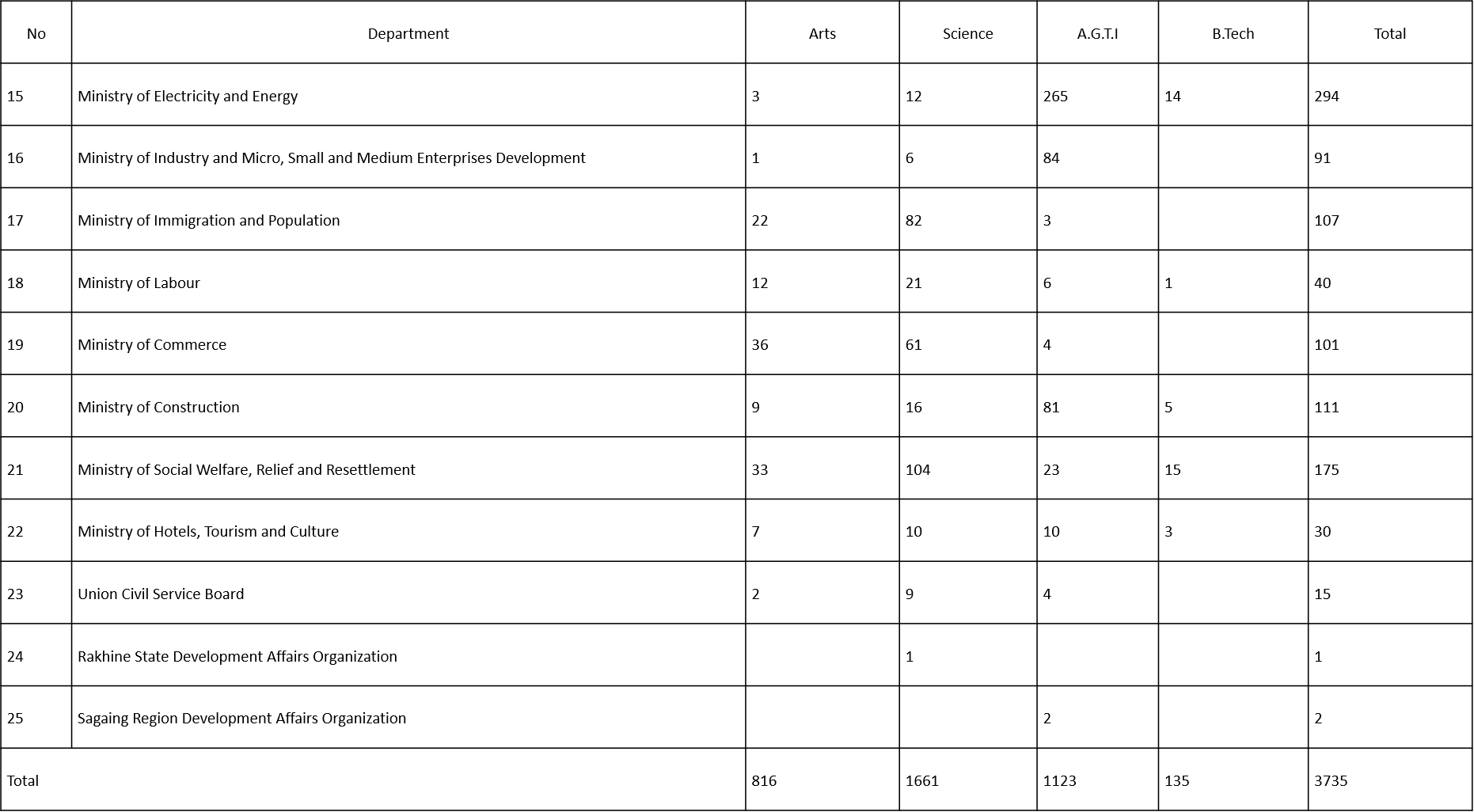
List of Graduates from the Nationalities Races Youth Resource Development Degree Colleges (Sagaing) Assigned by Ministry
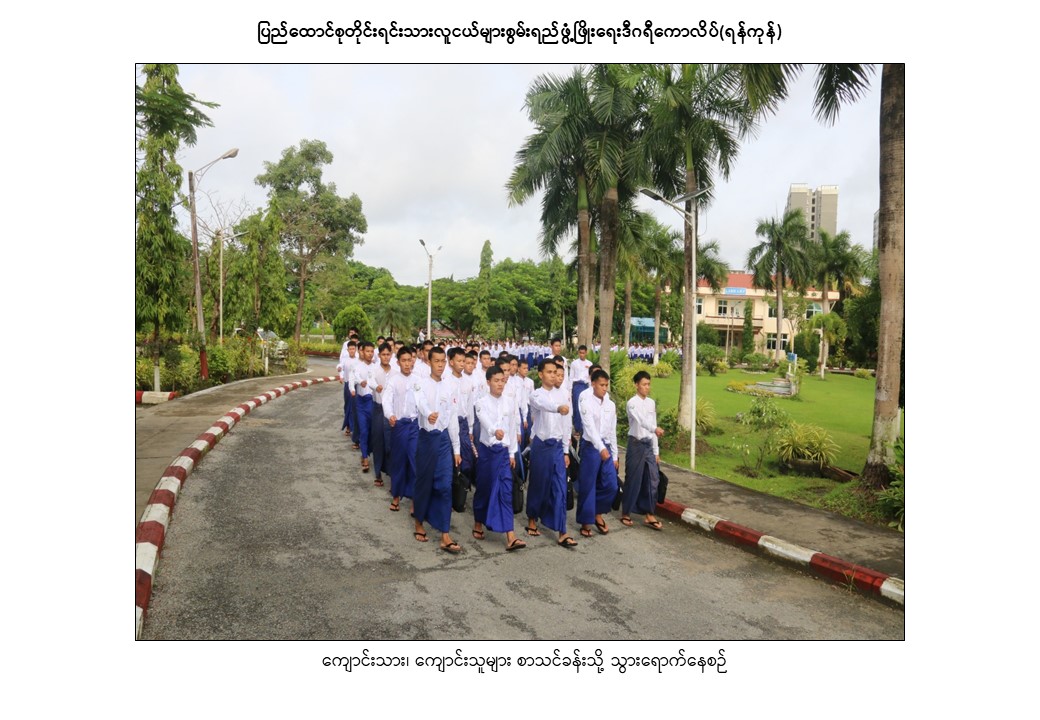
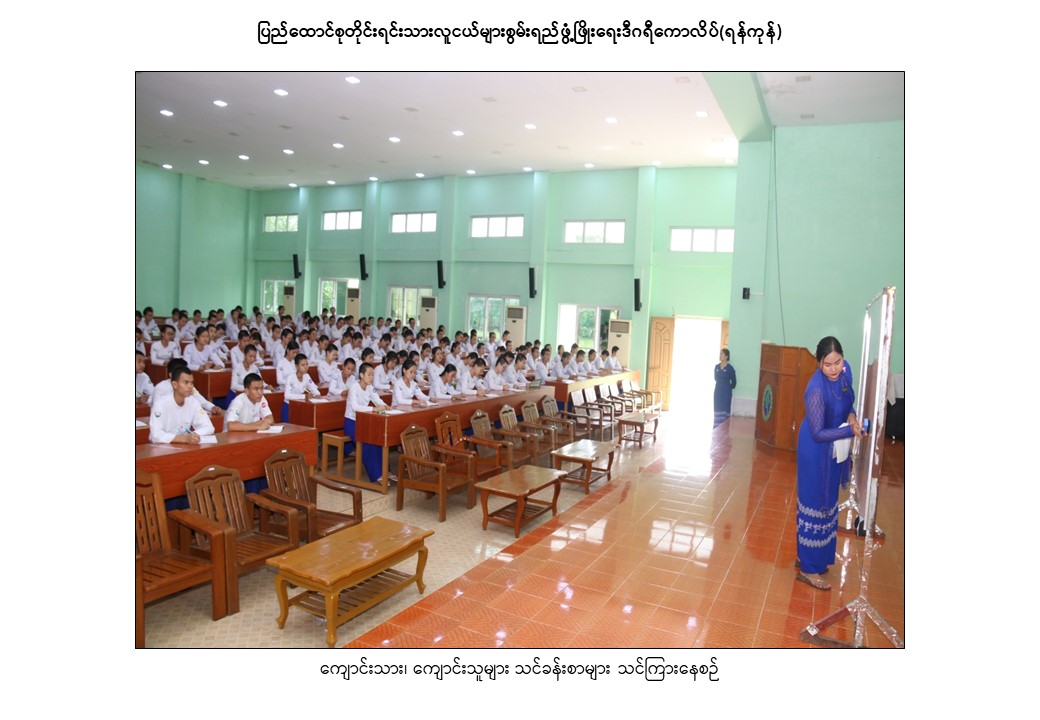
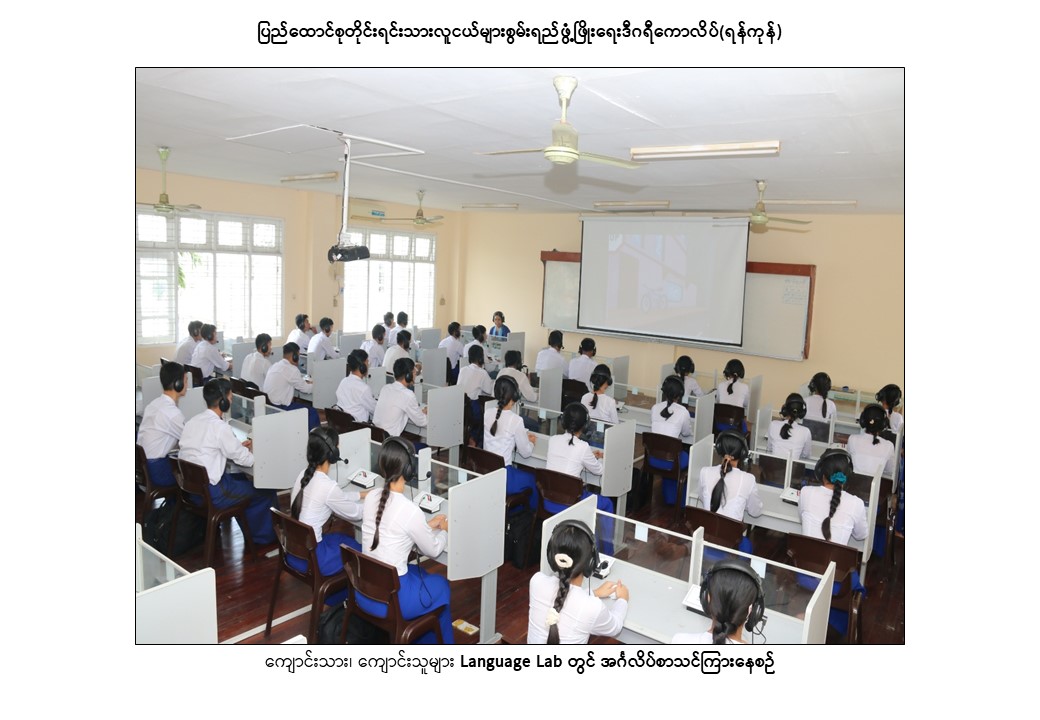
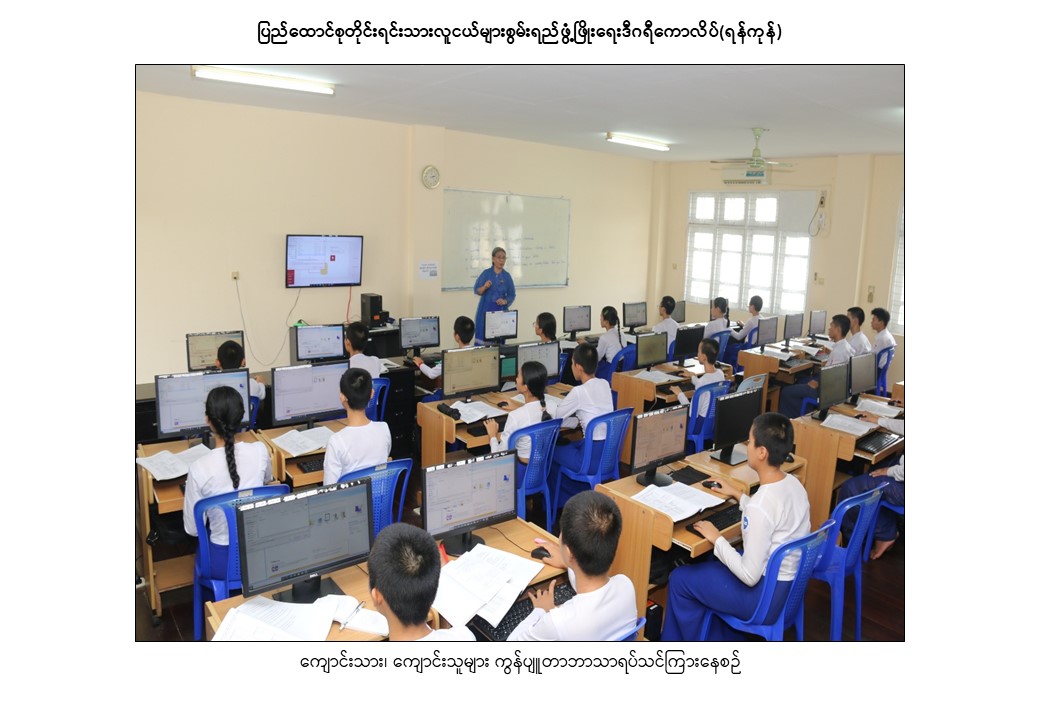
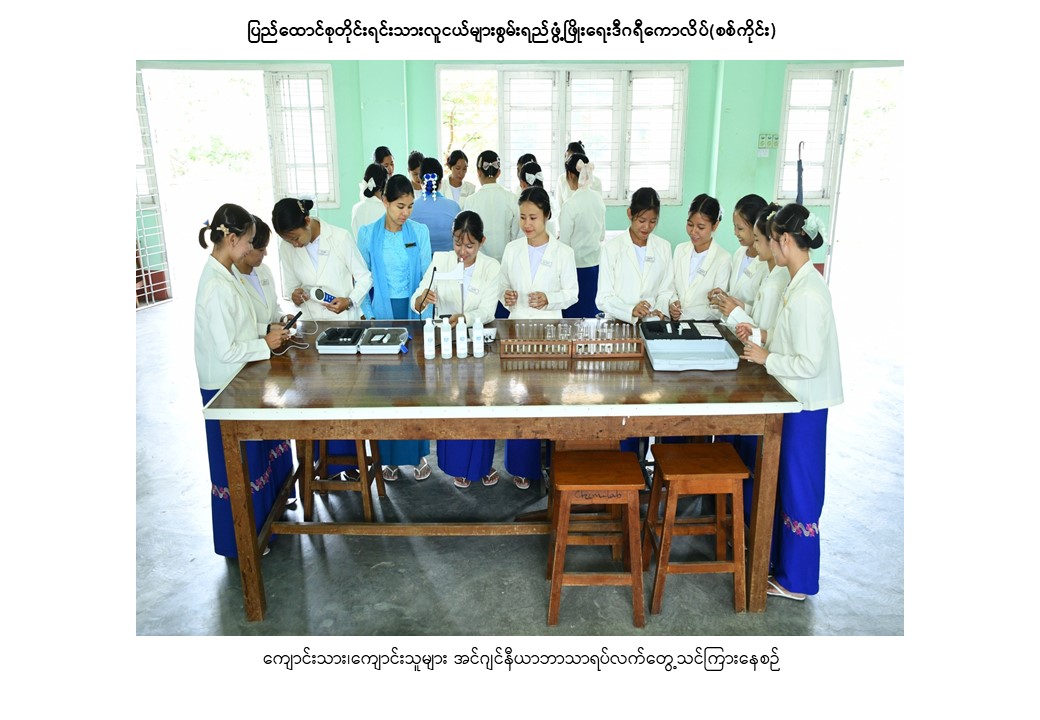
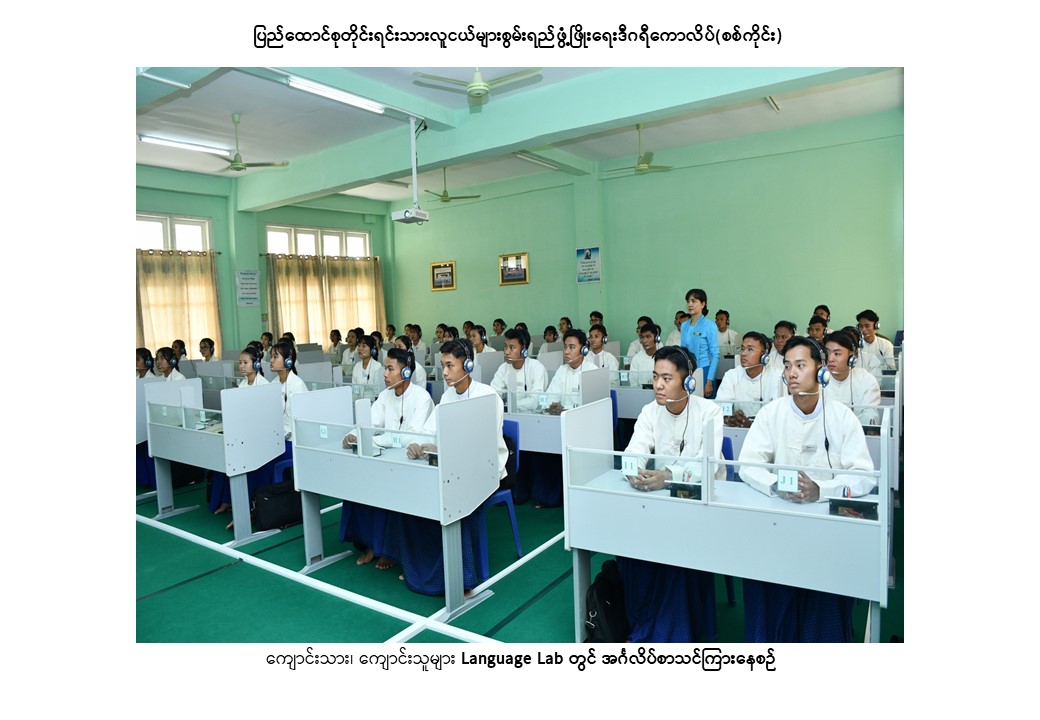
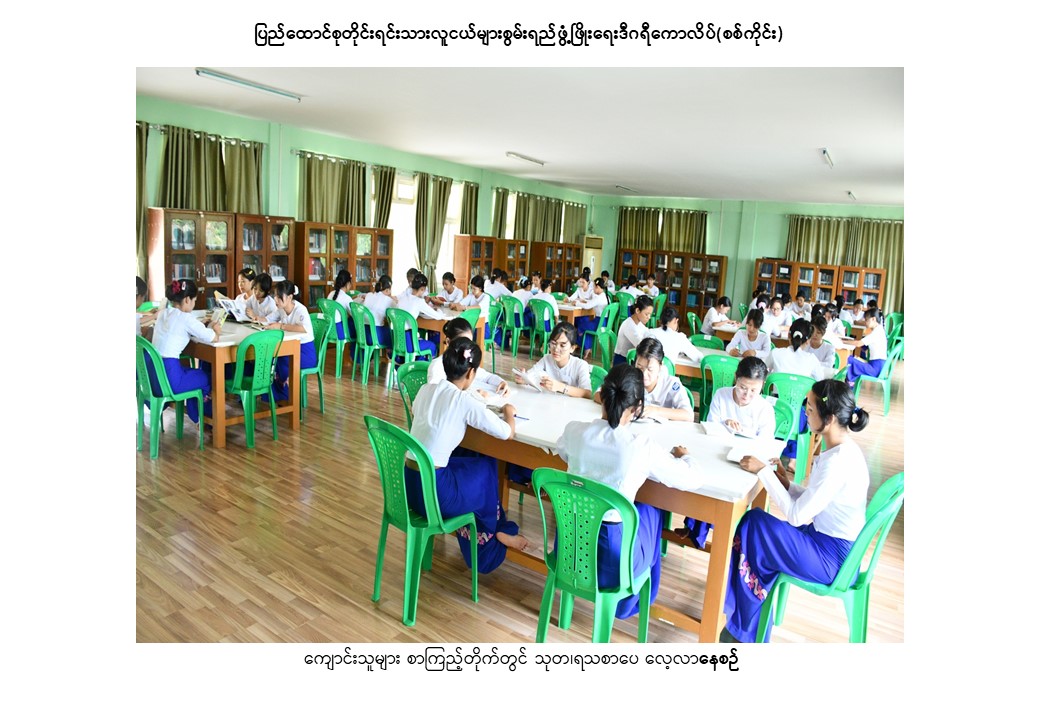
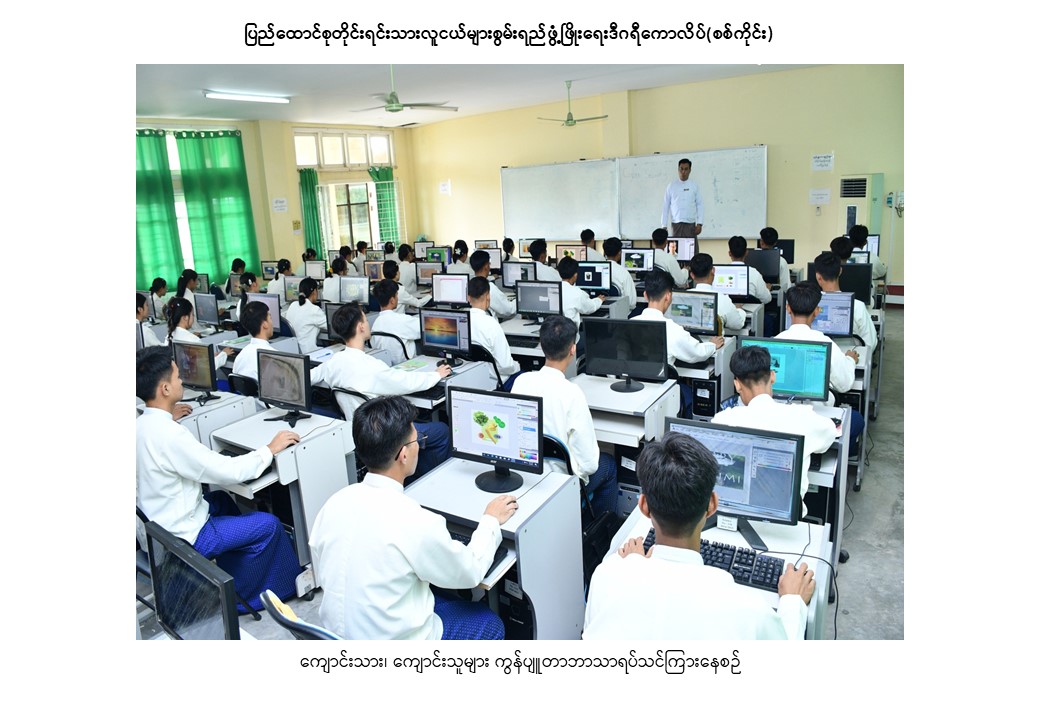
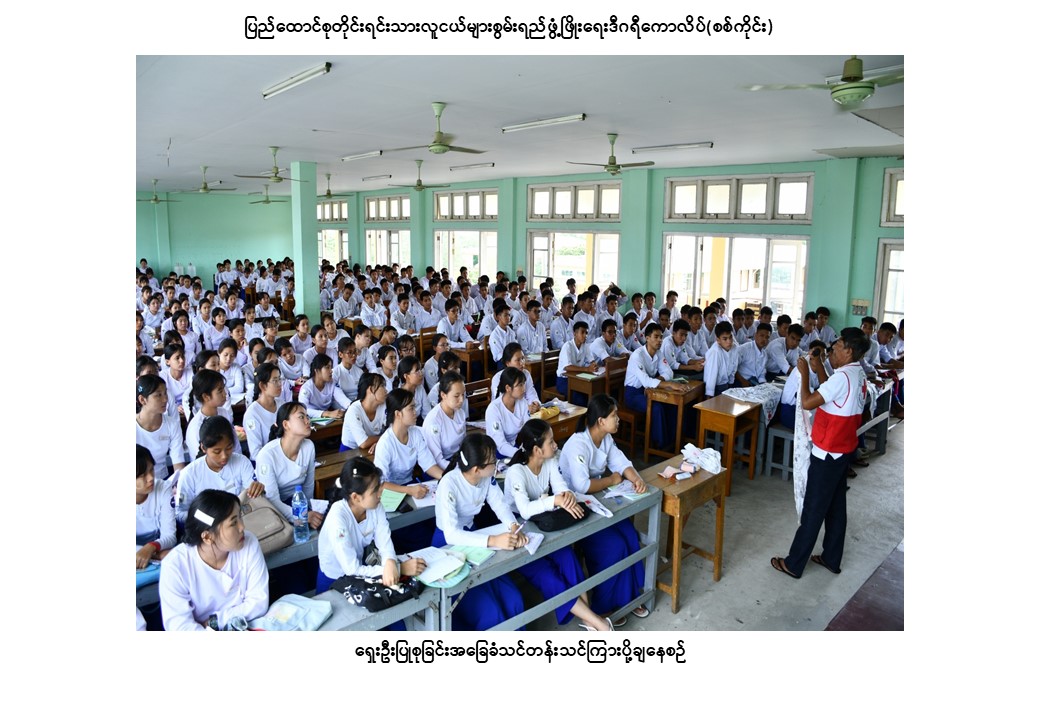
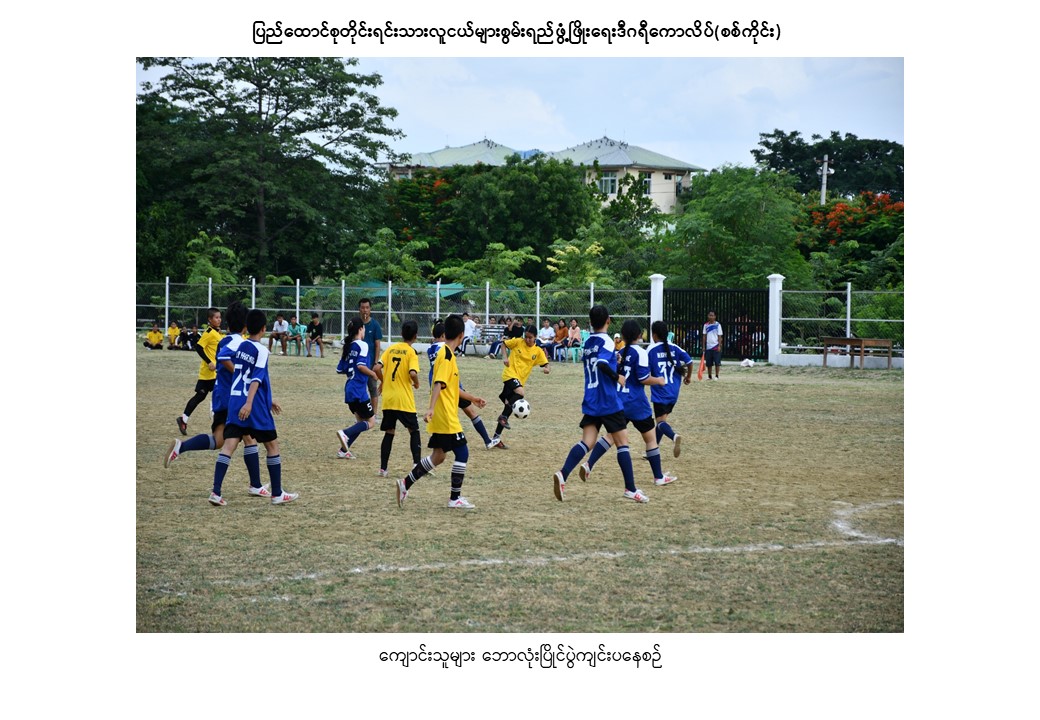
Information of Central Training School
Background Information
- Central Training School was first opened as Development Affairs Training School under the Department of Development Affairs on February 16, 1998 and then it was handed over to the Education and Training Department on June 30, 1999 with its new name "Central Training School".
Location and area
- It is located in Myawaddi Min Gyi Road, No.51 Ward, North Dagon Township, Yangon and it is ten acres wide.
Objectives
- The Central Training School has been established with the following objectives.
- To promote the skills of civil servants under the two departments of the Ministry of Border Affairs and other organizations and ministries
- To be able to carry out the tasks and responsibilities skillfully in accord with the position and rank
- To understand the rules and regulations, policy and guidance of the organization and to be able to implement the tasks assigned
Training Courses Conducted
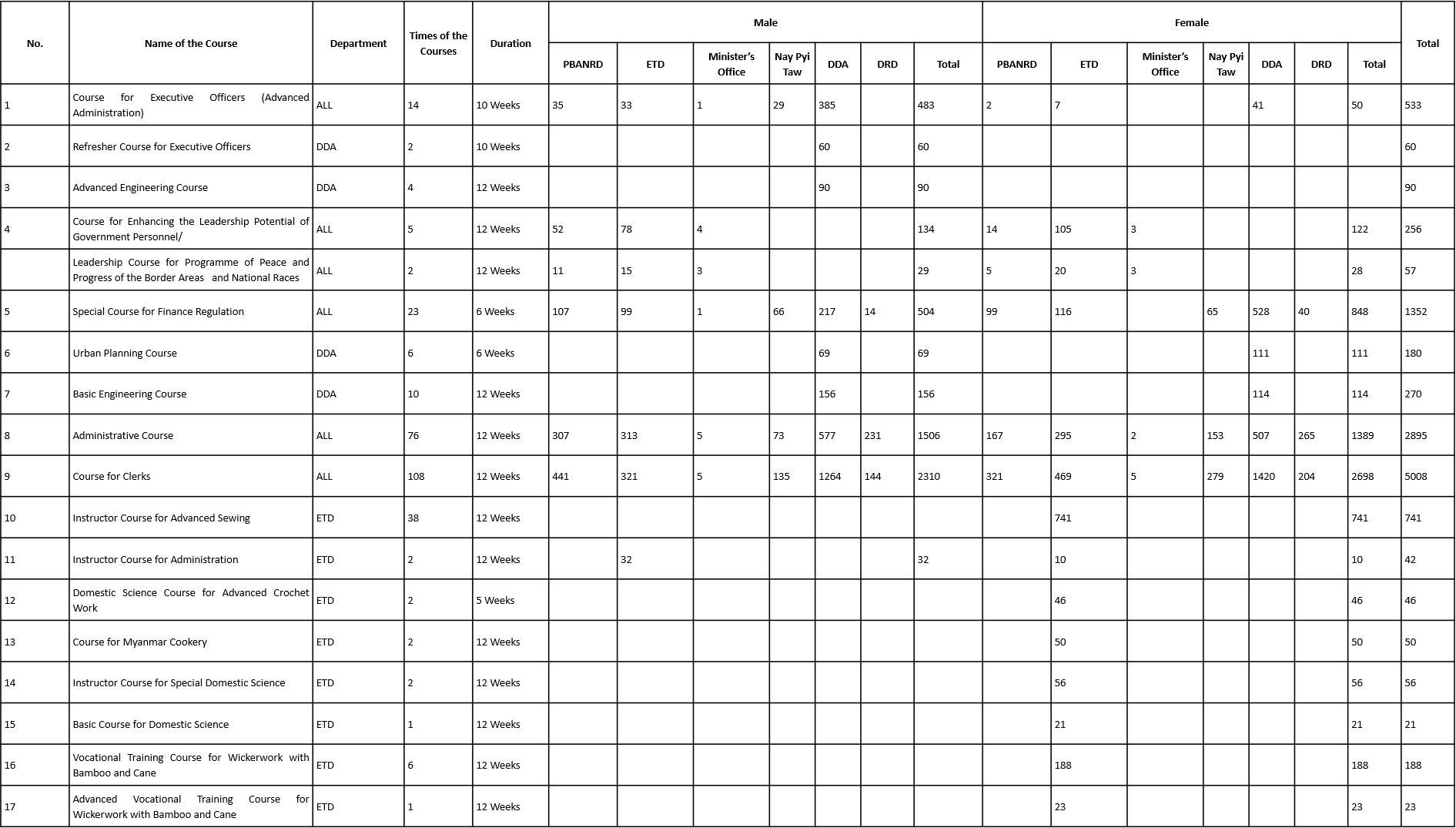
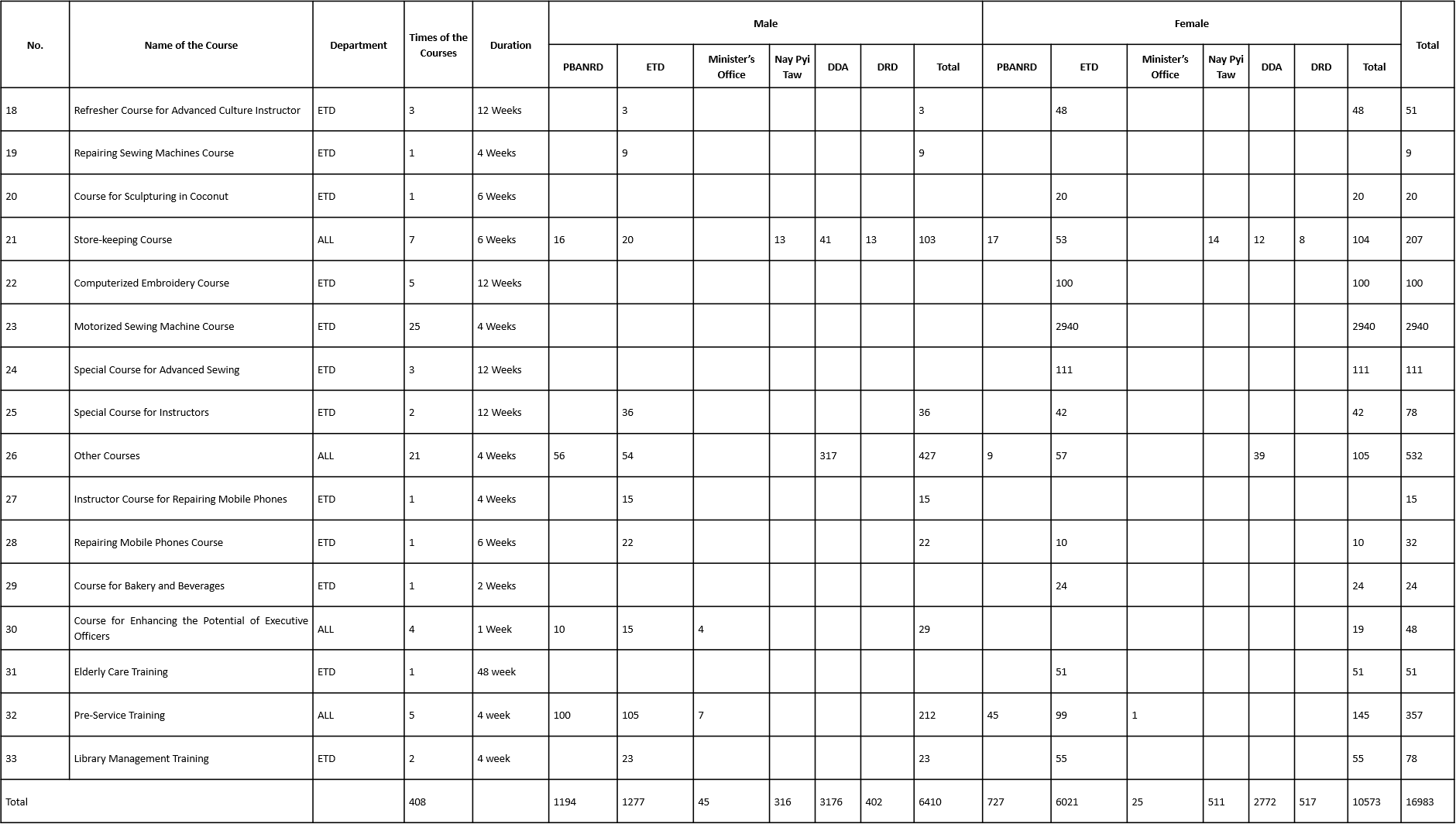
- With the aim of promoting the skills and capabilities of the civil servants and helping them achieve successful implementation of the objectives of the two departments under the Ministry, training courses have been organized since 1998 to the present time, 2026 at the Central Training School. So far, altogether 16983 trainees 6410 male trainees and 10573 female trainees) have been trained. (Attached File)
- During an individual fiscal year, the following courses are being conducted the whole year round.
No Name of the course
-
- Course for Clerks
- Pre-service training
Marking Scheme
- Course for Clerks
- Examination 50 marks
- Project Paper 30 marks
- Peer Assessment 10 marks
- Rules and Regulations
- Obeying rules and regulations 5 marks
- Crop-raising 2.5 marks
- No Absenteeism 1.5 marks
- Assessment Mark 1 mark
Total 100 marks
Selection and Supervision Committee
- Selection and Supervision Committee for assessing the skills and abilities of the trainees to pursue certificates is set up with the following people.
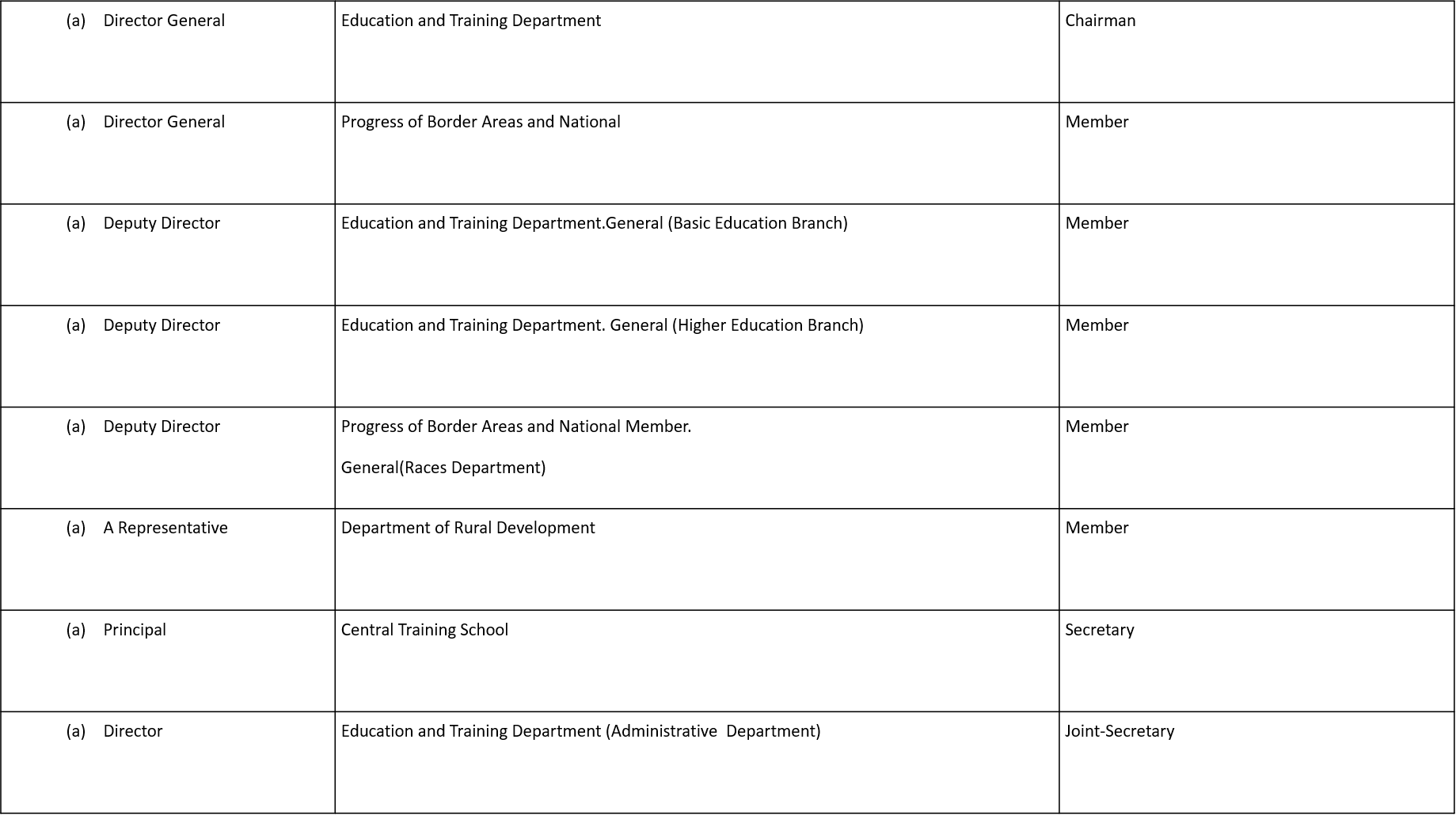
Daily Schedule of the trainees
|
from 05:40 to 06:20 |
|
from 06:20 to 07:00 |
|
from 07:00 to 07:30 |
|
from 7:30 to 08:00 |
|
from 8:00 to 11:10 |
|
from 11:10 to 12:40 |
|
from 12:50 to 16:00 |
|
from 16:00 to 16:30 |
|
from 16:30 to 17:30 |
|
from 17:45 to 18:30 |
|
from 19:00 to 21:00 |
|
from 21:00 to 22:00 |
|
22:00 |
The strength of staff from the two departments under the Ministry of Border Affairs who have completed the assigned training courses conducted at the Central Training School from 18.11.1998 to 19.6.2026
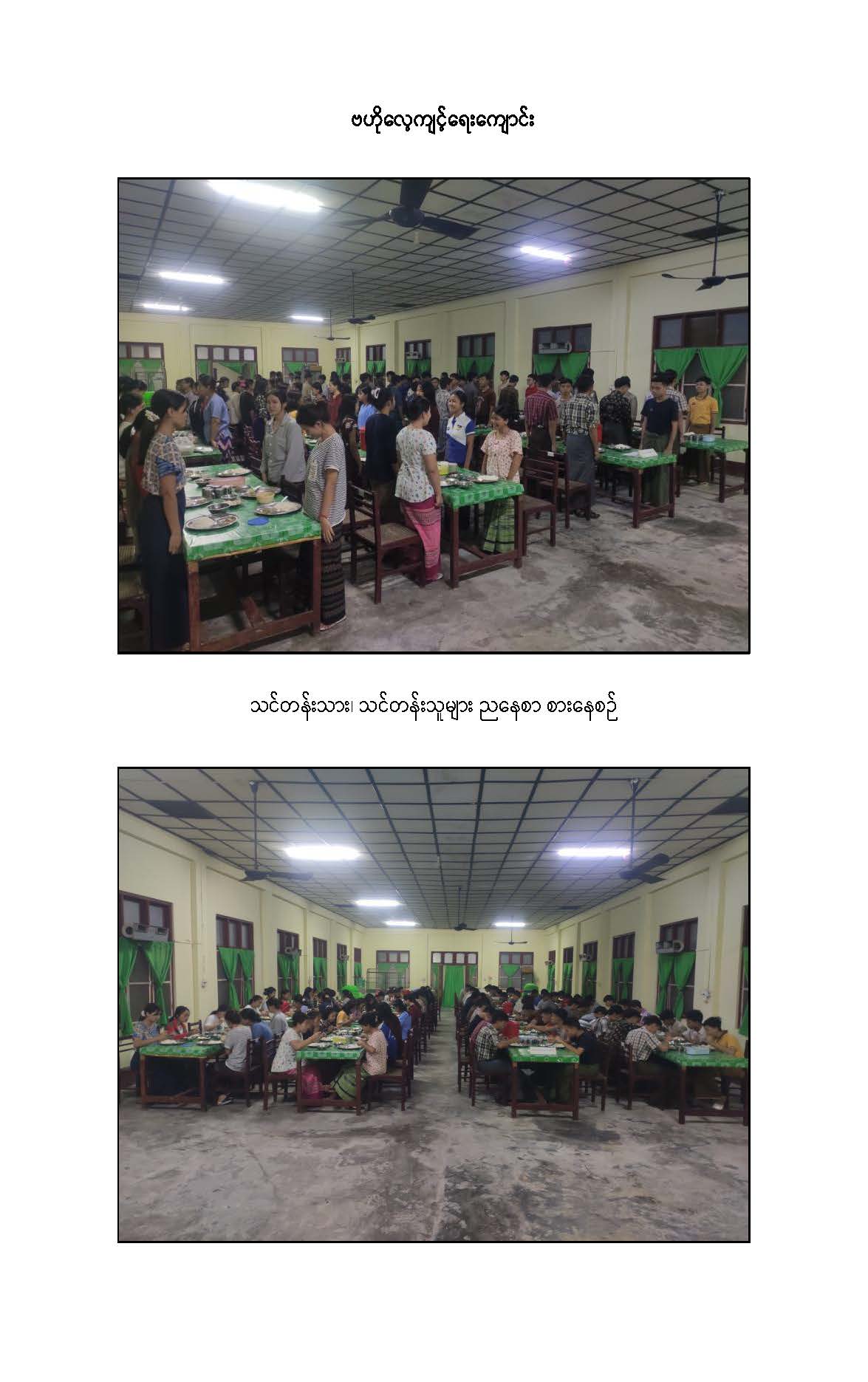
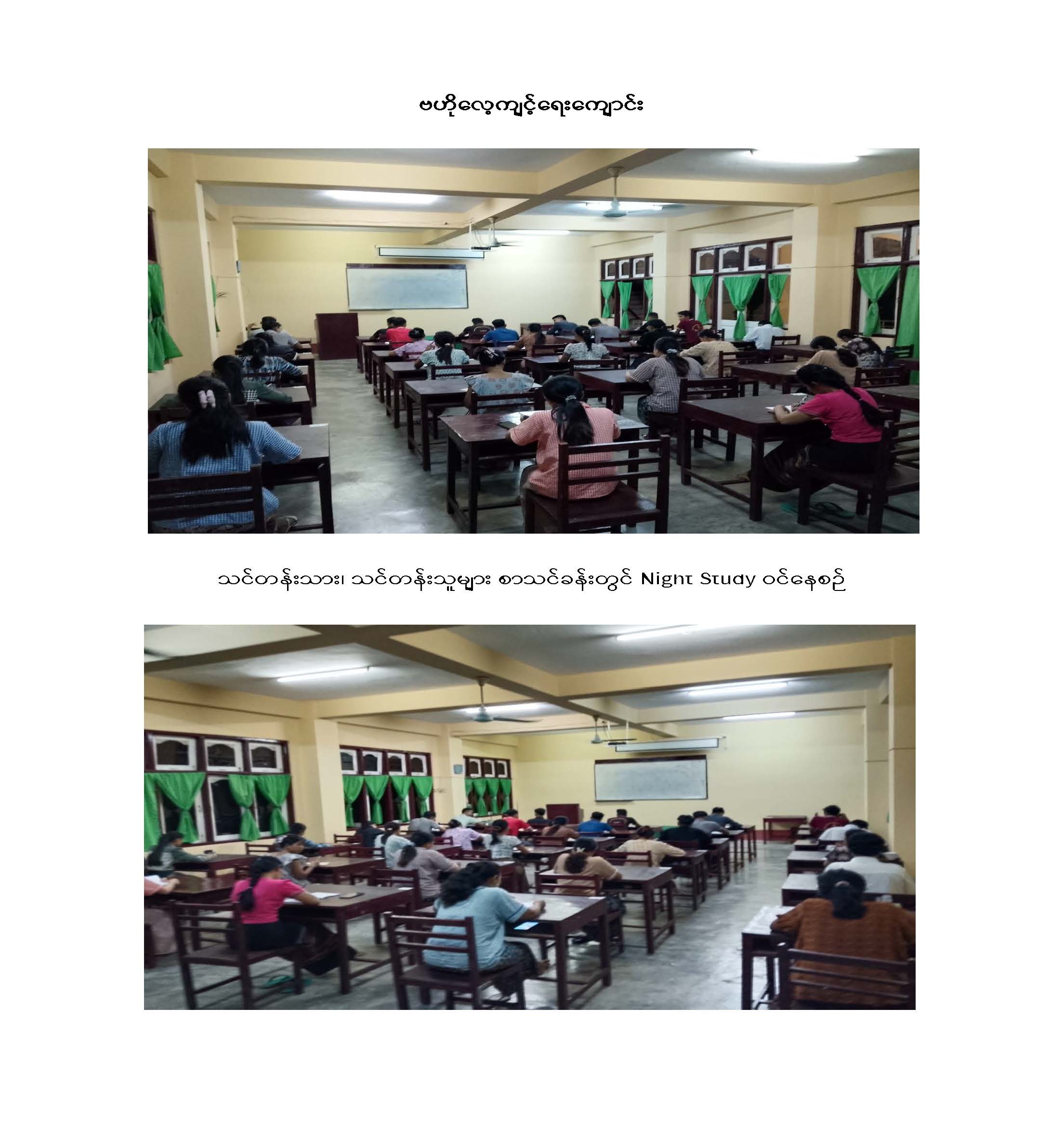
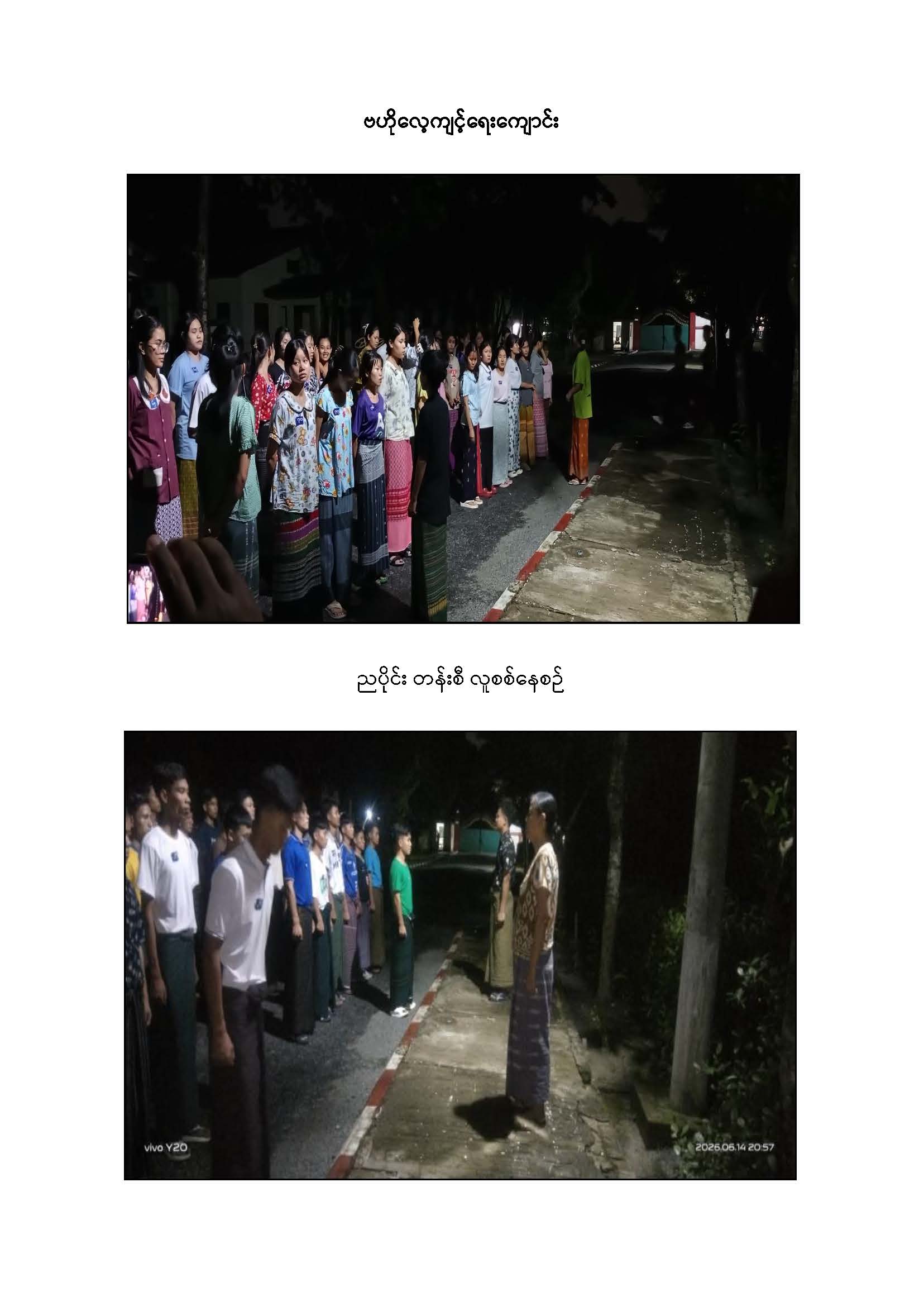
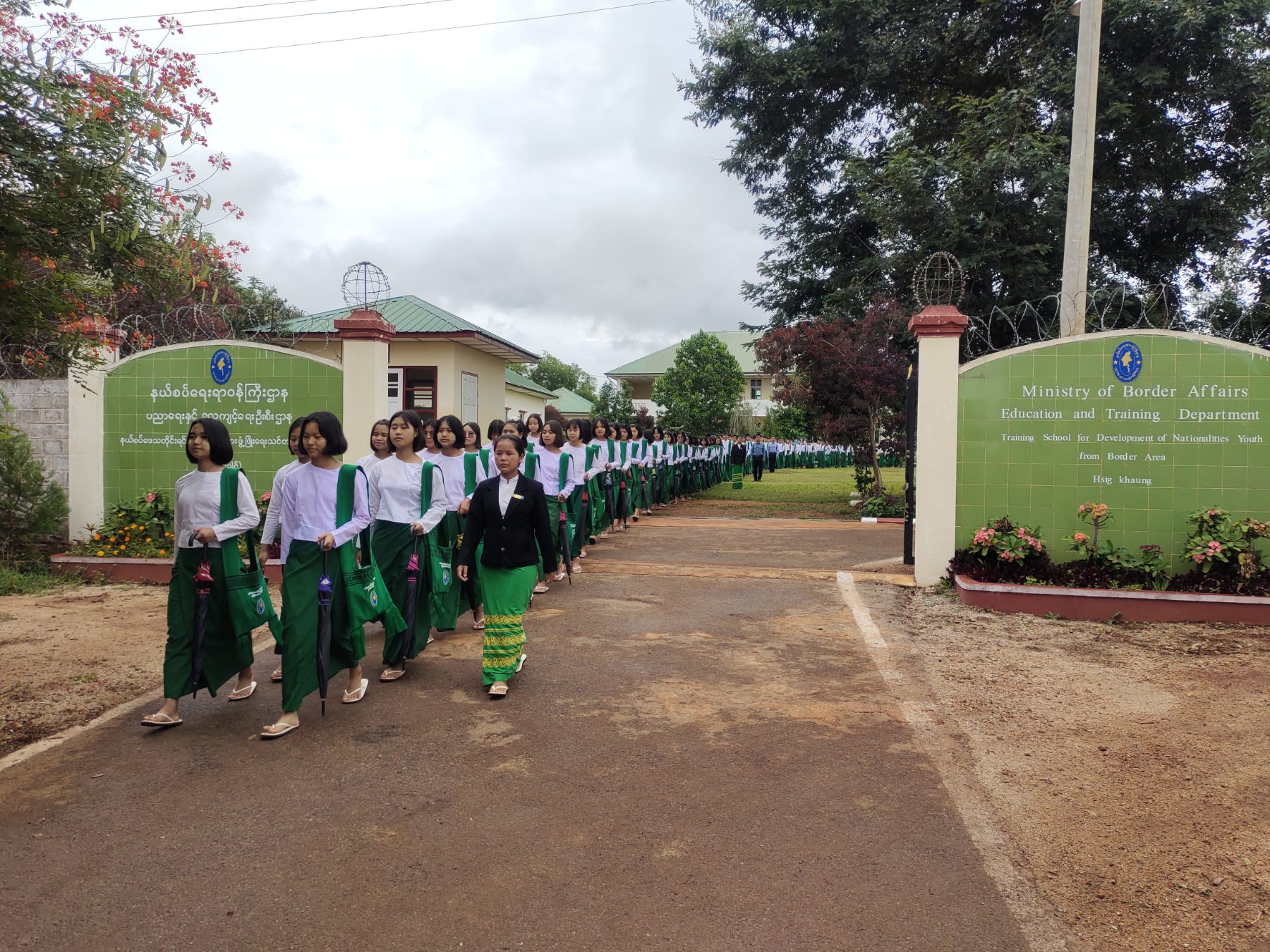
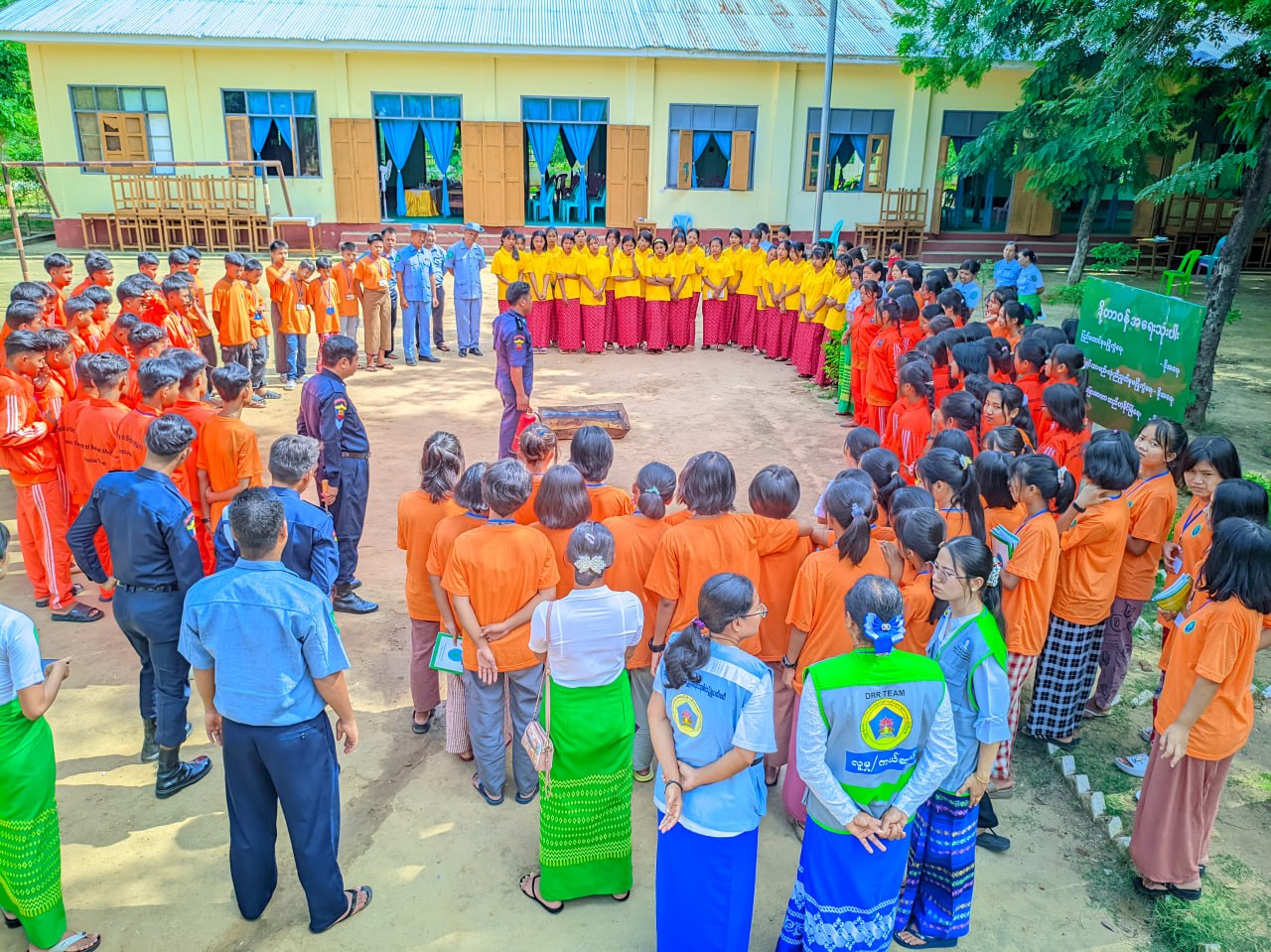
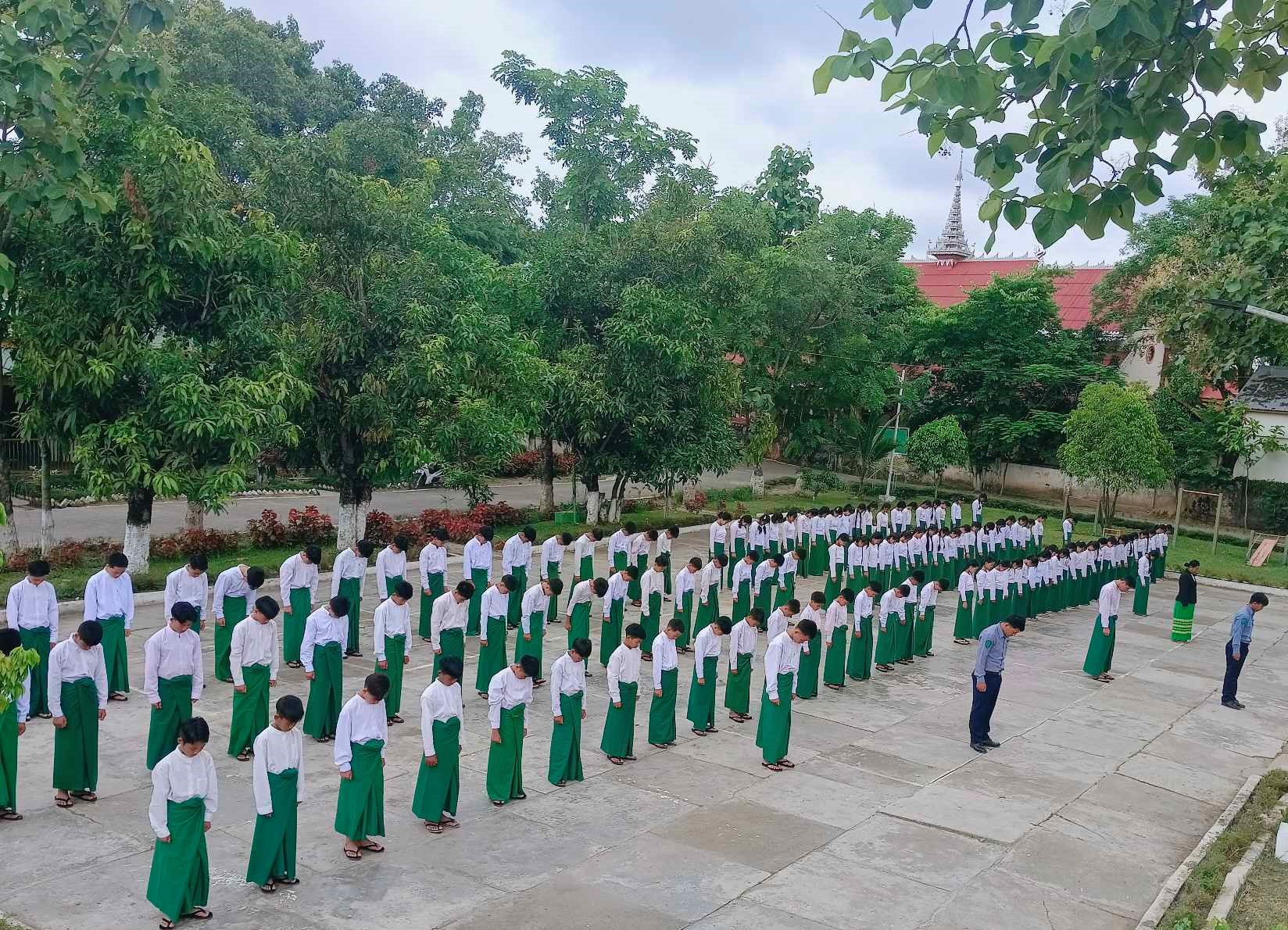
1. Training School for Development of Nationalities Youths from Border Areas Location
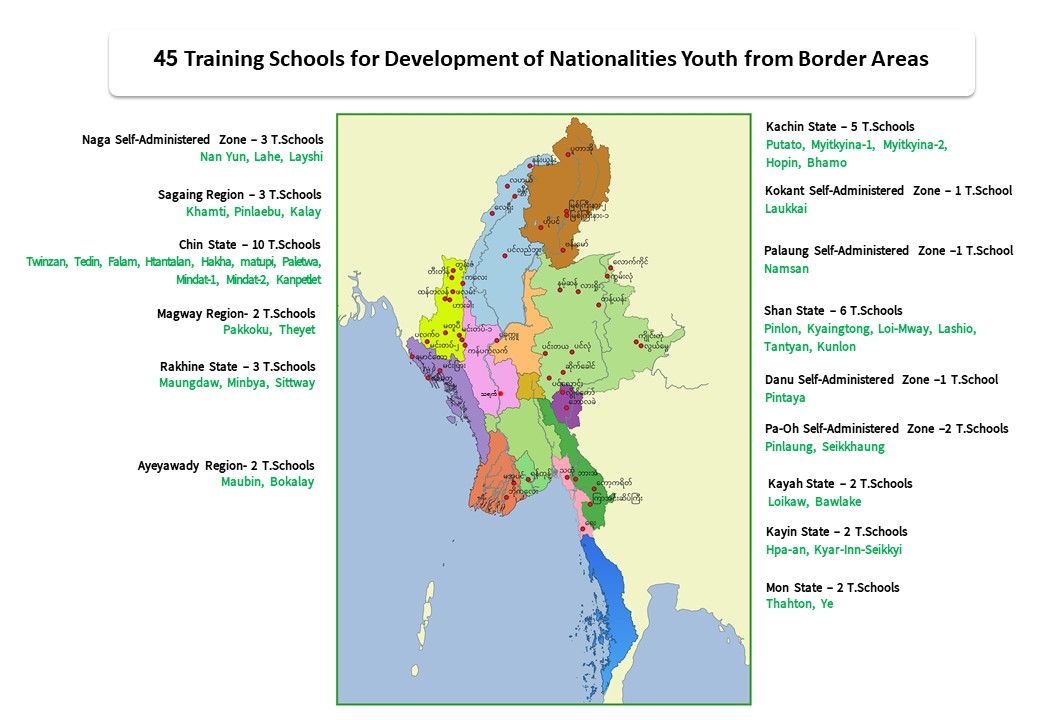
2. Purpose
Training School for Development of Nationalities Youths from Border Areas have set up the following objectives;
-
- To consolidate the Union Spirit and amity among the nationalities youth while studying together.
- To foster and belief in Three Main National Causes which are Non-disintegration of the Union, Non-disintegration of the national solidarity and perpetuation of the sovereignty of the State.
- To empower them to carry out their respective regions' development once they have finished their schooling.
- To nurture and train a new generation of highly educated and talented for the nation.
- To nurture and build up the morale and enthusiasmin the development work of border areas and the uplift of the living standard of the national races.
- To foster the morale of willingness to strive with might and main in the building of a new modern developed nation.
Acceptance criteria for students
3. Admission new students to Training School for Development of Nationalities Youths from Border Areas, those who meet the following qualifications are considered;
-
- Must be a citizen of the Republic of the Union of Myanmar.
- Must be living in remote villages far from the cities/townships in the border areas and must be proficient in their own ethnic language.
- Must be orphans, Motherless, Fatherless and poor students.
- Must be students in paragraph (c) who are highly intelligent, have a good academic background, and are eager to learn.
- Must be in good health and physically strong. (Those with chronic diseases, infectious diseases, physical disabilities, mental illness, and mental retardation, as well as those with tattoos, will not be accepted.)
- Must be grade 5 students between the ages of 11 and 12. If you submit proof of the death of one or both parents, you must be attending grade 6 to grade 8 and obtain approval from the Admissions of Head Office.
- Must be aware of and able to follow the rules set by the training school.
- Students must not be those who want to move with their parents to their new location.
- Admission will be based on the capacity of the dormitory at our school.
4. System of Selection
The relevant region's School Supervision Committee uses the following priority system to choose students for the Training School for Development of Nationalities Youths from Border Areas;
- Orphans
- Motherless
- Fatherless
- Poverty
5. Education
The Department supports ethnic minority students' living and educational expenses, as well as providing middle and high school education. In higher education, we give customized textbooks to help with exams, as well as extra teaching time with professional lecturers;
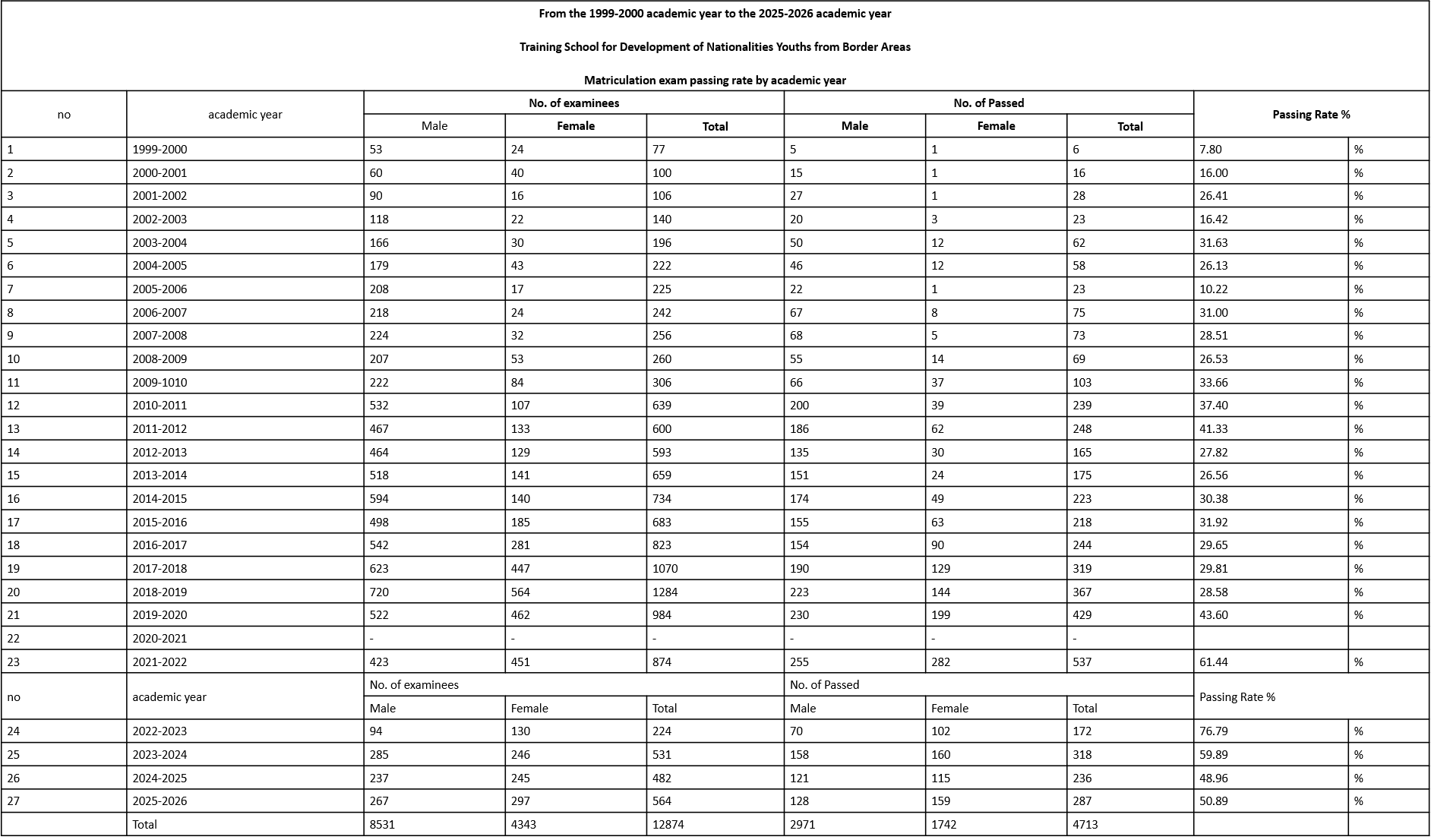
Degree college, university education
6. Students who have completed the Matriculation exam from basic education high school are admitted to Nationalities Youth Resource Development Degree College, Yangon, and Sagaing to pursue further university courses. Nursing, Midwifery, and a five-year Bachelor of Education (B.Ed.) degree program are available to students.
From the 1999-2000 academic year to the 2024-2025 academic year
From the Training School for Development of Nationalities Youths from Border Areas
Degree college and University attendance and current attendance status of students who have passed the matriculation examination
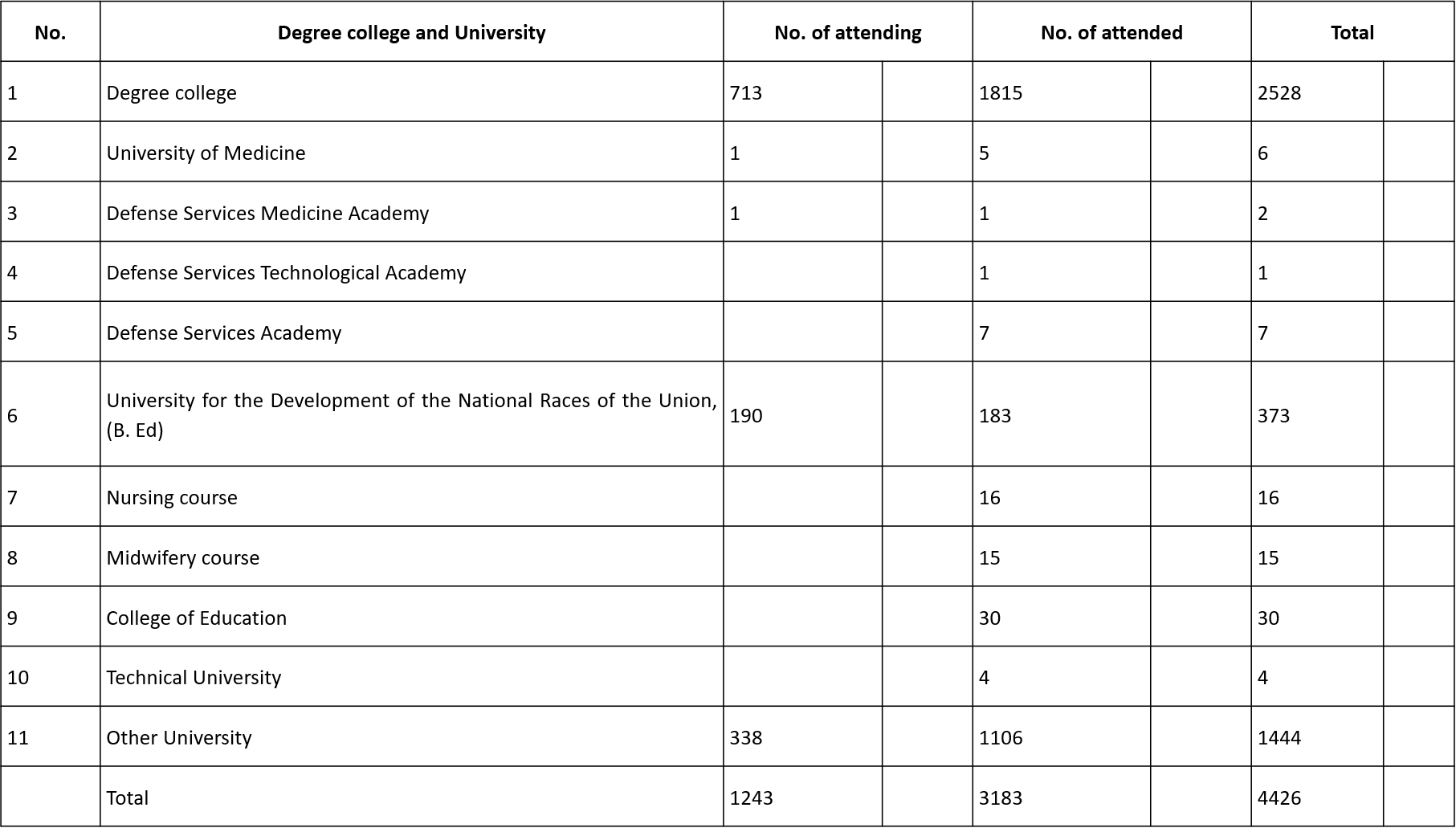
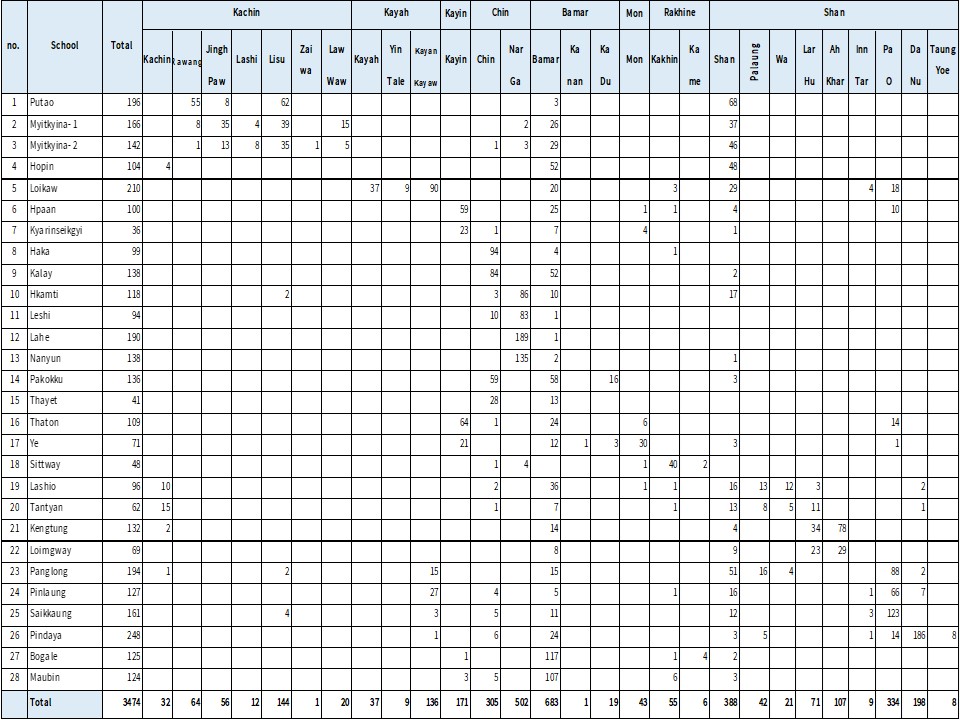
7. Student strength by ethnicity
List of students attending basic education schools in the 2026-2027 academic year in Training School for Development of Nationalities Youths from Border Areas, by ethnicity;
Eligibility Criteria for trainees in Vocational Training School
- Must be between the ages of 16 and 30 years .
- Must have a middle school education level.
- Must be in good health , not suffering infectious diseases and not be pregnant.
- Must be a person who is passionate about vocational skills.
- Must have to choose a priority unemployed and low-income women living in rural areas.
- Must have to choose a priority those who intend to work with vocational skills after the training .
- If a person who has successfully completed a course at a vocational training school wishes to attend the course again, the person must be a person who is working as a domestic worker.
Current Training Programs
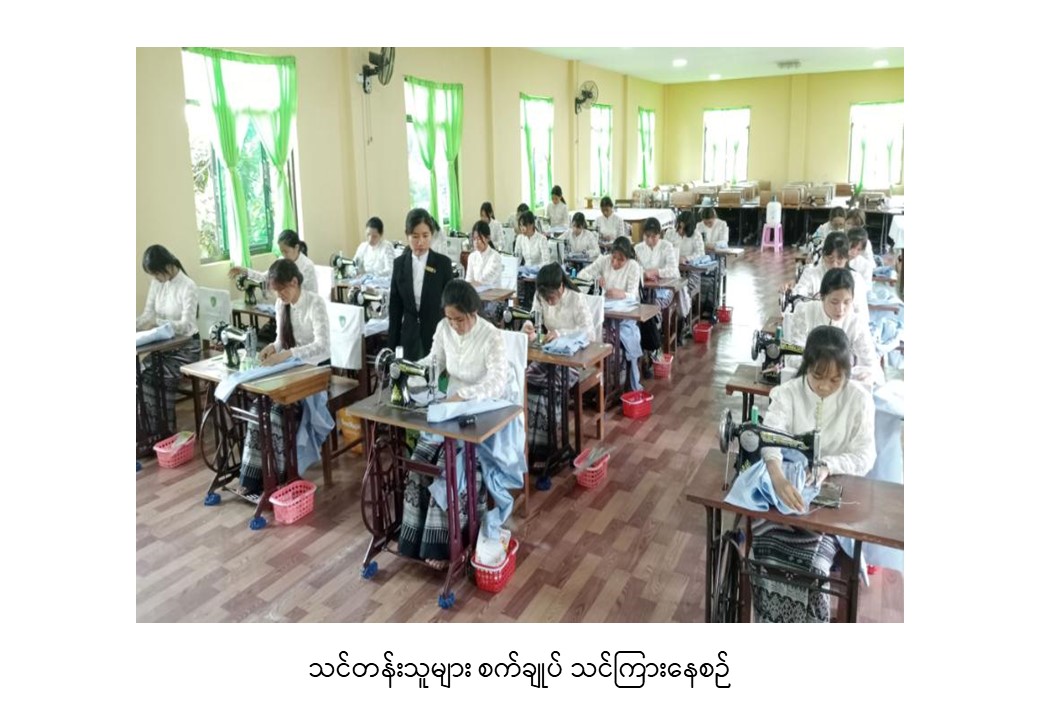
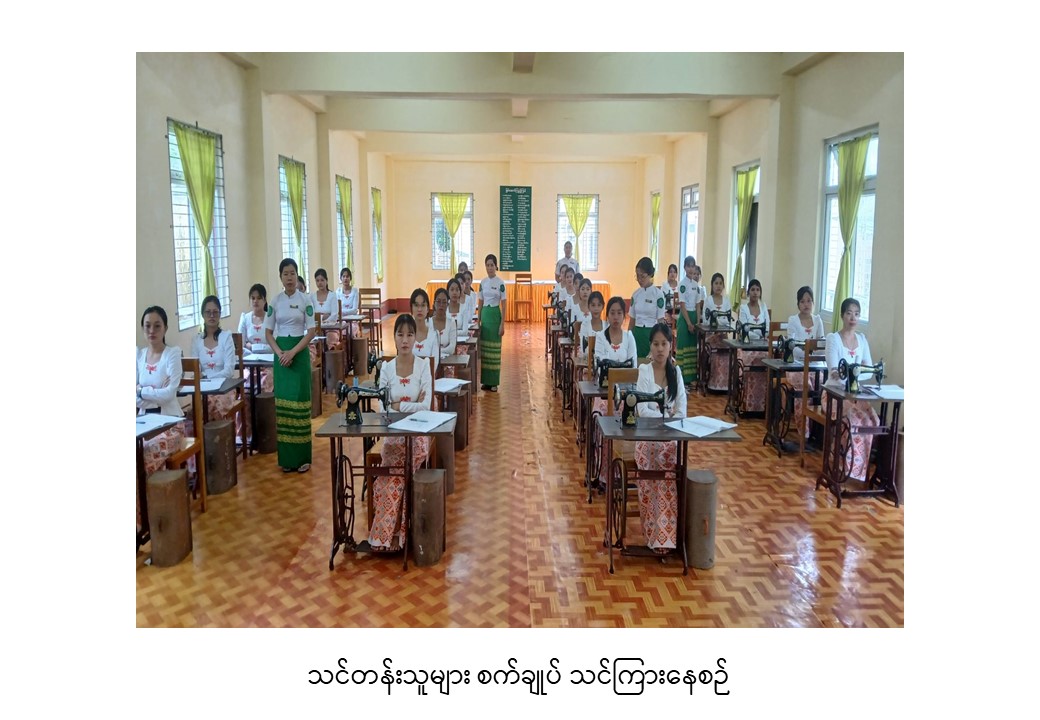
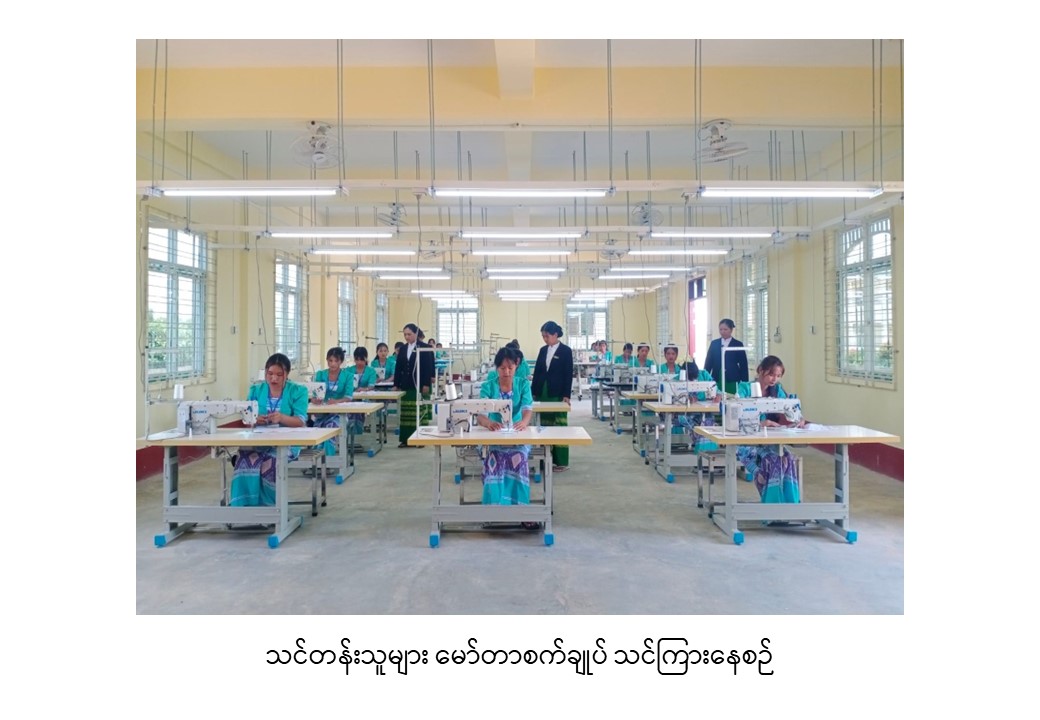
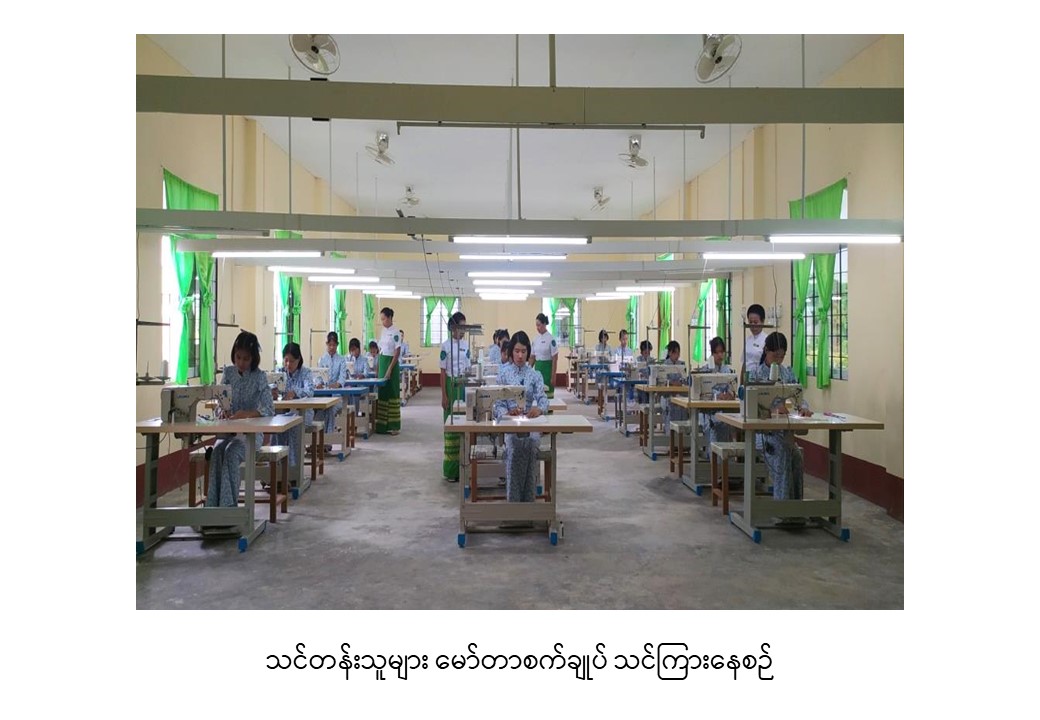
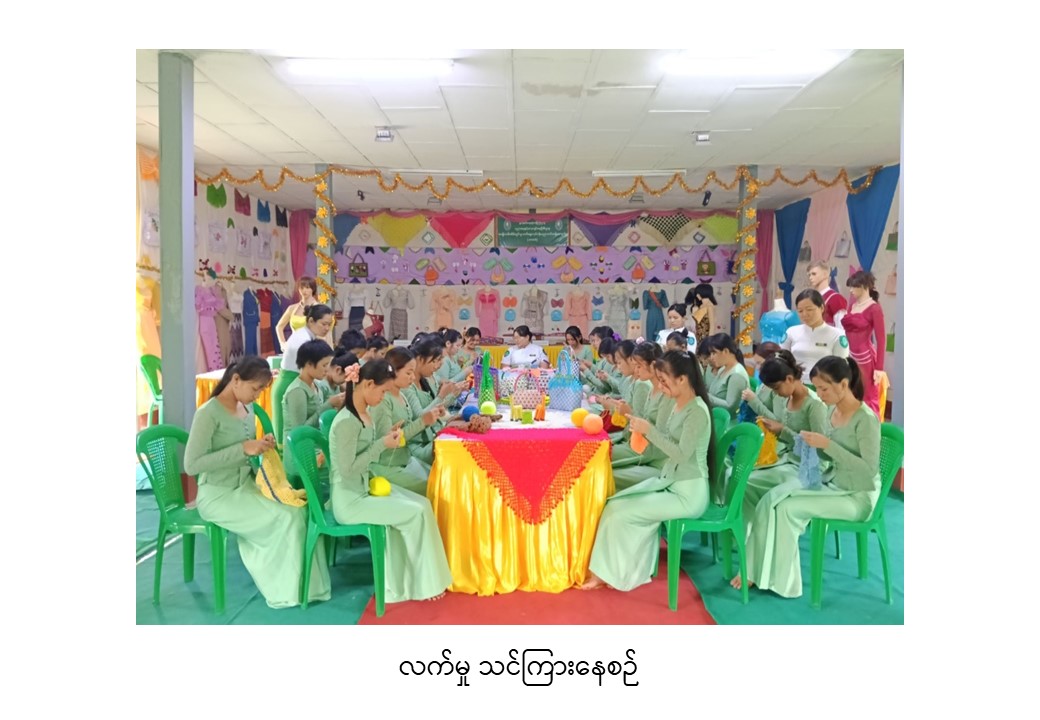
Vocational Training School of Domestic Science for Women (Loikaw, Hpa-an, Myainggyingu, Mudon, Ye, Muse, Kengtung, MineSat, Tachileik, Saikkaung, Hkamti, Le Shi, Lahe, Kalay, Pakokku, Myeik, Kawthoung, Pathein, Labutta) are offering the following courses for 22 weeks from 4-5-2026 to 2-10-2026;
- Advanced Vocational Tailoring Course 475
- Training Courses for Hotel Servicing 35
Total 510
Course-based teaching subjects
Lessons on tailoring
- Thong shorts with Leather
- Basic blouse
- Hawaiian shirt
- Mandarin shirt
- Sleeveless blouse/ Wrap Sleeveless blouse
- Wrap Over High neck blouse
- 3 blouses
- 1 set of uniform
- Stylish pants
- One-layer coat
- Three-layer/double-layer skirt/four-layer skirt /double-layer Longyi
- 2 modern and stylish pieces
- Vest
- Party dress
- Uniform for Trainee
- Traditional costume
- Fancy Dress
- Fancy Skirt
- Fancy Dress for the event
- Modern women's blouse
- Sport shorts
- Longyi for Men
- Company Uniform Style
- Luxury Cap Dress (5 & 1)
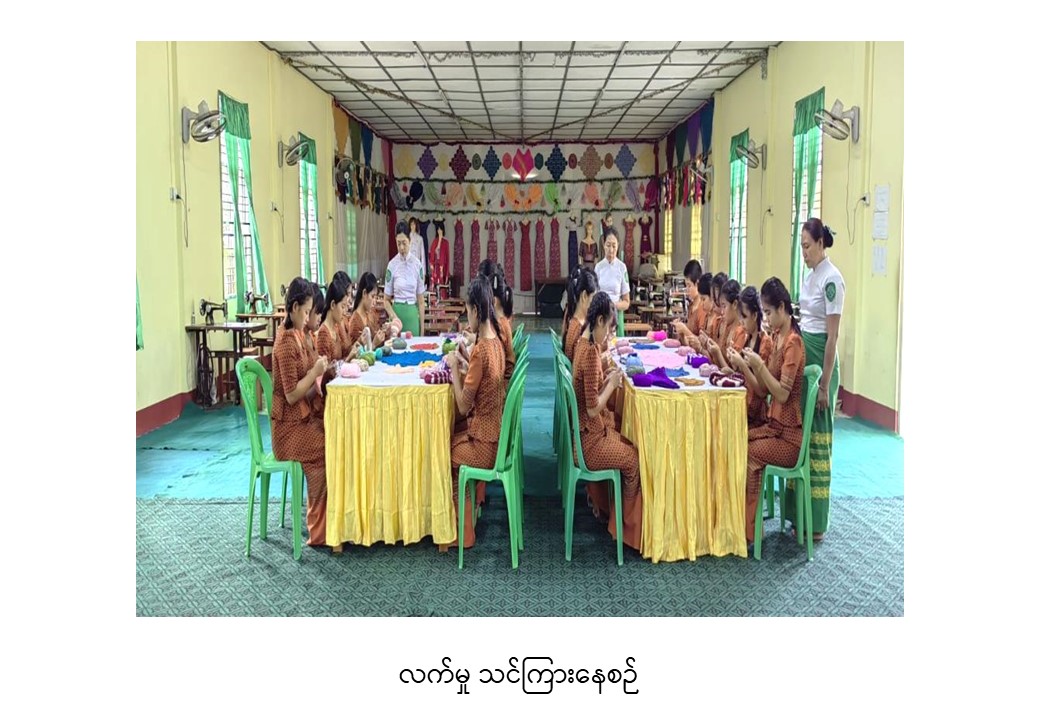
Handicraft lessons
- One-needle Basic stitching
- One-needle blanket knitting/long blanket knitting
- One-needle handkerchief
- One-needle punching of a punching mat
- Pillowcase embroidery
- Thai plastic basket embroidery
- Making a mirror lace bag
- Sewing a handbag with lace
- Making a smocking tissue box
- Double-needle embroidery
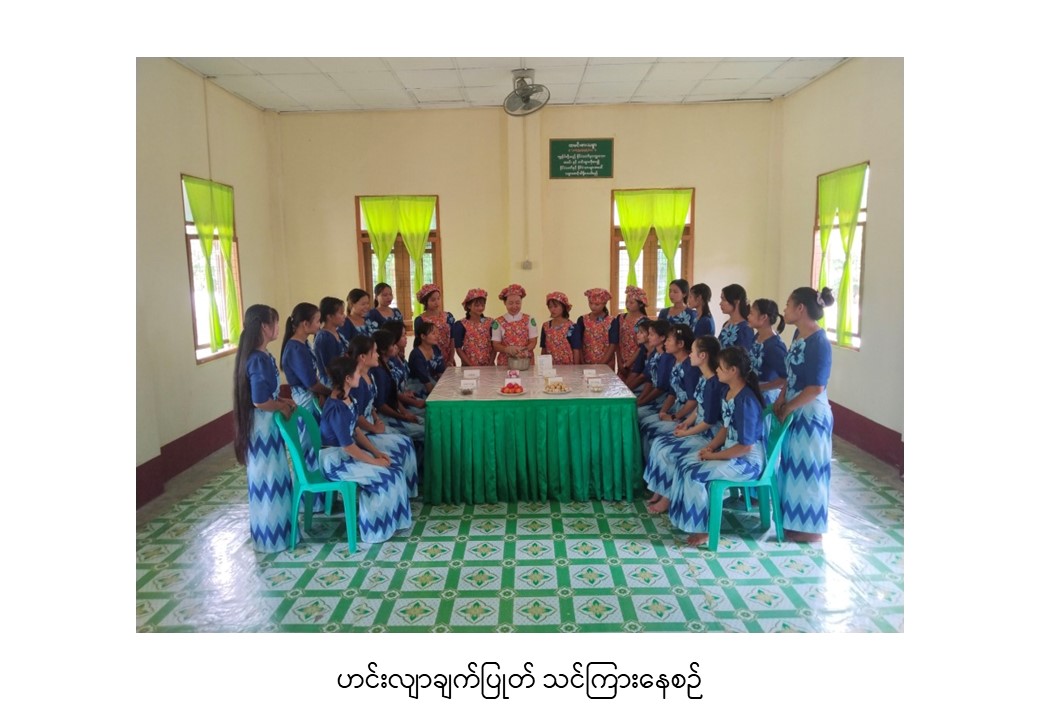
Cooking lessons
- Lime-steamed fish
- Prawn Curry
- Steamed Fish
- Kachin Style Chicken Curry
- Braised Pork
- Goat and Chickpea Curry
- Making Salad
- Making Mala Xiang Guo
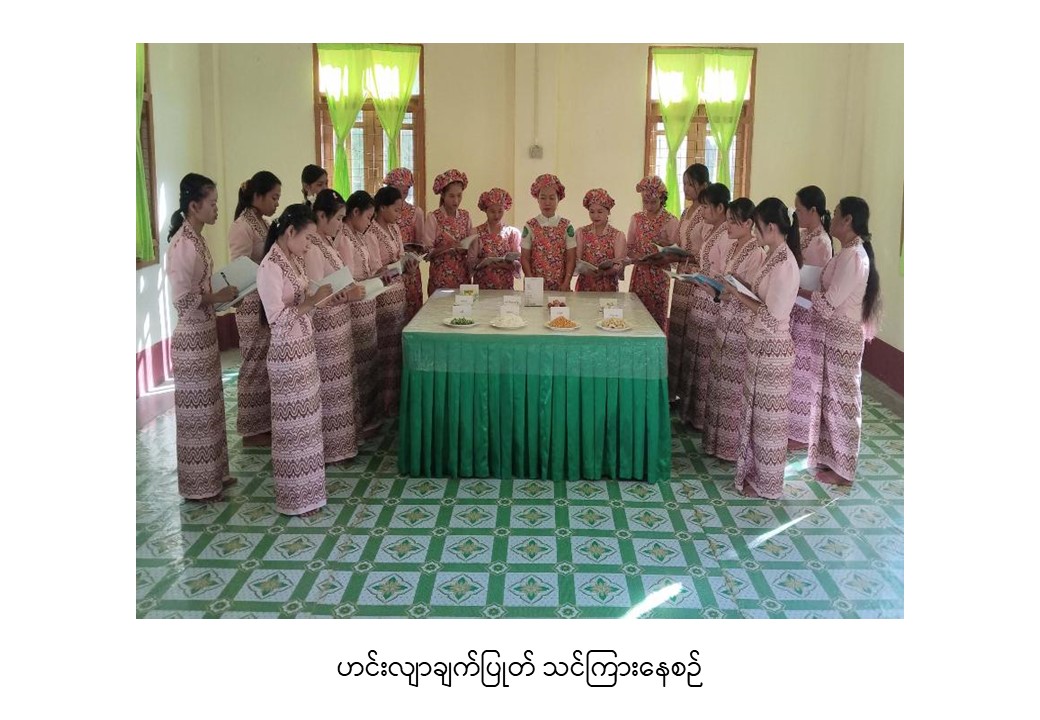
Baking lessons
- Coconut milk jelly
- Chocolate Donut
- Fried Pork Pumplings
- Pancakes
- Monhinkha
- Pumpkin Pudding
- Potato Pudding
- Soaked Noodles
- Meatballs Pudding
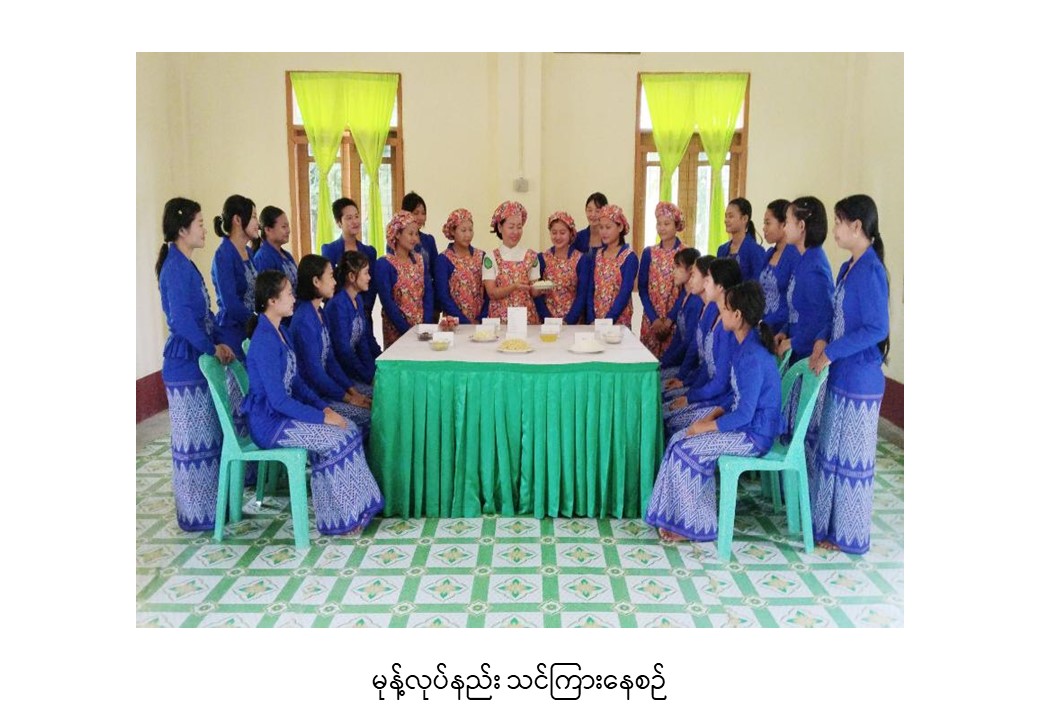
Eligibility Criteria for trainees in Training Courses for Hotel Servicing
- Must be a citizen of the Republic of the Union of Myanmar.
- Must have a high school level Grade 8 or Grade 12.
- Must be between the ages of 18 and 30 years .
- 4. Must be a person who is passionate about hotel servicing skills and attend to the end of the training.
- Must be single.
- Must be in good health and not suffering from any infectious or chronic diseases.
- Must have permission of the parent
- Must have good appearance and be able to answer in-person interviews.
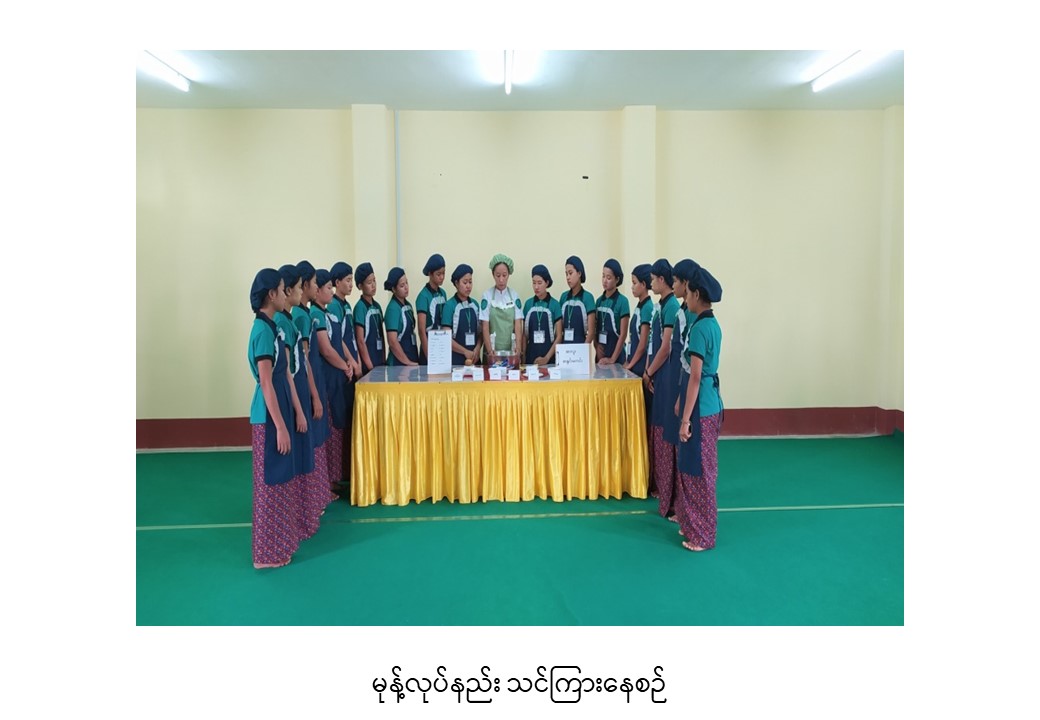
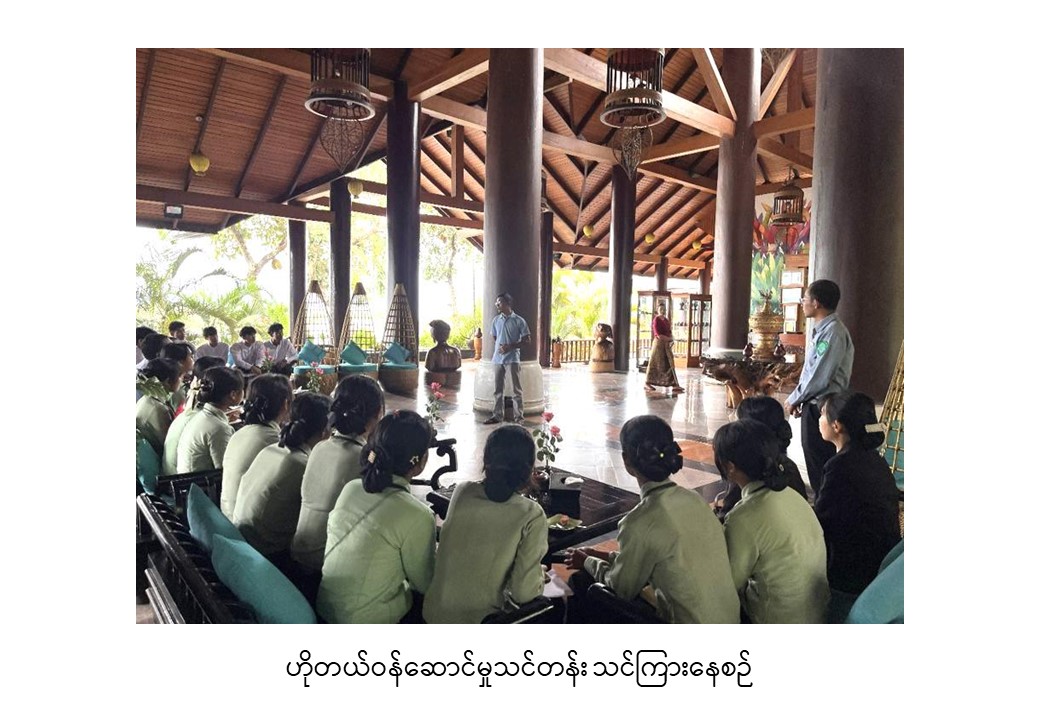
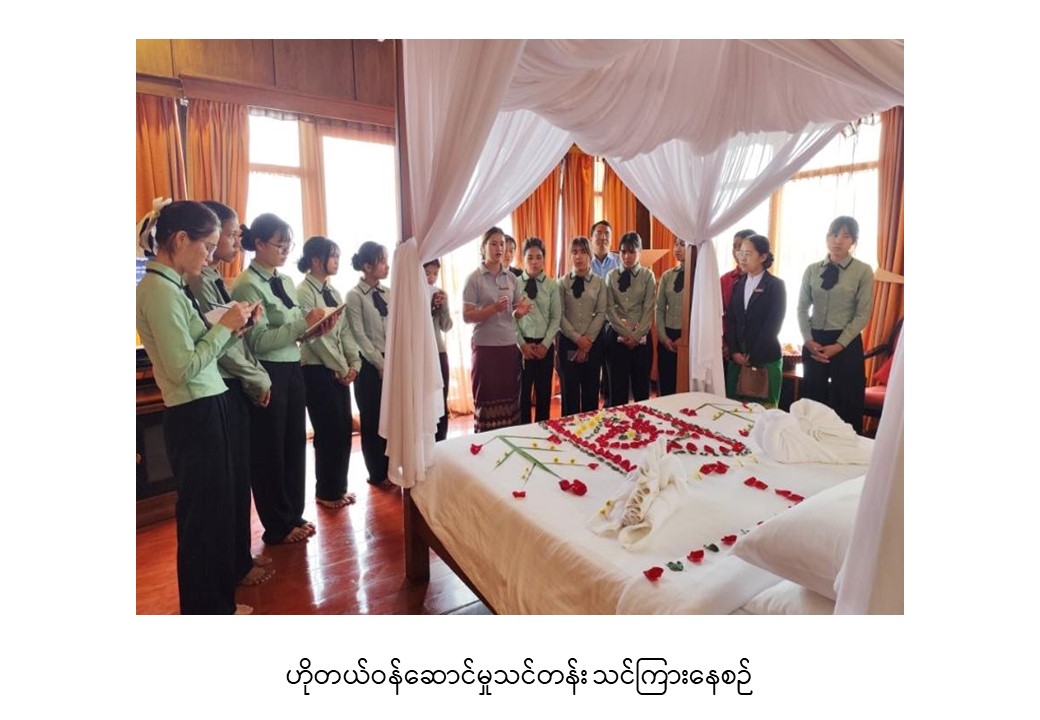
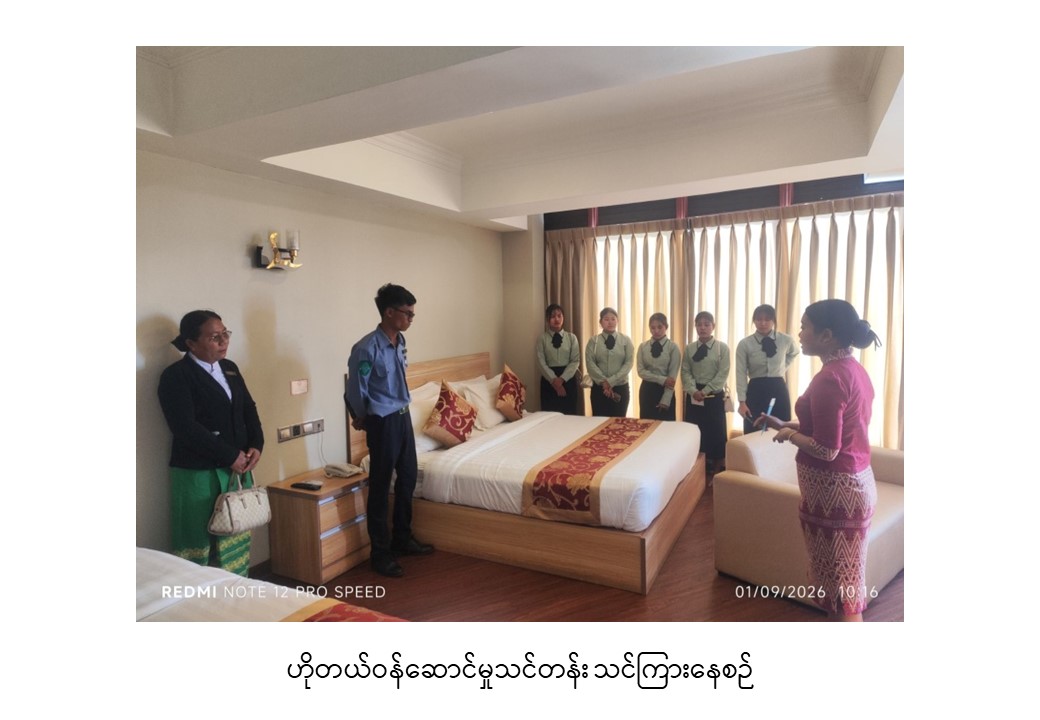
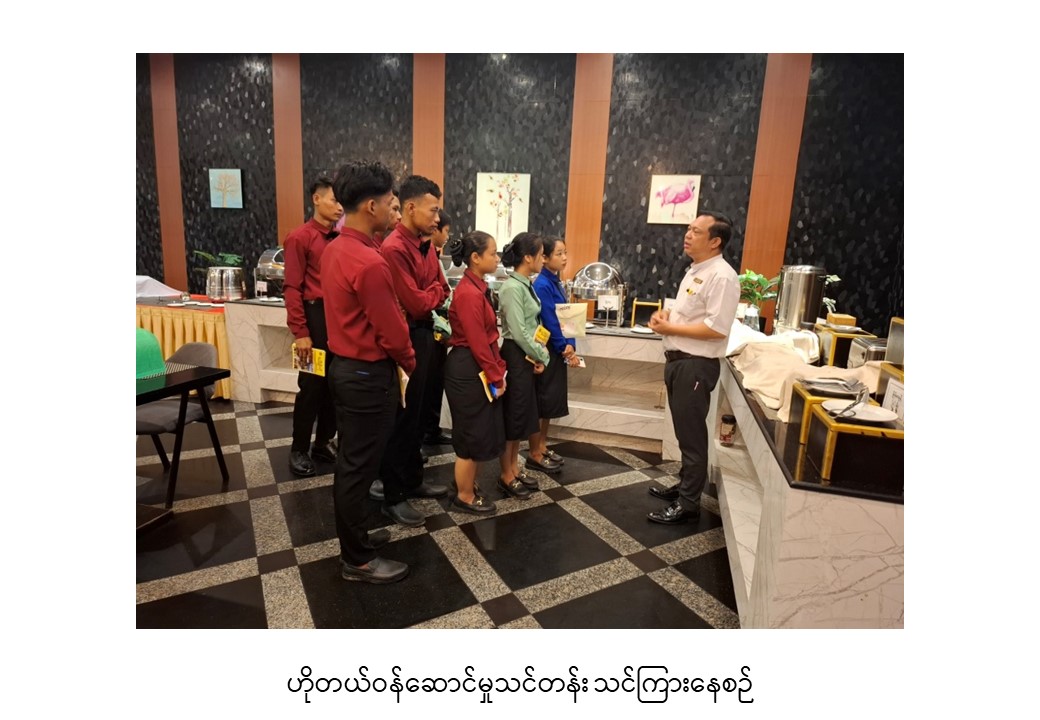
Training Courses for Hotel Servicing
Bedroom training lessons
- Housekeeping
- Public places
- Linen and laundry
- Hospitality
- customer service
- Occupational health, safety and security
- Life and work skills
- English for Hotel Industry
Food and beverage service lessons
- Food safety and personal hygiene
- Receptions and special events
- Hospitality
- Occupational health, safety and security
- Life and Career skills
- English for Hotel Industry
Eligibility Criteria for trainees in Technical Training School
- Must be a citizen of the Republic of the Union of Myanmar.
- Must have a middle school education level (or) be able to read and write in Burmese and English language.
- Must be a male, not older than 30 years old.
- Must be in good health, physically fit and not suffering infectious diseases.
- Must be those who are interested in the course and want to attend from the beginning to the end of the course.
Current Training Programs
Technical Training Schools for Nationalities Youth from Border Areas (Hpa-an, Dawei, Labutta, Aung Pan) are offering the following courses for 22 weeks from 4-5-2026 to 2-10-2026;
- Construction Course 14
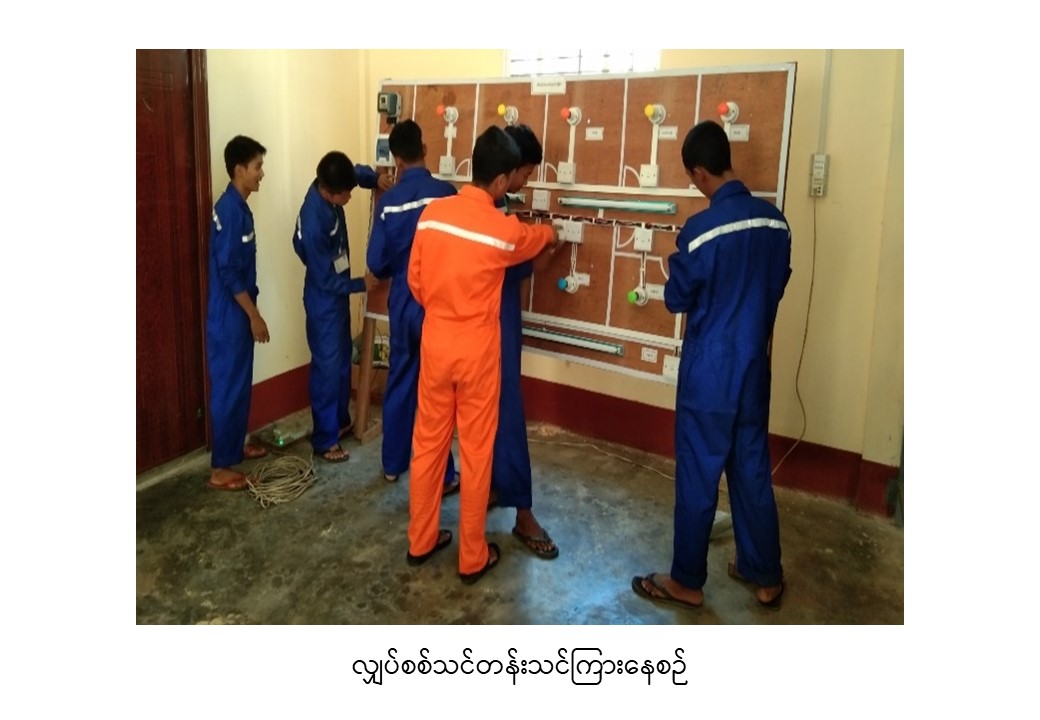
- Electrical Course 34
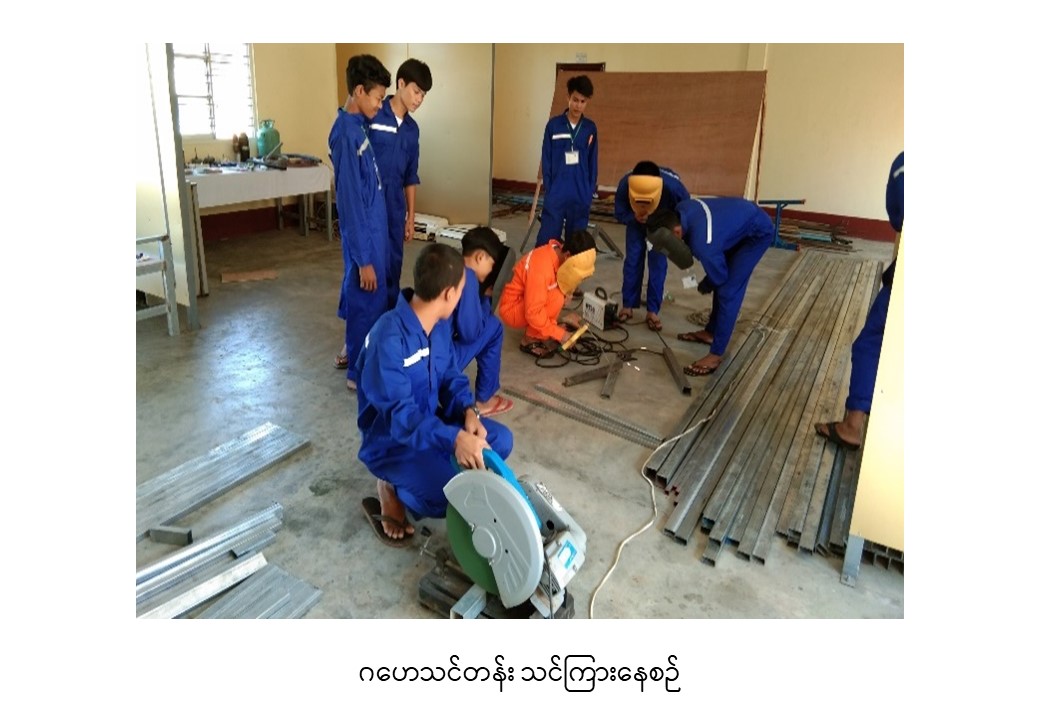
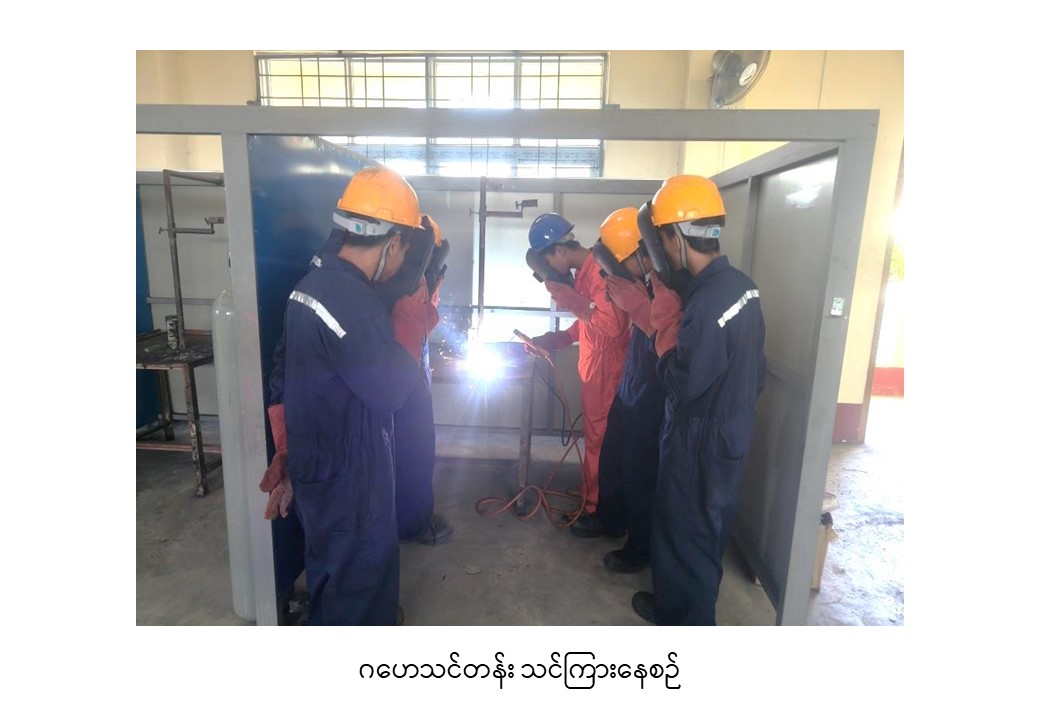
- Welding Course 35
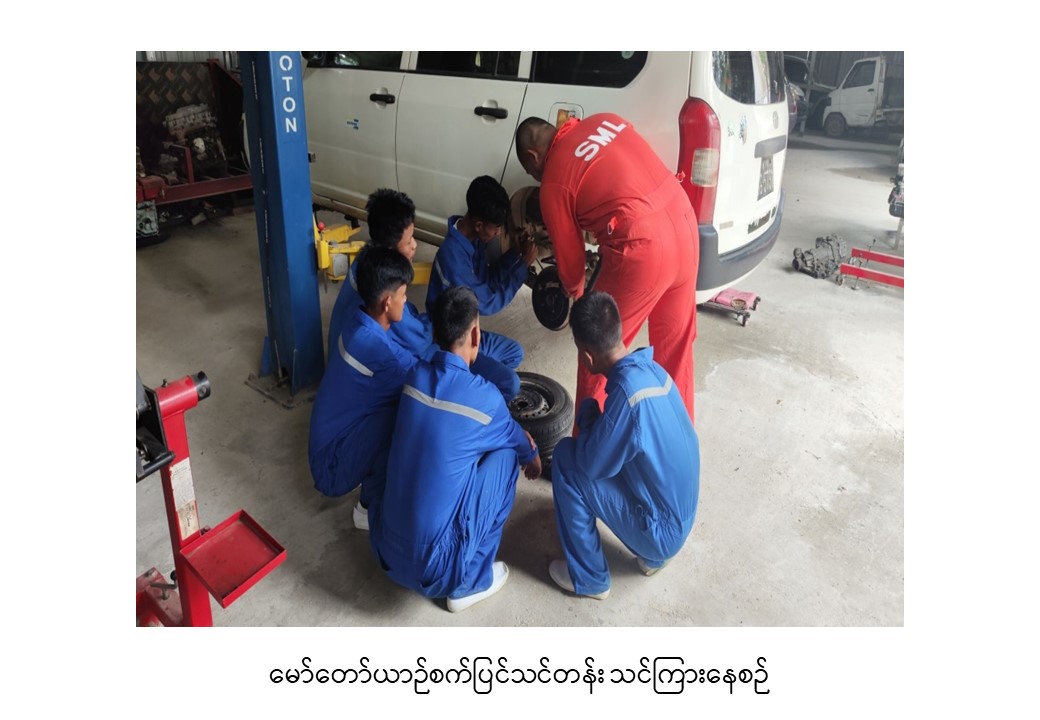
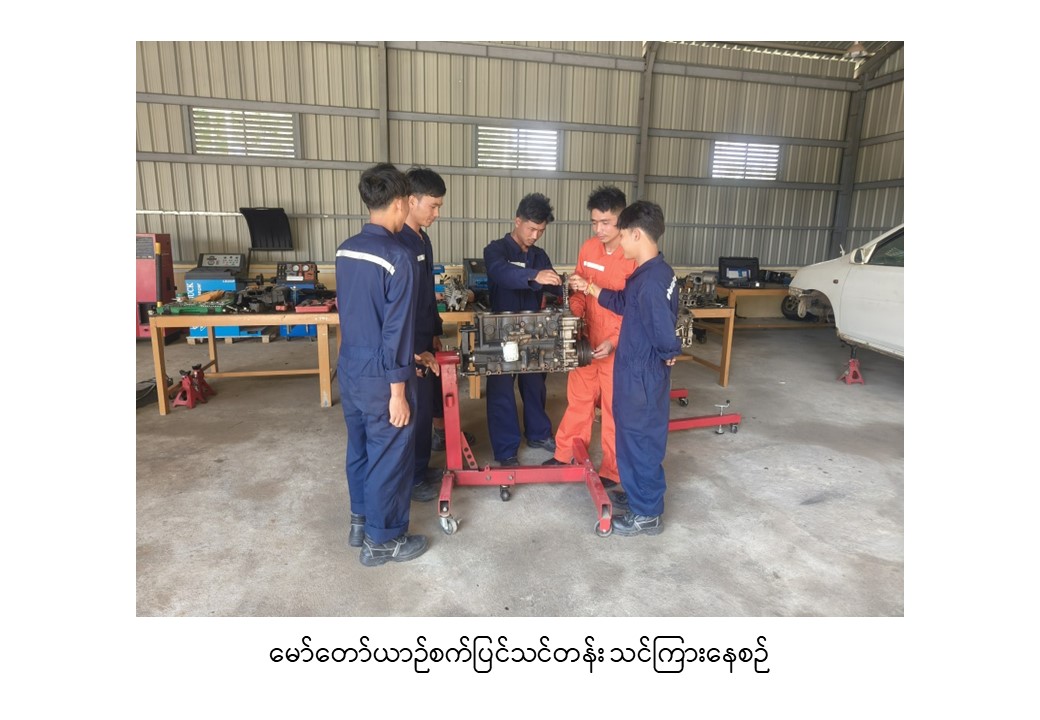
- Automotive Mechanic Course 40
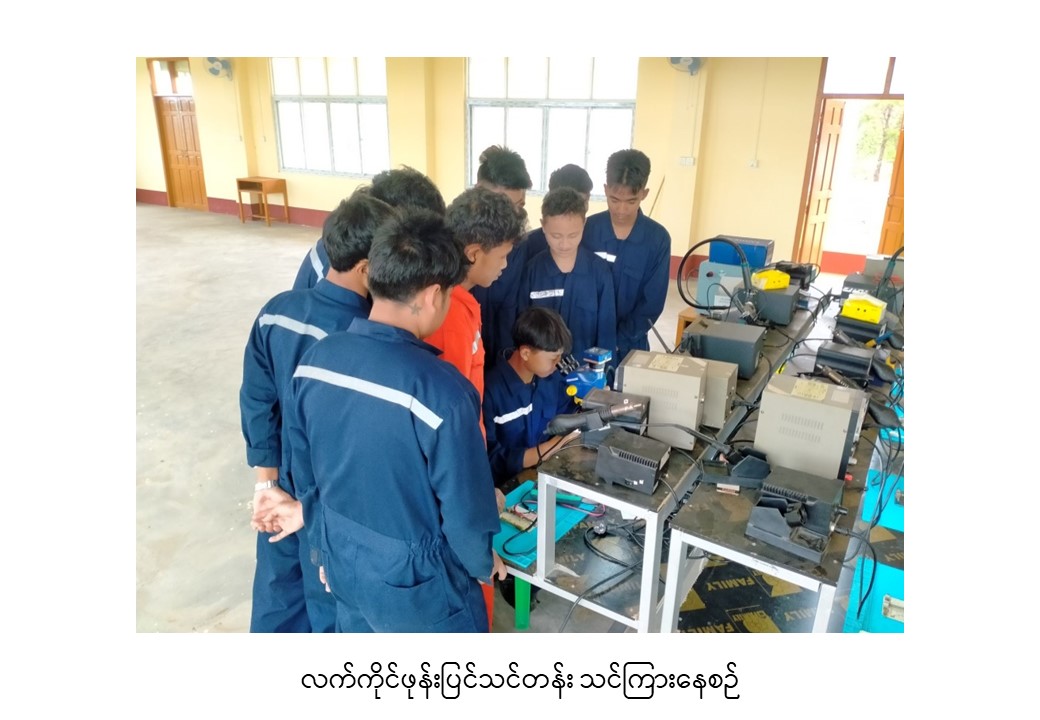
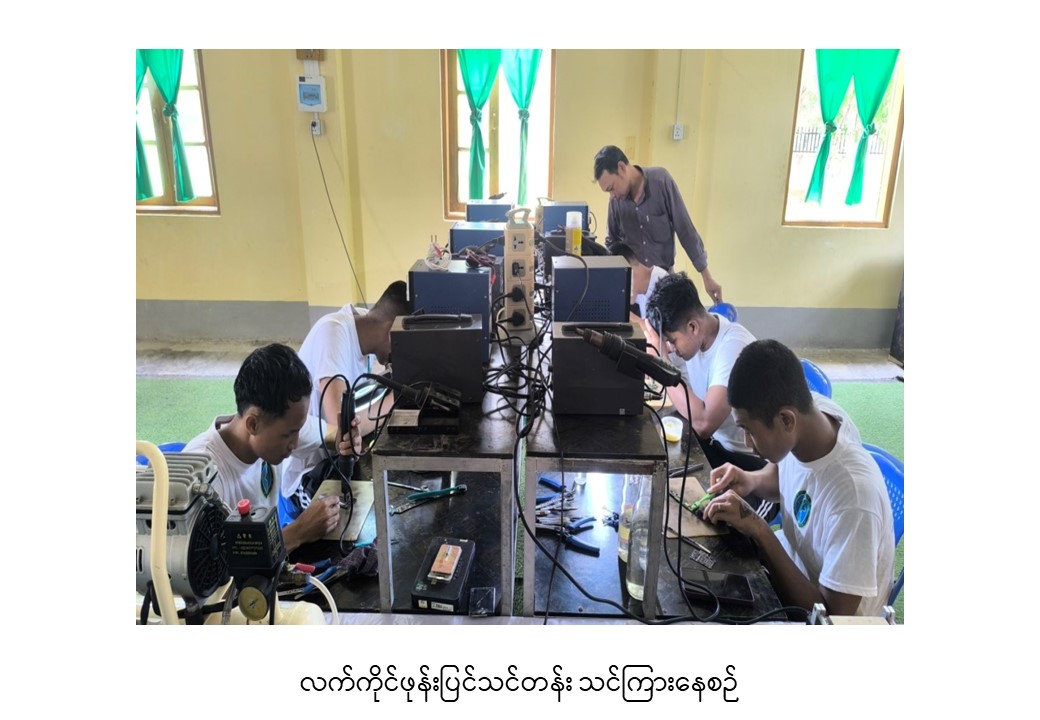
- Mobile Phone Repair Course 15
- Training Courses for Hotel Servicing 20
(Aung Pan)
Total 158
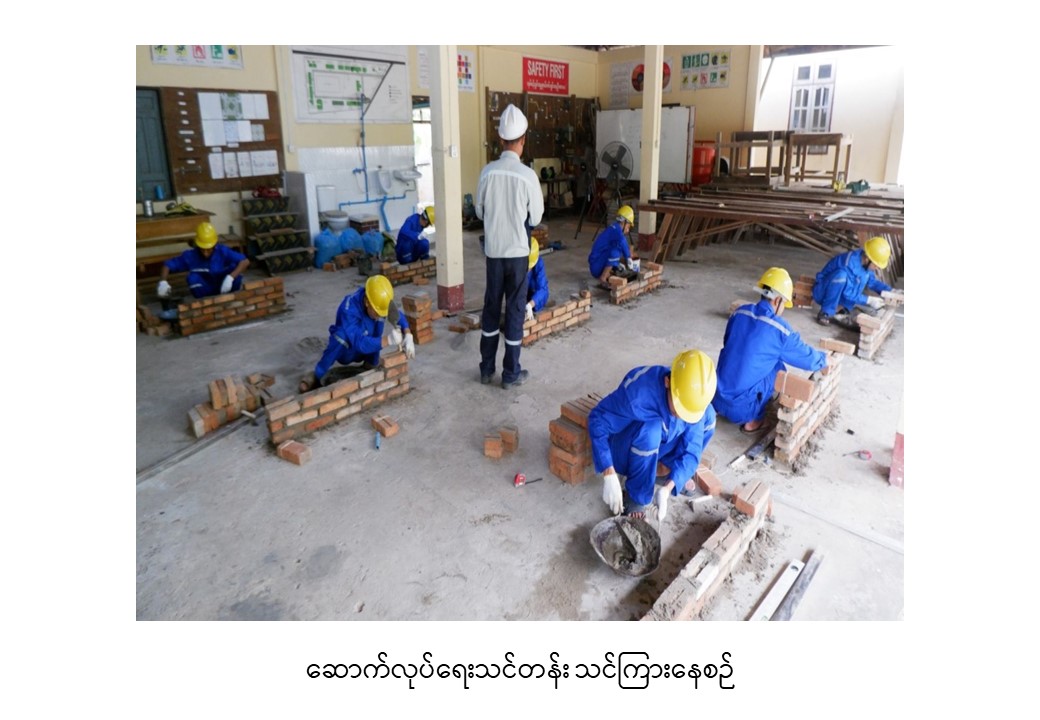
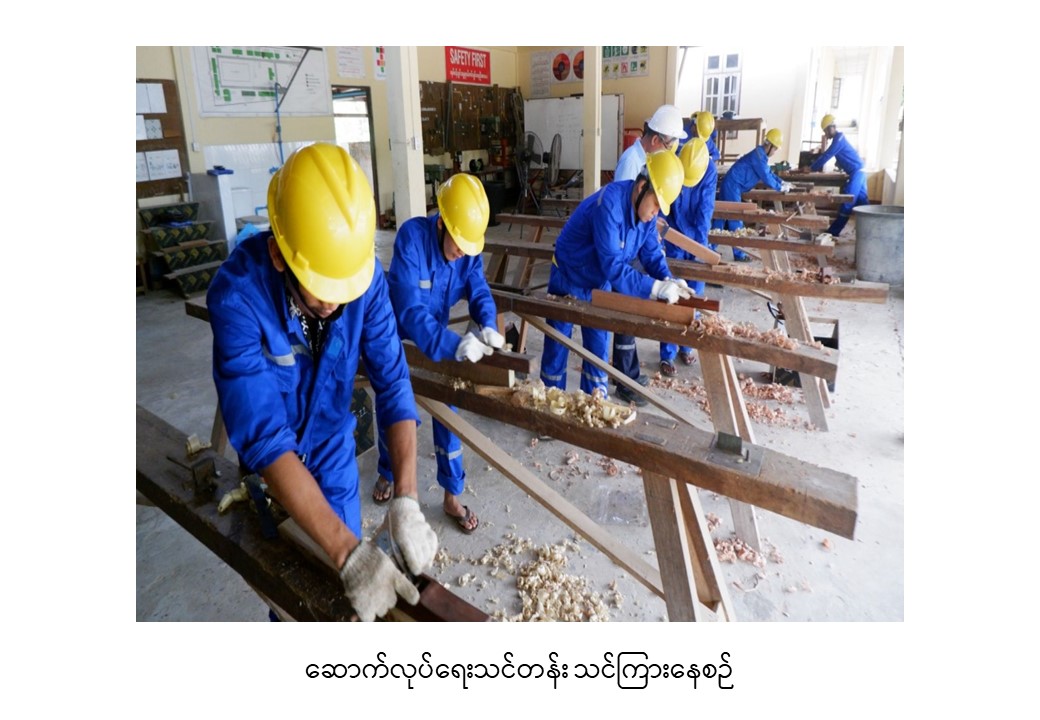
Construction Course
- Teaching handicrafts
- Teaching masonry
- Teaching ironwork
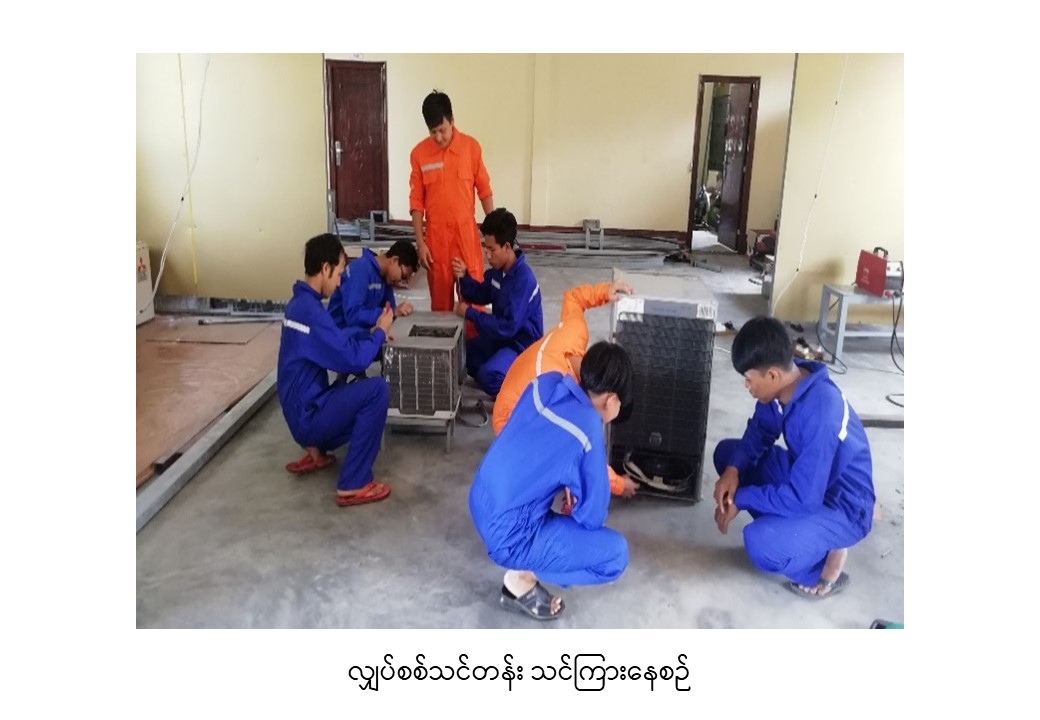
Electrical Course
- Electrical wiring methods
- Not only home electrical appliances, but also air conditioner repair methods
- Refrigerator repair is also taught both in writing and in practice.
Welding Course
- Various methods of electric welding
- Teaching various steel welding techniques as well as how to make steel tables, chairs, and cabinets
Automotive Mechanic Course
- Car engine repair
- Underbody repair
- SD Alignment How to measure
- Car repair using computer ( Scan Tools) in the ignition system
Mobile Phone Repair Course
- Mobile Phone
- Hardware
- Software
2026-2027Fiscal Year, Second Training Schedule
Technical Training Schools for Nationalities Youth from Border Areas
| Technical Training School | From 19-10-2026 to 19-3-2027 |
Training Courses for Hotel Servicing
| Theory time ( school ) | From 19-10-2026 to 8-1-2027 |
| On Job Training Period ( Hotel ) |
From 9-1-2027 to 19-3-2027 |
2026-2027Fiscal Year, Second Training Schedule
Vocational Training School of Domestic Science for Women
| Advanced Vocational Tailoring Course | From 19-10-2026 to 19-3-2027 |
Training Courses for Hotel Servicing
| Theory time ( school ) | From 19-10-2026 to 8-1-2027 |
| On Job Training ( Hotel ) | From 19-10-2026 to 8-1-2027 |
Website Address
×The source image could not be displayed. Check the source page.
SOURCES & REVIEWSources and how to read them.
Sources and how to read them.
Covers eight directory categories and the portal profiles of all 50 listed organizations, including tables, images and links. Full content of external agency websites and attached documents is outside this scope.
Images are reproduced from the government portal. Text within images has not been translated.
Retrieved by Nagani · 2026-10-18
Government portal source ↗