
Detailed organization profile
Ministry of Cooperatives and Rural Development
On this page
Published profile
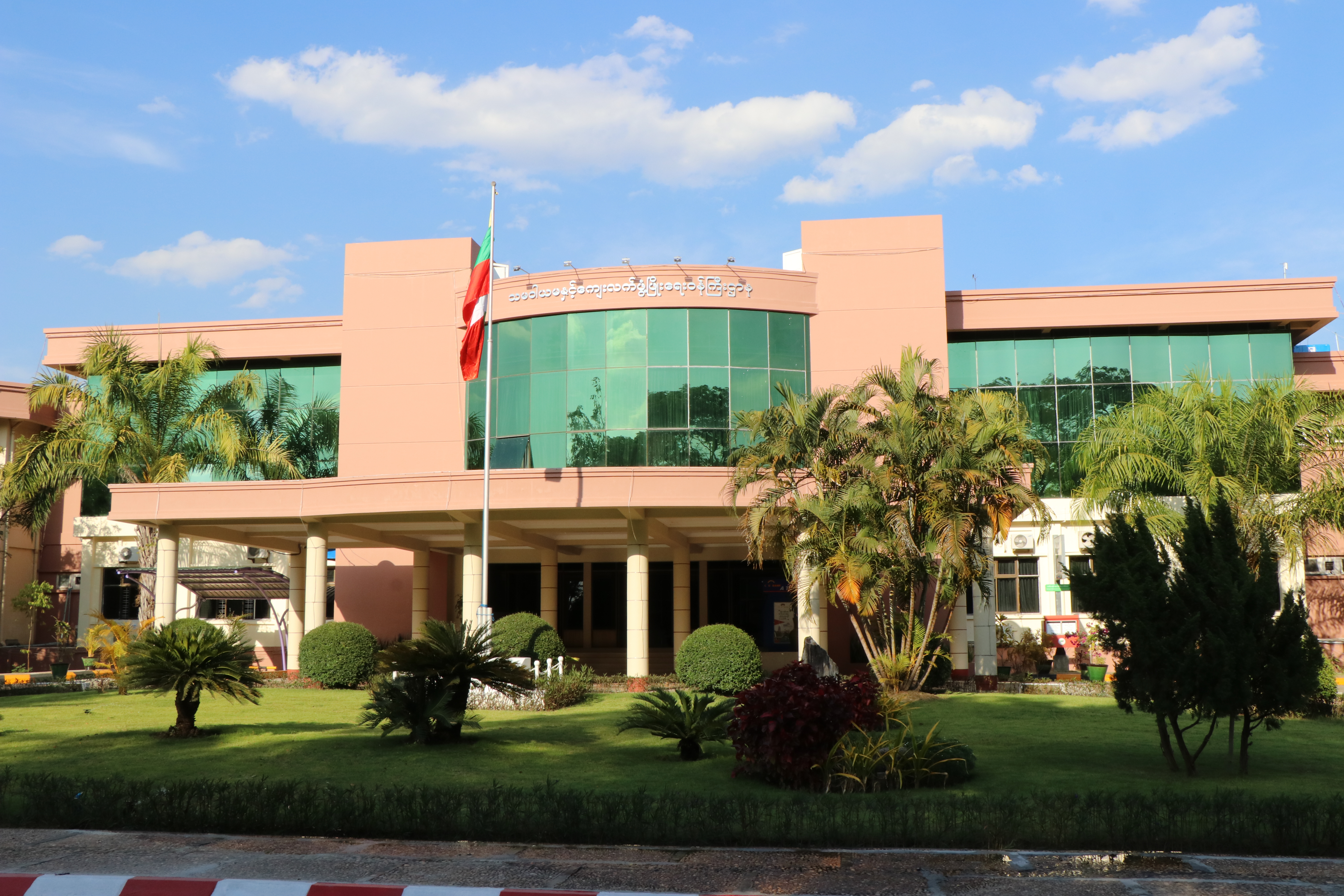
Ministry of Cooperatives and Rural Development
Backstory
Colonial 1904 In December, the Cooperative Commissioner's Office was opened in May City (Pyin Oo Lwin). 1951. On April 1st, the Ministry of Cooperatives and Goods Distribution of the Union of Myanmar was inaugurated.
1962 On March 19th and 6th, we joined with the Ministry of Supply. It became the Ministry of Supply and Cooperatives.
1965 According to Revolutionary Council Announcement No. 66 dated June 18th, when the Ministry of Trade was established separately, the Ministry of Supply and Cooperatives was changed exclusively to the Ministry of Cooperatives.
1974 under the Ministry of Industry. On February 2, the Domestic Industries Corporation joined. On 30-3-1976, it was reorganized as the Department of Home Industry.
The structure of the Cooperative Department was approved in 1991 by the National Peace Building Organization Meeting No. (39/31). It was established on October 30th.
1994 On July 7, the Union Government's Letter No. 21/94 Afra 94(15) The cooperative export import enterprise (Cooperative Export Import Enterprise) is not only to export export goods but also to increase and send new orders of export goods to the foreign market. It was established in the Ministry of Cooperatives with the purpose of importing the necessary imported goods from the state organizations cooperative associations and private enterprises with the foreign income obtained from the export business and expanding foreign markets. In 2014, the cooperative export and import business From April 1st, it was established as the Cooperative Trade Promotion Department.
On 31-5-2021, according to the approval of the meeting number (20/2012) of the Union Cabinet Office, Cooperative Degree College (Thanlein) and Cooperative College (Sagaing) were prepared and formed as Cooperative University (Thanlein) and Cooperative University (Sagaing).
2016 On March 30, the Ministry of Cooperatives, Agriculture, Changed and organized as the Ministry of Livestock and Irrigation.
On June 17, 2021, the Ministry of Cooperatives and Rural Development was reorganized as the Ministry of Cooperatives and Rural Development by the notification letter No. (140/2021) of the State Planning and Management Council. Department of Cooperatives under the newly reconstituted Ministry of Cooperatives and Rural Development. The Department of Rural Development and the Department of Small-Scale Industries participated, and U Hla Moe has been serving as the Union Minister since.
expectations
To contribute to national development by systematically developing the cooperative sector and small-scale industries and managing the sustainable development of rural socio-economic life.
tasks
Manufacturing by cooperatives; To develop trade and service activities; To develop value-added manufacturing activities; to provide vocational and technical training; To build rural infrastructure and provide family income raising activities.
objectives
(1) To build rural infrastructure and increase rural livelihoods and family income-raising activities;
(2) manufacturing; To promote cooperative activities and cooperative system that can be carried out collectively in trade and service activities.
(3) By being able to sell the products directly through the cooperative system, to create many benefits for the producers.
(4) To promote the production and marketing of quality products;
(5) the necessary technical and financial resources from domestic and foreign organizations; To connect with donors and support and promote rural development and cooperative sector and local raw material-based value-added manufacturing activities.
(6) Cooperatives; rural development activities; Relevant government organizations for the development of small scale industries. civil and social organizations private entrepreneurs INGOs/NGOs; To cooperate with the local people;
(7) To develop research and educational activities and to carry out human resource development activities.
policies
(a) Policy on cooperative enterprises and cooperative system development
(1) Cooperative Societies Act; formation of cooperative societies in accordance with the rules; Conduct correctional and cooperative education activities;
(2) Small capital loans in progress; We will further develop cooperative activities, including the sale of agricultural equipment and the sale of inputs.
(3) the economy of cooperative member families; We will cooperate with relevant organizations to improve education, health and living standards.
(4) Connect and cooperate with international cooperative organizations;
(5) manufacturing; trade Service cooperatives will be upgraded.
(b) Rural infrastructure development policy
(1) Rural roads and bridges for the socio-economic development of rural people. rural production road bridge Village roads and bridges Continuous development of rural drinking water supply operations will be carried out.
(2) In order to support the high standard of living and livelihood development of the rural people, rural lighting works outside the power grid will be carried out.
(3) Development of other social infrastructure in rural areas will be carried out through a community-centered approach.
(c) Rural socio-economic development policy
(1) Vocational skill-development work courses for rural people will be opened and taught, and social organizations with strong protection and response capabilities will be helped to develop.
(2) Education; Health environmental protection, Gender equality and natural disaster prevention activities related ministries, private entrepreneurs We will cooperate with the rural people.
(3) Specialists will be produced according to the sector and assigned to relevant activities effectively.
(d) Small Scale Industries Policy
(1) Small industries will be properly registered in accordance with the law and will help to ensure that the products are of good quality and correctness.
(2) We will give priority to the weaving and lacquer industry, which are included in domestic industries, and lead the development of Burmese traditional arts and crafts.
(3) The teaching of vocational skills necessary for the establishment of small-scale industries will be coordinated with various domestic and foreign organizations.
(e) Access to financial capital and input support policy
(1) Financial capital required for cooperative activities and rural businesses; loan support Facilitate the acquisition of investment and inputs;
(2) A permanent operating fund that can be implemented in a people-centered way so that rural people can carry out livelihood and family income-raising activities and obtain continuous sources of financing. small loans Establish and provide direct grants to the public;
(3) Rural-based businesses will also be encouraged to develop the economic life of rural people.
(f) research; Development and Technology Distribution Policy
(1) The private sector will be encouraged to participate in the development of sectoral research activities and the dissemination of modern technologies.
(2) manufacturing; trade We will cooperate with international organizations for the mutual exchange of modern technologies in service activities.
(3) Rural people; Educational activities for farmer cooperative members, government organizations, non-governmental organizations; It will be increased with the cooperation of all civil society organizations and private organizations.
(4) small industries; Traditional crafts including weaving and flowers (10) Research and development activities for vocational activities will be increased.
(g) Policy on Good Governance and Human Resource Development
(1) Inter-government departments in the formulation of policies and implementation of processes. We will coordinate with private organizations.
(2) Effective research activities and staff capacity building activities will be carried out for the development of a good service-oriented management mechanism.
(3) Transparency in the implementation of rural development activities. Responsibility It will be carried out with accountability.
(4) In order to be able to carry out good management efficiently and effectively, the e-government system will be applied and monitoring and evaluation methods will be carried out.
(5) In addition to modern higher education and vocational education, pre-work and work training will be increased for human resource development.
processes
(a) Cooperatives and Cooperative System Development Process
(1) Cooperative law for the development and success of cooperative activities; ethics We will help in accordance with the essence and cooperative principles.
(2) New Cooperative Societies Law; Organized and registered in accordance with the rules; Cooperative associations that have been formed will also be served to develop compactly and firmly.
(3) Provide small capital loan programs for the development of income-generating activities of rural people and urban grassroots;
(4) Agricultural use to farmers; We will arrange for the purchase and use of equipment and inputs for water industry using an installment system.
(5) Communicate and cooperate with the relevant departments to assist the land improvement activities in order to transition to the mechanized farming system; Financial support will be provided;
(6) Manufacturing by cooperative societies; trade Cooperative societies will be upgraded in performance by providing efficient services.
(7) Cooperative Societies Law; Regulating the school with rules, cooperative ethics; To know and understand the essence and basic principles, Department staff and executives at all levels of the cooperative association. Business performance training courses will be opened for employees.
(8) International assistance for the necessary capital funds for the development of cooperatives; To obtain support and loans;
(9) Economy of cooperative member families; Education We will cooperate with relevant organizations to improve health and living standards.
(b) Rural infrastructure development process
(1) Agriculture; Farming rural roads; rural production roads and bridges; We will facilitate the construction of roads and bridges in the village.
(2) Provision of drinking water in rural areas and environmental sanitation activities;
(3) In accordance with the National Electricity Access Plan, we will carry out electricity supply operations in rural areas outside the power grid and cooperate with private entrepreneurs.
(4) Construction of rural housing will be provided for rural residents whose homes have been destroyed due to emergencies and natural disasters.
(5) Small-scale infrastructure development activities that can be implemented by rural residents themselves. Income raising activities and livelihood development activities will be developed.
(6) Rural infrastructure development activities will be implemented in accordance with the Environmental and Social Management Framework.
(c) Rural socio-economic development process
(1) To develop the business capacity of the rural people, performance improvement courses and vocational courses will be opened and delivered.
(2) Environmental protection in carrying out rural development projects. Plans will be implemented to reduce the damage caused by natural disasters.
(3) Education in carrying out rural development activities; In addition to health, gender equality will be prioritized.
(4) We will assist in the development of rural social organizations with strong protection and response capabilities.
(d) Small-scale industrial process
(1) We will encourage and support the promotion of small scale industries through the emergence of relevant laws by regions and states across the country.
(2) Registration of small industries will be done in accordance with the law.
(3) Research laboratories will be established and tested for the quality of small-scale industrial products and disaster prevention.
(4) For the sustainable development of weaving and lacquer industry skills, we will train and produce diploma level literate people and experts.
(5) Incubation Center, a training center for value-added manufacturing and vocational training, will be established and supported to produce small entrepreneurs.
(6) Trade fairs and showrooms will be organized for the market development of traditional Myanmar handicrafts and small business products.
(e) Procedure for obtaining financial capital and providing input support
(1) Revolving Fund (Revolving Fund) in a people-centered way to improve livelihood and family income of rural people. Microfinance, We will encourage and assist the public in obtaining direct grants (Block Grants).
(2) Organizations for easy access to small-scale industrial equipment. Banks cooperative societies; We will connect with companies and provide sales and service activities through the installment system.
(3) Cooperative sector; Domestic and foreign assistance to improve the rural development sector and the small industrial sector. facilities, loans, Investments will be obtained.
(f) Research; Development and technology distribution process
(1) Laboratories will be established for the development of manufacturing activities and rural infrastructure.
(2) Research and development will be carried out to increase the production of quality products.
(3) research activities; Short-term, which will train and produce experts according to subject for the development of technology and human resources. Long-term plans will be implemented;
(4) cooperative enterprises; We will manage to increase the use of modern information technology in rural development activities and small industries.
(g) Good governance and human resource development process
(1) Standardize businesses and implement e-government systems and information management systems (MIS); Monitoring and Evaluation (M&E) techniques will be implemented;
(2) Rural development activities; Transparency in tendering activities; Responsibility It will be carried out with accountability
(3) administrative matters regarding service to employees at departmental levels; Training will be provided on capacity building issues and management issues.
(4) Government departments and private individuals as well as civil society organizations at the federal and state/regional levels in implementing the established policies and processes. Coordination between non-governmental organizations will be improved;
(5) To achieve effective success in the implementation of the established policies and procedures, the improvement of the work performance of the departments will be carried out.
(6) Private organizations associated with department activities; We will encourage and support cooperative societies to increase their business performance.
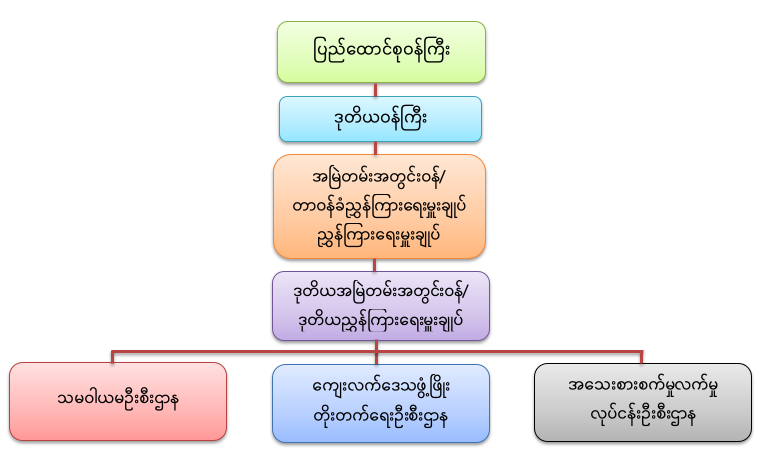
structure
SOURCES & REVIEWSources and how to read them.
Sources and how to read them.
Covers eight directory categories and the portal profiles of all 50 listed organizations, including tables, images and links. Full content of external agency websites and attached documents is outside this scope.
Images are reproduced from the government portal. Text within images has not been translated.
Retrieved by Nagani · 2026-10-18
Government portal source ↗